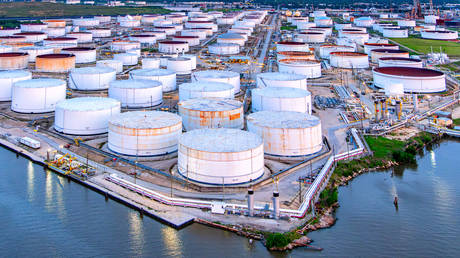
Global crude oil reserves are currently experiencing a contraction phase that defies traditional cyclical patterns. While historical "reserve scares" were typically solved by price-induced exploration surges, the present drain is driven by a fundamental shift in the capital-expenditure-to-production ratio. The speed at which known reserves are being extracted now significantly outpaces the rate of commercialization for new discoveries, creating a structural deficit in the global energy ledger. This is not a simple story of "running out of oil" but a complex problem of diminishing returns on energy investment (EROI) and the physical limits of existing brownfield assets.
The Mechanics of Reserve Erosion
To understand the current pace of depletion, we must categorize the drain into three distinct structural pillars. Each pillar exerts pressure on the global supply stack in different ways, complicating the path to a balanced energy market.
1. The Brownfield Exhaustion Curve
The majority of global production stems from mature fields, many of which are decades past their peak. These assets face a natural decline rate that typically averages 4% to 6% annually without significant reinvestment. As pressure in these reservoirs drops, the "lift cost" per barrel rises, requiring more energy and capital just to maintain a flat production profile. The current record pace of depletion is partly an optical illusion created by the fact that we are "mining" the easiest barrels first, leaving behind viscous or hard-to-reach crude that requires higher technology and higher prices to extract.
2. The Exploration Capex Gap
Following the price collapses of 2014 and 2020, integrated oil companies shifted their strategy from "volume at any cost" to "value over volume." This pivot resulted in a multi-year period of underinvestment in frontier exploration.
- The Lead-Time Trap: A deepwater discovery made today takes 7 to 10 years to reach first oil. The lack of major discoveries between 2015 and 2022 has created a "supply canyon" that will manifest in the late 2020s.
- Resource Sterilization: Increasing regulatory hurdles and ESG-driven capital constraints have effectively "sterilized" known reserves in certain jurisdictions, making them economically unviable even if physically present.
3. The Shale Treadmill Effect
Light Tight Oil (LTO), primarily from the U.S. Permian Basin, has masked the depletion of global conventional reserves for a decade. However, shale wells exhibit extreme decline rates, often losing 70% of their initial production within the first twelve months. To maintain output, operators must drill a continuous stream of new wells—a process known as the shale treadmill. As the "Tier 1" acreage is exhausted, drillers are moving to "Tier 2" and "Tier 3" locations, which provide lower initial production rates and require more lateral length to achieve the same internal rate of return (IRR).
Quantifying the Replacement Ratio
The most critical metric for long-term energy security is the Reserve Replacement Ratio (RRR). An RRR of 100% means a company or country is finding as much oil as it is pumping. Globally, this ratio has trended well below 100% for the better part of the last decade.
The logic of replacement is governed by the Cost Function of Incremental Supply. As easy-access reserves disappear, the industry moves into four high-cost environments:
- Ultra-Deepwater: Operating in depths exceeding 1,500 meters.
- Arctic/Frontier: High logistical costs and extreme environmental risk.
- Enhanced Oil Recovery (EOR): Injecting $CO_2$ or chemicals to scrub remaining oil from "empty" wells.
- Unconventional Heavy Crudes: Requiring massive heat (steam) or refining complexity.
Each of these categories requires a sustained Brent price floor to justify the investment. If prices remain volatile, boards of directors prefer to return cash to shareholders via buybacks rather than risk billions on a 30-year project that might become a stranded asset.
The Misconception of Proven Reserves
Public discourse often confuses "Resources" with "Proven Reserves" (P1). This distinction is vital for accurate analysis.
- Proven Reserves (P1): Oil that has a 90% probability of being extracted profitably under current economic and political conditions.
- Probable/Possible Reserves (P2/P3): Subsurface accumulations that are known to exist but lack the infrastructure or price point to be commercialized.
The "record pace" of drain reported by major agencies refers to the depletion of P1 reserves. When a refinery processes a barrel of P1 crude, that barrel must be replaced by moving a barrel from the P2 category into P1. This "reclassification" requires capital, technology, and a stable regulatory environment. The current bottleneck is not a lack of molecules in the ground, but a lack of conversion from possible to proven.
Geometric Constraints and Flow Rates
A common error in energy analysis is treating a reserve like a tank of water where you can drain the last drop as fast as the first. In reality, oil extraction is governed by Darcy’s Law, which relates flow rate to the permeability of the rock and the viscosity of the fluid.
As a field nears the end of its life, the "Water Cut"—the ratio of water to oil produced—increases. Operators eventually reach a point where they are pumping 95 barrels of water for every 5 barrels of oil. The energy required to process that water often exceeds the energy value of the oil recovered. This physical limit represents the true "end of the reserve," regardless of how much oil technically remains in the pores of the rock.
Geopolitical Friction and the Concentration of Supply
As western international oil companies (IOCs) pull back from long-cycle projects, the burden of replacement falls on National Oil Companies (NOCs) in the OPEC+ bloc. This creates a concentration of supply risk.
- Sovereign Risk: Many nations with the largest remaining reserves (Venezuela, Iran, Libya) are under sanctions or internal strife. Their reserves are effectively "offline" for the global market.
- Spare Capacity Overshoot: To stabilize markets, Saudi Arabia and others maintain spare capacity. However, as global depletion accelerates, this "buffer" is being utilized to fill the gaps left by declining fields elsewhere, leaving the world with no margin for error during a supply shock.
Structural Efficiency vs. Absolute Demand
The argument that energy transition will neutralize the reserve drain assumes a rapid decoupling of GDP growth from oil consumption. While electric vehicle (EV) penetration is rising, oil's role in petrochemicals, aviation, and heavy shipping remains difficult to substitute.
The Jevons Paradox suggests that as we become more efficient with energy, we tend to find more ways to use it. Efficiency gains in internal combustion engines (ICE) have historically been offset by the increased size and weight of vehicles. Until a viable, high-density alternative exists for the entire industrial stack, the drain on crude reserves remains a critical threat to global logistics.
The Strategy for Market Participants
The era of cheap, abundant "easy oil" has concluded, replaced by an era of "complex oil." For investors and strategists, the focus must shift from pure production volumes to the quality and longevity of the reserve base.
The strategic play is to identify operators who possess:
- Low-Decline Assets: Conventional assets that provide stable cash flow with minimal maintenance capex.
- Inventory Depth: A proven runway of Tier 1 drilling locations that can survive a sub-$60 Brent environment.
- Technological Arbitrage: The ability to use secondary and tertiary recovery techniques to reclassify P2 reserves into P1 at a lower cost than frontier exploration.
The global economy is currently operating on the momentum of 20th-century discoveries. To prevent a catastrophic supply crunch in the 2030s, a massive reallocation of capital toward high-yield extraction technology is required. Waiting for price signals to trigger this investment is a high-risk strategy, as the lead times of the physics involved do not respond to the speed of financial markets. The depletion is locked in; the only variable is the efficiency of our response.



