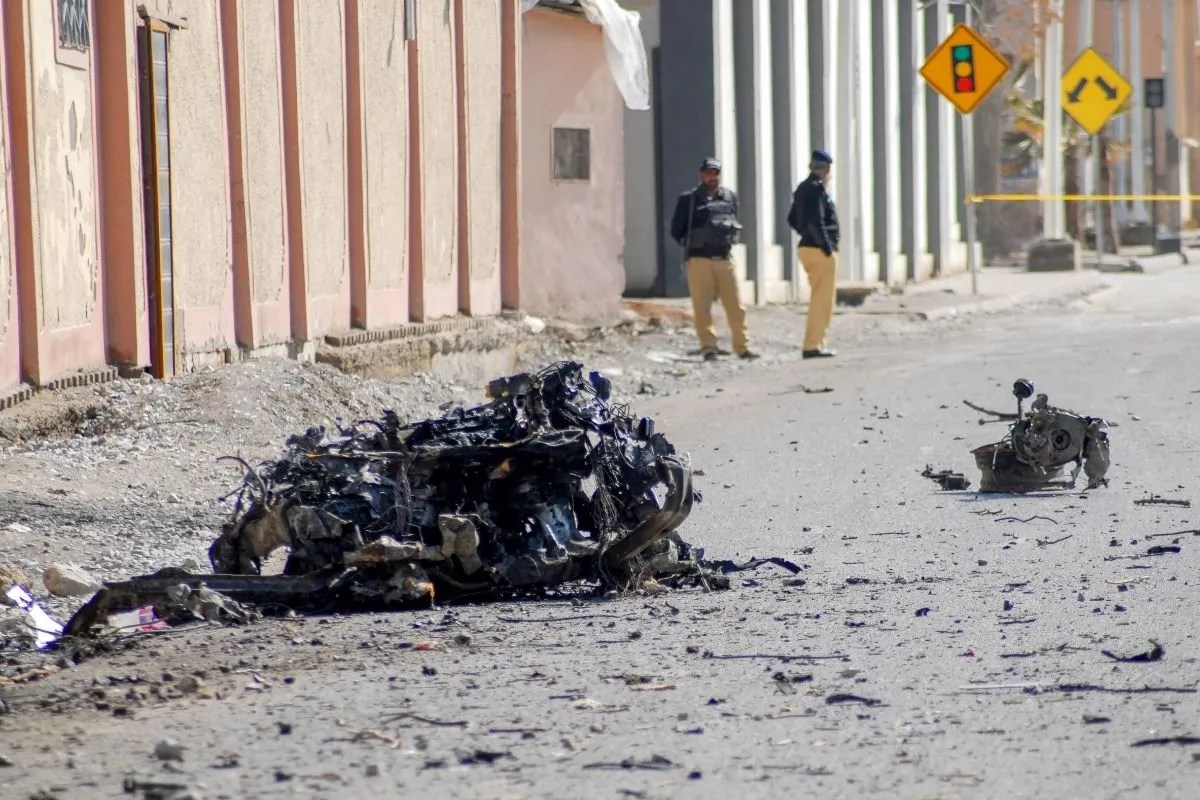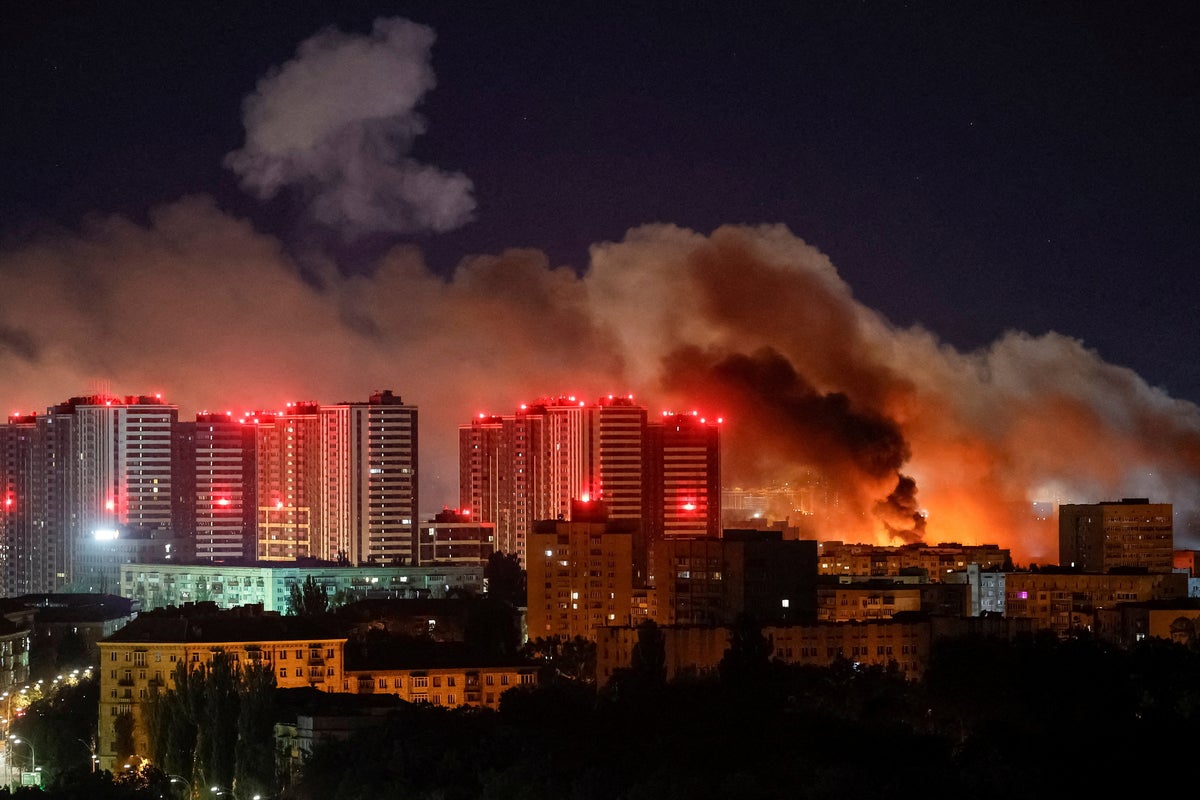
Strategic equilibrium during protracted state conflict rarely degrades along a linear trajectory; instead, it fractures through calculated bursts of kinetic violence designed to preempt political friction. The recent ballistic missile attack on Kyiv, resulting in fatalities just hours after the departure of high-level diplomatic envoys, illustrates a recurring operational rhythm. This timing is not coincidental. It represents a precise tactical intersection where state actors use missile deployments to signal resolve, disrupt allied alignment, and test air defense saturation thresholds immediately following diplomatic deadlock.
To decode this operational pattern, analysts must move past standard reactive reporting and examine the underlying mechanics driving these strikes. The conflict features a dual-track dynamic: high-stakes diplomatic signalling on one side and a relentless optimization of kinetic attrition on the other. When political channels stall or envoys withdraw without an agreement, the military apparatus steps in to reset the bargaining range through force projection.
The Dual-Track Signaling Model
Diplomatic interventions and kinetic escalations operate within a single, interdependent feedback loop. Envoys representing external mediators or allied powers enter a conflict zone with specific political mandates: either to establish parameters for de-escalation or to test the viability of a negotiated settlement. Their departure without a signed framework signals to the opposing military command that political leverage has temporarily exhausted its utility.
At this juncture, the doctrine of coercive signaling takes precedence. A ballistic missile strike delivered immediately after diplomatic failure serves three distinct operational objectives:
- It demonstrates tactical autonomy, proving that battlefield operations remain entirely unconstrained by external diplomatic pressure.
- It imposes immediate economic and psychological costs on the adversary's capital, degrading urban resilience and forcing the diversion of state resources toward civil defense and emergency response.
- It transmits a direct, unmediated message to foreign capitals that future security guarantees or peace architectures will face severe physical friction on the ground.
This creates a structural rhythm. Diplomacy opens a window of perceived vulnerability or opportunity; when that window closes without yielding strategic concessions, kinetic retaliation fills the vacuum. The timing of the Kyiv strike reflects this predictable sequence, weaponizing the temporal gap between political talks and the resumption of full-scale tactical operations.
Air Defense Saturation and Ballistic Mechanics
Understanding why ballistic strikes penetrate urban shields requires a hard look at interception economics and missile flight dynamics. Unlike slow-moving loitering munitions or subsonic cruise missiles, ballistic systems operate at high terminal velocities, drastically compressing the decision and reaction windows for integrated air defense networks.
The tactical calculus governing these attacks relies on saturation economics. A mixed salvo typically deploys decoys, electronic countermeasures, and multiple warheads along varied trajectories to overwhelm radar processing capacity and exhaust interceptor missile inventories. Even sophisticated air defense architectures face hard physical limits regarding simultaneous engagement tracks.
Incoming Salvo (Ballistic + Decoys)
       │
       ▼
[Radar Processing & Threat Prioritization]
       │
       ├─► Interceptor Launch (High Marginal Cost)
       │
       ▼
[Terminal Phase Velocity / Saturation Point]
       │
       └─► Impact or Debris Distribution
The cost function heavily favors the attacker. The financial outlay required to manufacture and launch a ballistic missile is frequently lower than the total cost of the interceptor munitions expended to neutralize it, particularly when accounting for the premium associated with advanced surface-to-air systems. Consequently, every strike functions simultaneously as a physical attack on infrastructure and an economic drain on the defender's supply chain of specialized interceptors.
Urban Vulnerability and Infrastructure Stress
Concentrating kinetic strikes on major metropolitan centers like Kyiv maximizes systemic friction. Modern capitals are complex adaptive systems characterized by interdependent utilities, transport hubs, and centralized command nodes. A ballistic impact in an urban area triggers cascading failures across multiple domains:
- Grid Stability: Proximity blasts damage local substation transformers, forcing emergency load-shedding and disrupting industrial output.
- Medical Logistics: Casualties place immediate strain on emergency room capacity, requiring the reallocation of surgical resources away from routine care.
- Psychological Attrition: Regular air raid alerts and urban impacts degrade the collective cognitive bandwidth of the civilian population, testing the political will required to sustain long-term defense efforts.
The strategic rationale for targeting urban administrative centers relies on shifting the burden of the war from the front-line trenches directly to the political core. By forcing leadership to manage simultaneous humanitarian crises, civil infrastructure repairs, and military logistics, the attacking force attempts to induce institutional paralysis.
The Friction of External Mediation
External diplomatic missions face inherent structural limitations when attempting to broker terms while high-intensity kinetic operations continue. Envoys operate under compressed timelines and rigid political constraints, whereas military planners operate on continuous operational loops optimized for lethality and territorial control.
When external envoys depart empty-handed, it validates the assessment of hardline military leadership that neither side has reached a mutually hurting stalemate severe enough to compel genuine concessions. The subsequent strike acts as a punctuation mark, underscoring the failure of the diplomatic track and reinforcing the primacy of force.
This dynamic exposes the fragility of external mediation efforts that lack credible enforcement mechanisms or immediate leverage. Without concrete incentives or deterrents attached to the diplomatic process, talks become little more than pauses in an ongoing cycle of escalation, easily severed by the next launch sequence.
Strategic Outlook
Anticipating future escalations requires tracking the correlation between diplomatic touchpoints and missile inventory depletion rates. As long as political objectives remain fundamentally irreconcilable, ballistic strikes following high-profile visits will remain a standard operational reflex.
Future analysis must prioritize monitoring supply chain inputs for long-range precision munitions and assessing the real-time consumption rates of air defense interceptors. The decisive factor in this phase of the conflict will not be the rhetoric produced at negotiating tables, but the sustainable capacity of domestic and allied industrial bases to absorb, intercept, and retaliate against high-speed kinetic barrages.