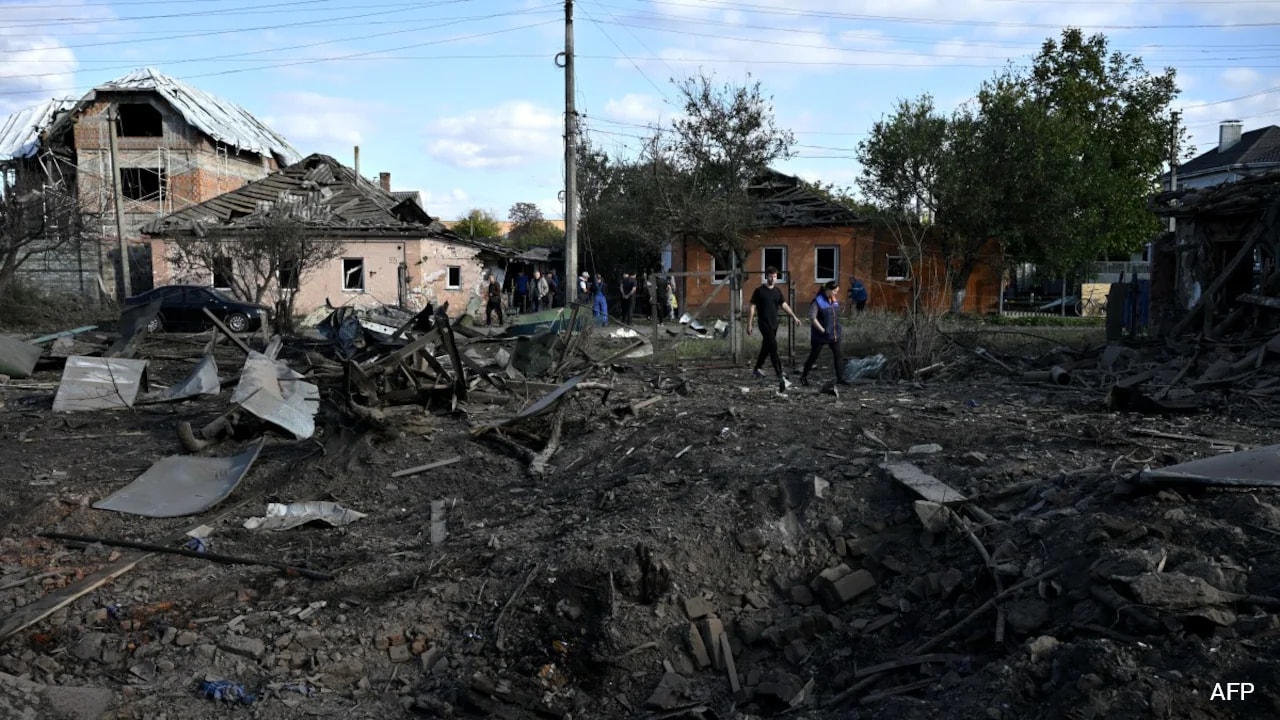
The intensification of military strikes in Ukraine, resulting in dozens of casualties including children, highlights a recurring structural pattern in modern interstate warfare. When strategic deadlock emerges on conventional frontlines, the friction of protracted attrition often drives combatants to shift vector profiles toward urban infrastructure and densely populated zones. Understanding this escalation requires moving beyond surface-level reporting to examine the structural mechanics of targeting choices, civilian exposure metrics, and the compounding cost functions of sustained high-intensity bombardment.
The Mechanics of Urban Targeting Shifts
Military doctrine dictates that offensive momentum relies on suppressing enemy command, control, communications, and logistical nodes. However, as defensive lines harden and air defense networks achieve parity or localized denial, precision degradation occurs. This operational friction creates a substitution effect where long-range missile and drone assets are redirected from tactical frontlines to rear-echelon and urban centers. Discover more on a similar topic: this related article.
The rationale behind this shift operates on two levels of strategic calculus:
- Strategic Coercion: Increasing the friction of daily life for the civilian population to degrade national resolve and divert state resources toward civil defense, humanitarian relief, and reconstruction.
- Asset Depletion Forcing: Exposing air defense architectures by compelling defenders to expend high-cost interceptor missiles on lower-cost saturation vectors, eventually saturating coverage parameters.
When munitions impact residential blocks, schools, or commercial districts, the kinetic footprint is not merely a tactical error; it is often the direct output of degraded guidance systems operating in electronic warfare environments or the deliberate acceptance of collateral damage to achieve psychological and economic disruption. Additional analysis by The New York Times highlights comparable perspectives on the subject.
The Cost Function of Protracted Attrition
In economic and operational terms, modern high-intensity conflict functions as a brutal cost-benefit analysis where human capital acts as the ultimate shock absorber. The aggregate cost of an extended military campaign can be modeled across three primary variables:
- Direct Mortality and Morbidity: The immediate loss of life and physical trauma inflicted on non-combatants, which skews heavily toward the most vulnerable demographics due to their lower mobility thresholds and reliance on fixed social infrastructure like schools and hospitals.
- Infrastructure Degradation: The systemic destruction of electrical grids, water treatment facilities, and transportation networks. This compounds civilian casualties long after the initial kinetic strike by inducing secondary health crises and forcing mass demographic displacement.
- Psychological Attrition: The cumulative erosion of societal cohesion. The persistent threat of unannounced kinetic strikes forces populations into underground shelters, disrupting labor productivity, education systems, and economic output.
[Kinetic Strike Initiation]
       │
       ├─► Direct Civilian Casualties (Mortality/Trauma)
       │
       ├─► Infrastructure Collapse (Power, Water, Medical)
       │         │
       │         └─► Secondary Mortality & Displacement
       │
       └─► Psychological Attrition (Economic & Social Paralysis)
The Information Asymmetry in Conflict Reporting
Reporting on civilian casualties during intensive bombardment often suffers from structural opacity. Verification lags, restricted access to active strike zones, and the weaponization of information by belligerent parties create significant distortion in real-time data flows. Analysts must separate confirmed kinetic events from propaganda narratives by evaluating three verification tiers:
- Primary Telemetric and Visual Evidence: Open-source intelligence, satellite imagery, and geolocated video feeds that establish the physical footprint of the strike and the nature of the impacted structures.
- Institutional Corroboration: Data provided by international monitoring bodies, such as specialized United Nations observation missions, which apply standardized methodologies to document civilian harm despite access constraints.
- Logistical and Medical Audits: Hospital intake records and mortuary data that quantify the exact scale of human loss, though these are frequently delayed or suppressed under wartime censorship laws.
Strategic Outlook and Force Projections
As long as strategic symmetry persists on the physical frontlines, the incentive structure for asymmetric pressure against civilian population centers remains intact. Air defense saturation strategies and long-range precision strikes will continue to serve as primary instruments for inflicting systemic stress when ground maneuvers stall. Mitigating these outcomes requires not merely diplomatic appeals, but a fundamental shift in the distribution of advanced layered air defense assets to rear-echelon urban zones—a measure constrained entirely by global production bottlenecks of interceptor missiles and the logistical limits of transfer timelines.