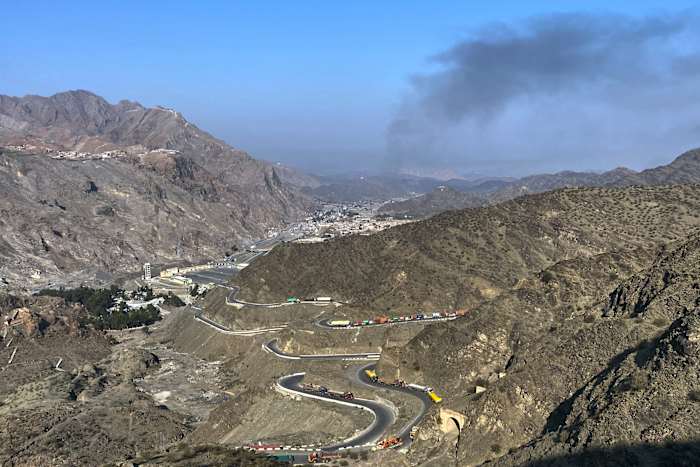
The reported interception of a Pakistani aerial strike targeting Bagram Air Base signifies a fundamental shift from asymmetric border skirmishing to conventional state-on-state signaling. While historical friction along the Durand Line typically involves localized infantry exchanges or mortar fire, the transition to targeting deep-tier infrastructure like Bagram suggests an expansion of the conflict’s theater of operations and a recalibration of deterrent thresholds. This engagement, now entering its fourth day, is not a series of isolated events but the byproduct of a specific breakdown in the regional security architecture.
The Strategic Value of Bagram as a Redline
Bagram Air Base serves as more than a military installation; it is the psychological and logistical center of gravity for any Afghan administration. For the Taliban-led government, maintaining the integrity of this site is the primary metric of their sovereignty. For Pakistan, targeting it represents a calculated attempt to disrupt the operational depth of the Afghan Air Force and intelligence apparatus.
The logic of this escalation follows three distinct pillars:
- Denial of Safe Haven: Pakistan’s primary objective involves the neutralization of Tehrik-i-Taliban Pakistan (TTP) leadership elements that Islamabad asserts are sheltered within Afghan borders. Targeting Bagram suggests a belief that high-value assets have been moved from the border ruggedness into formal military facilities.
- Sovereignty Signaling: By attempting a strike on a major base, Islamabad is communicating that no inch of Afghan territory is "off-limits" if internal Pakistani security is compromised.
- Domestic Political Deflection: Both administrations face significant internal pressures. Military escalation serves as a reliable mechanism for consolidating domestic nationalist sentiment, though this creates a "escalation ladder" from which it is difficult to descend without a tangible victory.
Structural Failures of the Durand Line Buffer
The current fighting persists because the "buffer zone" concept has collapsed. Historically, the 2,640-kilometer border was managed through a mix of tribal autonomy and indirect influence. The transition to a fenced, hard border—initiated by Pakistan and rejected by the Afghan administration—has turned a fluid social boundary into a friction point.
The cost function of this conflict is asymmetrical. Afghanistan, lacking a comprehensive air defense umbrella, relies on ground-based anti-aircraft systems and man-portable air-defense systems (MANPADS) to thwart sophisticated Pakistani F-16 or JF-17 sorties. The Afghan claim of "thwarting" a strike implies either an electronic warfare intervention, a successful kinetic interception, or, more likely, a failure in the Pakistani munitions' guidance systems or a deliberate "miss" intended as a shot across the bow.
Tactical Variables and the Fourth-Day Threshold
Entering the fourth day of active combat indicates that neither side has achieved their immediate tactical objectives. Short-term border skirmishes (1-2 days) are typically about "face-saving." A four-day engagement suggests a deeper commitment to shifting the status quo.
The kinetic reality on the ground is governed by these variables:
- Terrain Advantage: Afghan forces hold the high-ground advantage in many sectors of the Kunar and Nangarhar provinces, making Pakistani ground incursions prohibitively expensive in terms of manpower.
- Air Superiority vs. Ground Saturation: While Pakistan maintains a clear technological edge in the air, they cannot hold territory from the sky. Afghan forces utilize "swarming" tactics, using light infantry and mobile artillery to harass Pakistani border outposts, forcing the Pakistani military to decide between retreat or further escalation via heavy armor and airpower.
- Intelligence Leakage: The effectiveness of the Bagram interception suggests that Afghan intelligence may have received advanced telemetry or humint (human intelligence) regarding the strike, potentially from regional actors interested in seeing Pakistan’s influence checked.
The Economic Bottleneck of Prolonged Conflict
Neither nation possesses the fiscal reserves to sustain a high-intensity conventional war. Pakistan’s economy is currently tethered to international lender requirements and stabilizing inflation. A full-scale war would trigger an immediate flight of foreign investment and a suspension of critical credit lines.
Afghanistan’s economy, while more insulated due to its relative isolation from global financial markets, remains subsistence-based and heavily reliant on cross-border trade. The closure of key transit points like Torkham and Chaman creates an immediate inflationary spike in Kabul, particularly for fuel and grain. This economic reality serves as the ultimate "cooling" mechanism. The conflict is likely to remain "sub-conventional"—intense enough to signal resolve, but restrained enough to avoid total economic collapse.
Regional Alignments and the Vacuum Effect
The absence of a mediating superpower has created a vacuum. Previously, the United States served as a stabilizer, providing a common point of contact for both militaries. Without this third-party pressure, the "security dilemma" takes over: any defensive move by Kabul is seen as an offensive preparation by Islamabad, and vice versa.
- China’s Dilemma: Beijing seeks stability to protect the China-Pakistan Economic Corridor (CPEC) and its nascent mining interests in Afghanistan. Continued fighting threatens the "Belt and Road" connectivity.
- Central Asian Interests: Countries to the north fear a spillover of radicalization. If the Afghan state becomes preoccupied with a southern border war, its ability to police northern insurgent groups—like the ISKP—diminishes.
Strategic Forecasting: The Pivot to Attrition
The engagement at Bagram signals that the "rules of the game" have changed. We are no longer in an era of "border management"; we are in an era of "competitive sovereignty."
The most probable path forward involves a transition from kinetic strikes to a "grey zone" conflict. This includes:
- Economic Coercion: Pakistan will likely utilize its control over Afghan transit trade as a non-kinetic weapon, effectively blockading the landlocked nation's primary route to global markets.
- Proximate Insurgency: Afghanistan may increase its "deniable" support for insurgent elements within Pakistan’s Khyber Pakhtunkhwa province to force a Pakistani troop reallocation away from the Durand Line.
- Air Defense Modernization: Kabul will prioritize the acquisition of more robust air defense systems—potentially from regional black markets or sympathetic neighbors—to neutralize Pakistan’s primary tactical advantage.
The immediate strategic play for the Afghan administration is to leverage the Bagram interception as a diplomatic tool, presenting themselves as the aggrieved party under foreign aggression to gain leverage in regional forums. For Pakistan, the focus must shift to a "proportional response" that addresses TTP threats without triggering a multi-front border war they cannot afford to finance. The fourth day of fighting is not the peak; it is the baseline for a new, more volatile era of Central-South Asian relations.
The Afghan Ministry of Defense must now decide whether to utilize its limited drone fleet for a retaliatory strike or to hold its position. A retaliatory strike on a Pakistani urban or high-value military target would likely move the conflict past the point of de-escalation, triggering a general mobilization. The most effective move is the fortification of the Bagram perimeter coupled with an aggressive diplomatic campaign to isolate Islamabad’s "pre-emptive strike" doctrine as a violation of international norms.


