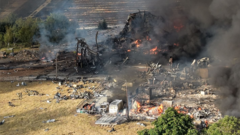
Twenty firefighters rushed to the hospital after a sudden explosion shook an industrial site in Essex. This incident highlights ongoing vulnerabilities in emergency response protocols and industrial safety standards across the region. When structural failures and hazardous materials collide, the immediate toll falls squarely on the first responders tasked with mitigation.
Understanding how an ordinary callout transforms into a multi-casualty event requires looking past the smoke and examining the systemic pressures facing modern industrial centers. Facilities aging past their intended operational lifespans often operate under outdated regulatory frameworks. These environments create high-risk scenarios where a single point of failure triggers catastrophic cascading effects.
The Anatomy of a Response Gone Wrong
Emergency services operate under the assumption of calculated risk. Firefighters train for unpredictable variables, yet industrial sites frequently present hidden hazards that defy standard containment protocols. When pressurized vessels or volatile chemical compounds breach containment, the window for safe evacuation narrows to seconds.
Modern commercial facilities often house complex networks of materials that react violently when exposed to extreme heat or mechanical shock.
- Pressure Vessel Integrity: Fatigue cracks and corrosion compromise structural limits long before external indicators appear.
- Chemical Staging: Improper storage densities accelerate thermal runaway during localized fires.
- Communication Gaps: Rapidly shifting on-site conditions frequently fail to reach incoming crews before they enter the hazard zone.
Operational command structures depend on accurate facility mapping. Too often, structural modifications made years prior are missing from active architectural databases. Crews enter burning complexes blind to interior layout changes, trapped by dead ends or unexpected material storage zones.
Regulatory Blind Spots in Regional Manufacturing
Safety inspections operate on fixed schedules. Bureaucratic lag ensures that enforcement agencies rarely keep pace with operational modifications made by private enterprises attempting to cut costs. Profit margins dictate maintenance cycles, and deferred maintenance remains a silent contributor to major industrial disasters.
Accountability becomes fragmented across multiple corporate layers. Subcontractors manage specific operational units within larger complexes, creating ambiguity regarding who holds ultimate responsibility for site safety compliance.
When oversight is shared among multiple entities, critical safety checks routinely fall through the cracks.
Investigators examining the Essex incident will inevitably focus on valve maintenance logs and pressure relief system functionality. Yet the broader structural issue involves an economic model that rewards minimal compliance over proactive modernization.
The Human Cost to Emergency Services
Emergency personnel absorb the immediate physical and psychological fallout of industrial negligence. Hospitalizing twenty professionals strains local healthcare infrastructure while temporarily stripping surrounding municipalities of critical rescue capacity.
The psychological aftermath extends far beyond the physical injuries treated in emergency rooms. First responders face recurring exposure to avoidable hazards, eroding trust in the systemic protections meant to safeguard their lives on duty. Retaining experienced personnel grows increasingly difficult when institutional safety standards lag behind known industrial risks.
True reform demands strict accountability for facility owners who prioritize output speed over fundamental structural integrity. Until regulatory bodies enforce severe penalties for deferred maintenance, industrial sites will remain ticking time bombs for the communities hosting them and the crews sworn to protect them