Brussels is racing against a political clock. Nobody wants to negotiate a seven-year European Union budget while major capitals are staring down volatile national elections in 2027.
Look at the calendar for 2027. France holds presidential elections in April and May. Italy, Poland, Greece, and other member states also face high-stakes political tests. If EU leaders don't lock in the next Multiannual Financial Framework (MFF) for 2028–2034 before those ballot boxes open, the math could get ugly fast—especially with eurosceptic and nationalist voices gaining ground in key capitals.
That explains why the EU budget fight feels unusually sharp right now. It isn't just an accounting squabble between Brussels and national treasuries. It's a tug-of-war between grand geopolitical ambitions—defense, competitiveness, enlargement, and support for Ukraine—and governments that are stretched thin at home.
Why 2027 Elections Are Raising the Stakes on the EU Budget
Honestly, timing is half the battle in European fiscal politics. Under EU rules, adopting a new Multiannual Financial Framework requires unanimity among all 27 member states in the European Council, followed by the consent of the European Parliament. Once a deal is struck, legislative acts still need time in 2027 so money flows smoothly on January 1, 2028.
Wait until 2027, and negotiators risk bargaining with lame-duck governments or newly elected leaders who campaigned on cutting Brussels' bill. Take France. Polls in late 2026 show far-right leader Marine Le Pen leading ahead of the April–May 2027 presidential race, and she has vowed to push for sharp cuts to EU contributions and end financial support for Ukraine. Critics already argue that rushing a deal before the election tries to lock in commitments ahead of voter choices.
At the same time, national governments have plenty of domestic headaches. In France, public debt has climbed toward roughly 119% of GDP in mid-2026 and is projected higher in 2027, with slow growth and stubborn deficits forcing painful spending and tax choices at home. When finance ministers look at rising payments to Brussels—such as France's contribution rising to around €30.9 billion in 2027 under its draft budget, with early estimates for the 2028–2034 cycle pointing much higher if new EU revenue sources stall—domestic pushback becomes a real political risk.
What people often miss is that this isn't only about net payers complaining. Elections in countries like Poland, Italy, Greece, or Montenegro also shape views on agricultural subsidies, regional cohesion cash, and enlargement. Even a country that receives net EU funds can dig its heels in if a campaign turns Brussels into a scapegoat.
Where Member States and Institutions Are Clashing
If you ask ten officials in Brussels what's holding up the 2028–2034 MFF, you'll get ten slightly different answers—all pointing to the same squeeze. The European Commission proposed a seven-year budget around €2 trillion in current prices (or roughly €1.76 trillion in constant 2025 prices including NextGenerationEU debt repayments). Since then, negotiating drafts from the Council presidency have trimmed numbers across several headings, sparking fierce pushback.
Net Payers Versus Big Beneficiaries
This classic split never really goes away, it just changes costumes. Net contributors—led by heavyweight payers like Germany—face tight fiscal room and resist ballooning national GNI-based contributions. Meanwhile, countries relying heavily on cohesion funds and the Common Agricultural Policy (CAP) warn that deep cuts will hurt rural incomes, regional infrastructure, and social convergence.
There's a catch, though. Parliamentarians like Siegfried Mureșan and Carla Tavares have pointed out a glaring contradiction: national budgets grew sharply between 2018 and 2025, while the EU budget grew by a fraction of that—barely keeping pace with inflation—even as capitals ask Brussels to do more on security and competitiveness. In my view, that mismatch is the core hypocrisy of the debate. You can't demand strategic autonomy on a shoestring budget without either cutting promises or finding real money.
National Plans Versus Regional Power
Another big friction point is structural. The Commission's 2028–2034 design consolidates dozens of programs into fewer instruments and introduces National and Regional Partnership Plans (NRPPs), grouping cohesion, rural development, migration, and security into single national frameworks.
On paper, fewer overlapping pots sounds cleaner and faster. In practice, regional authorities and critics worry that bundling everything into national plans could centralize power in national capitals, dilute dedicated cohesion spending, and force regional projects to compete against defense or border priorities. Whether that simplification actually speeds up payouts or creates new turf wars is still heavily debated.
Ukraine, Defense, and "Own Resources"
Geopolitics has collided head-on with budget mechanics. Funding support for Ukraine, bolstering defense and industrial competitiveness, and repaying NextGenerationEU pandemic recovery debt—which starts hitting the EU budget in 2028 and stretches out to 2058—all demand serious cash.
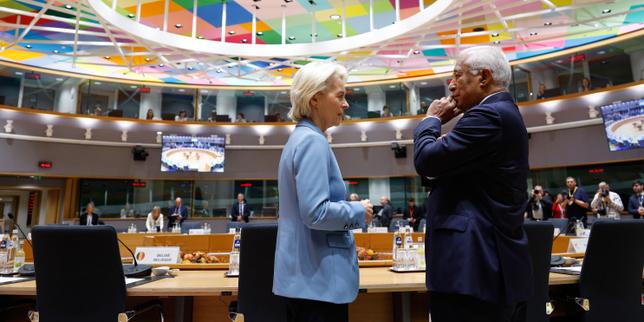
How do you pay for all of that without blowing up national deficits? "Own resources"—dedicated EU revenue streams such as emissions trading revenues, carbon border adjustments, or corporate levies—are supposed to carry part of the load. Yet own resources also require unanimous Council approval and national ratification. Tying Ukraine aid or contentious new levies to the wider MFF deal makes compromise harder, even as European Council President António Costa pushes leaders toward a political breakthrough before year-end.
The 2027 Annual Budget Is Only the Opening Act
It's easy to confuse the annual EU budget for 2027 with the seven-year MFF fight, so let's keep them straight. On November 11, 2026, the Council and European Parliament reached an agreement on the 2027 annual budget—roughly €199.7 billion in commitments and €211.5 billion in payments—ahead of its formal plenary vote scheduled for late November.
That 2027 deal keeps the lights on for the final year of the current 2021–2027 cycle, including extra support for migration management as the Pact on Migration and Asylum rolls out in full and buffers for ongoing crises. Helpful? Yes. Enough to settle the 2028–2034 architecture? Not even close.
The real cliff-edge sits in the summits ahead—starting with the late-November European Council meeting and running toward December 2026. If leaders don't narrow their differences before 2027 campaign season hits full stride, negotiations could drag into a much more unpredictable year. And if an MFF deal stalls too long into 2027, businesses, regions, and researchers face lingering uncertainty over how programs will transition in 2028.
What Businesses, Regions, and Policymakers Should Do Next
If you work in public affairs, regional development, defense, green tech, or cross-border business, waiting until 2028 to pay attention is a mistake. Rules and envelopes take shape during the legislative follow-up to the political deal.
- Track the November–December 2026 Council summits closely. Watch the headline numbers on competitiveness, cohesion, agriculture, and Global Europe, plus any wording on own resources and rule-of-law conditions.
- Map out National and Regional Partnership Plans early. If your organization relies on regional, rural, or transition funding, pay attention to how national governments draft NRPPs and how regional bodies retain influence.
- Stress-test your plans against 2027 political shifts. Build contingency assumptions around key national votes—especially in France—and keep an eye on the European Council's 2028–2034 MFF overview and European Parliament budget briefings for official text updates.
A deal before the end of 2026 won't magically erase Europe's fiscal strain or domestic populism. Still, locking in the framework before 2027's election storm breaks gives the Union its best shot at avoiding a messy stalemate when the next budget cycle begins.