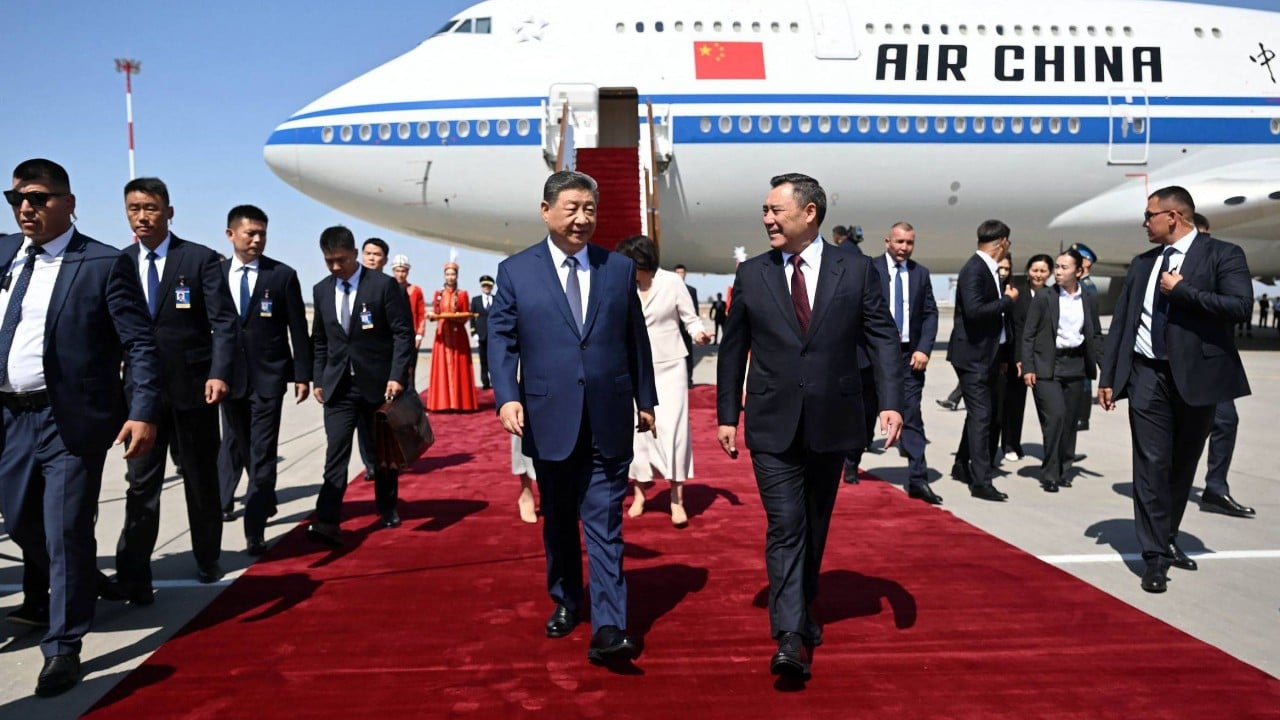
The twenty-fifth anniversary of the Shanghai Cooperation Organisation, marked at the September 2026 summit in Bishkek, forces an analytical shift from diplomatic symbolism to institutional output. Beijing’s grand strategy across Eurasia relies on translating loose continental alignment into durable, operational networks. As participating heads of state convene under Kyrgyz host Sadyr Japarov, the structural friction points of the bloc reveal how China manages the trade-offs between geographical expansion and internal cohesion.
The Three Structural Pillars of Eurasian Integration
China's integration strategy within the bloc operates across three distinct operational layers, each governed by different velocity and resistance variables.
First is the security architecture. Originally forged to resolve post-Soviet border demarcations and demilitarize frontier zones, the mechanism has evolved into a transnational risk mitigation framework. Traditional counter-terrorism mandates now absorb cyber defense, information security, and emerging technology risks. The establishment of specialized institutions—such as the anti-drug center and the universal counter-terrorism platform—attempts to standardize security protocols across states with highly divergent intelligence capabilities.
Second is the physical connectivity vector. The Belt and Road Initiative functions as the arterial network powering Eurasian economic gravity. The ongoing construction of major infrastructural corridors, such as the $4.7 billion China-Kyrgyzstan-Uzbekistan railway, illustrates the shift from maritime dependency to land-based logistics security. This transit axis bypasses maritime chokepoints, embedding Central Asian economies directly into manufacturing and supply chains anchored by Chinese industrial output.
Third is the financial insulation layer. Long-term vulnerability to Western-dominated financial messaging systems has compelled members to accelerate currency diversification. Transactions settled in national currencies—predominantly the renminbi and the ruble—minimize exposure to secondary sanctions. The political consensus to operationalize an independent development bank, formalized initially at the Tianjin summit, provides a dedicated capital allocation vehicle independent of World Bank or IMF conditionalities.
The Cost Function of Multilateral Expansion
While the geographic footprint of the organization has grown to encompass ten full member states alongside a sprawling tier of observers and dialogue partners, enlargement introduces severe organizational drag.
Decision-making within the bloc relies on consensus. As the roster expands to include states with acute bilateral friction—most notably India and Pakistan—the lowest common denominator dictates the ceiling of institutional action. Strategic divergence prevents the bloc from evolving into a collective security treaty or a binding economic customs union. Instead, it functions as a diplomatic clearinghouse where bilateral agreements are signed in the margins of multilateral declarations.
This structural limitation forces Beijing to pursue a hub-and-spoke model. While multilateral forums provide political legitimacy and collective identity, economic and logistical integration relies primarily on bilateral capital deployment and state-to-state contracts. Bishkek acts as the stage for these bilateral bargains, where macro-regional ambitions are converted into micro-economic execution.
The Institutional Bottlenecks
The institutional maturity of the organization faces three operational constraints that restrict its capacity to manage deep continental integration.
- Capital Allocation Gaps: The transition from political consensus to funded mandates remains incomplete. Without a fully capitalized development bank with legally binding capital commitments, infrastructure projects depend on bilateral state loans rather than multilateral syndicate financing.
- Regulatory Asymmetry: Border procedures, technical standards, and customs protocols across Central Asia, South Asia, and East Asia lack harmonization. Physical rail lines cannot eliminate administrative friction at national frontiers.
- Security Spillover Management: Instability originating from peripheral zones, particularly Afghanistan and parts of the Middle East, tests the internal security mechanisms of Central Asian frontline states, requiring continuous resource diversion.
Strategic Outlook
The trajectory of Chinese strategy across Eurasia over the next decade depends on functional pragmatism rather than ideological expansion. The bloc will continue to prioritize logistical corridors, industrial capacity transfer, and payment system resilience over military integration. For Beijing, the utility of the organization lies in its ability to anchor Central Asia as an economically stable, politically sovereign zone that insulates China's western frontier while securing uninterrupted access to continental resources.
Xi arrives in Kyrgyzstan for SCO summit, state visit as Bishkek provides an on-the-ground look at the city preparations and diplomatic engagements defining the 25th-anniversary summit.