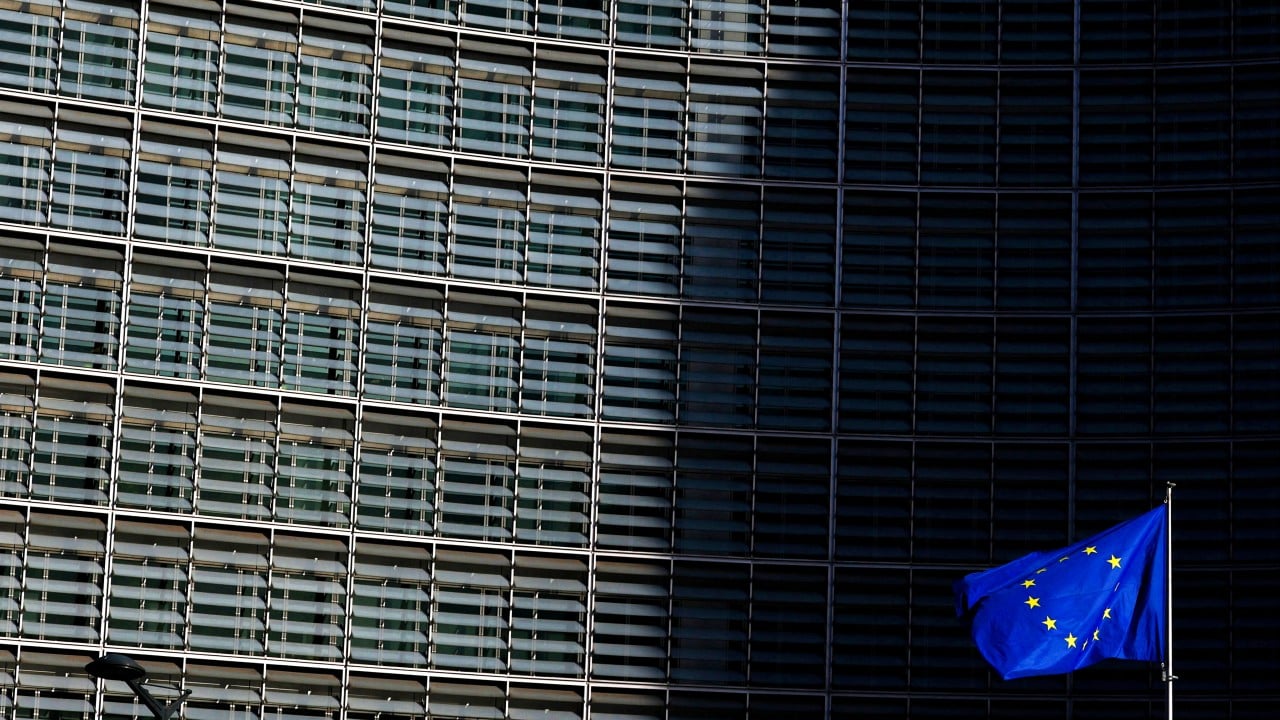
Europe is tired of being the middle child in a messy divorce between Washington and Beijing. For decades, the European Union operated on a simple, perhaps naive, premise. It believed that trade could prevent war and that being a "soft power" superpower was enough to stay relevant. That era is dead. Today, the continent finds itself squeezed by a protectionist United States and an increasingly assertive China. The old joke that Europe is an economic giant, a political dwarf, and a military worm isn't funny anymore. It's a liability.
If you’ve been following the news, you know the pressure is mounting. The U.S. is pulling inward with massive subsidies like the Inflation Reduction Act, lures that are literally sucking European factories across the Atlantic. Meanwhile, China is flooding the European market with cheap electric vehicles and green tech, subsidized to the hilt by the state. Europe is caught in a pincer movement. But the narrative that the EU is just a helpless victim is starting to shift. Brussels is finally putting on its brass knuckles.
The End of Naivety in Brussels
The shift didn't happen overnight. It took a global pandemic and a brutal war on the doorstep to wake the bureaucrats up. Mario Draghi, the former Italian Prime Minister and ECB chief, recently dropped a massive report that basically told European leaders to "get real or get left behind." His message was blunt. Europe needs to invest roughly €800 billion more every year just to keep pace with the U.S. and China.
That’s a staggering number. It’s about 5% of the EU’s total GDP. To put that in perspective, the Marshall Plan after World War II was only about 1% to 2%. We’re talking about a total overhaul of how the European economy functions. For years, Europe relied on cheap Russian energy and an open Chinese market. Both of those pillars have crumbled. Now, the EU is forced to find a third way—one that doesn’t involve being a vassal state to either side.
I’ve watched this play out in the halls of the European Commission. The tone has changed from "how do we cooperate?" to "how do we protect ourselves?" It’s a messy transition. You have 27 different countries with 27 different agendas trying to act as one. Germany wants to keep selling cars to China. France wants "strategic autonomy" (their favorite buzzword for being independent of the U.S.). The Baltics just want to make sure they aren't invaded. Finding a single "hit back" strategy is like herding cats in a thunderstorm.
Weaponizing the Single Market
Europe’s biggest weapon has always been its market. With nearly 450 million relatively wealthy consumers, nobody can afford to be kicked out of the European club. Brussels is finally realizing they can use this as a cudgel.
Take the new Foreign Subsidies Regulation. This is a big deal. It allows the EU to investigate companies from outside the bloc that receive state help and then try to buy European firms or win big government contracts. It’s aimed squarely at China. They’re also rolling out the Carbon Border Adjustment Mechanism (CBAM). It’s essentially a green tariff. If you want to sell steel or cement in Europe, and you produced it in a way that trashed the planet, you’re going to pay a heavy tax at the border.
- Anti-Coercion Instrument: This allows the EU to retaliate with trade restrictions if a country tries to bully a member state (like China did to Lithuania over Taiwan).
- De-risking, Not Decoupling: This is the new mantra. They aren't cutting China off entirely—that would be economic suicide—but they are moving supply chains for critical minerals and chips back home or to "friendly" nations.
- The AI Act: By setting the world’s first major rules on AI, Europe is trying to be the global "referee" even if it isn't the star player on the field yet.
It’s a bold move. But it comes with risks. If Europe gets too protectionist, it risks raising prices for its own citizens. If it doesn't get protectionist enough, its industries will simply vanish. It’s a tightrope walk over a pit of fire.
The American Problem No One Wants to Admit
While everyone talks about China, the relationship with the U.S. is actually the more awkward one. We’re supposed to be best friends. But the U.S. is currently Europe’s biggest competitor for investment. The Inflation Reduction Act (IRA) was a massive wake-up call. It showed that even a "friendly" administration in Washington is perfectly happy to cannibalize European industry to meet its own climate goals.
Energy costs are the real killer. European manufacturers pay three to four times more for electricity than their American counterparts. It’s hard to "hit back" when your basic overhead is so much higher. The EU is trying to respond with its own "Green Deal Industrial Plan," but it lacks the simplicity and the deep pockets of the American version.
There's also the defense issue. For decades, Europe outsourced its security to the Pentagon. Now, with the political winds in the U.S. shifting toward isolationism, there’s a frantic scramble to rebuild European armies. But you can't build a world-class defense industry in a weekend. It takes decades of sustained investment and, more importantly, a unified command structure that doesn't exist yet.
Why Innovation Is the Real Battleground
If Europe wants to stop being a punching bag, it has to stop just regulating and start actually building. The stats are grim. Not a single European company founded in the last 50 years has reached a valuation of $100 billion. In the U.S., that happens every other Tuesday.
The problem isn't a lack of talent. It’s a lack of capital. Europe has plenty of money, but it’s tucked away in boring savings accounts and fragmented national markets. There’s no "Capital Markets Union" yet. If a startup in Berlin wants to scale up, it often has to go to Silicon Valley to find the cash. That means the profits, the talent, and the future taxes all leave the continent.
The Specific Mistakes We Keep Making
- Over-regulation of early-stage tech: We often try to "fix" a technology before it's even been invented.
- National egos: Countries like France and Germany often block cross-border mergers because they want to keep their own "national champions."
- Energy fragmentation: We still don't have a truly integrated power grid, which keeps prices volatile and high.
Honestly, the "hitting back" part isn't about starting a trade war. It’s about cleaning up our own house. If Europe can’t fix its internal market, no amount of tariffs on Chinese EVs will save it.
The Pivot to Global South Alliances
Europe is also realizing it needs more friends. The "Global Gateway" is the EU’s answer to China’s Belt and Road Initiative. It’s an attempt to build infrastructure and digital links in Africa, Latin America, and Southeast Asia. The goal is to offer an alternative to Chinese debt-trap diplomacy while securing the raw materials needed for the green transition.
It’s a smart play, but it’s late. China has been on the ground in these regions for twenty years. Europe is showing up to the party with a nice tie and a briefcase, but China already bought the bar and the sound system. To win here, Europe has to prove it’s a better partner—one that brings high standards and sustainable jobs, not just loans.
The Hard Truth About European Unity
Can Europe actually do this? The math says yes. The politics say maybe. The EU is still the world's largest trading bloc. It has a massive pool of skilled labor and some of the best infrastructure on the planet. But it’s haunted by the "unanimity" rule. Currently, a single country like Hungary can veto major foreign policy moves or funding packages.
To truly hit back, the EU needs to move toward "qualified majority voting" on things like taxes and foreign policy. That’s a hard sell. It requires nations to give up a slice of their sovereignty. But as the world shifts toward a "might makes right" mentality, a fragmented Europe is just a collection of small targets.
You're seeing a new kind of leader emerge in Brussels—one that's less interested in lecturing the world on values and more interested in defending interests. It’s a darker, more pragmatic version of the European project. It might be less inspiring than the old "Ode to Joy" idealism, but it’s much more likely to survive 2026.
Your Move as a Business or Investor
If you're operating in this environment, don't wait for a unified European response. It’s going to be "lumpy." Some sectors, like defense and green energy, will see massive state support. Others will be left to fend for themselves.
Keep a close eye on the "Report on the Future of the Single Market." It's the blueprint for the next five years. Look for shifts in competition law. The EU is likely to start allowing bigger mergers that would have been blocked in the past, specifically to create companies that can actually fight on a global scale.
The days of the passive European market are over. Whether the "hit back" actually lands or just results in a self-inflicted wound depends entirely on whether Paris and Berlin can stop bickering long enough to realize they’re in the same boat. And that boat is currently taking on water.
Start by diversifying your own supply chains away from single-point failures in China. Look into the European Chips Act subsidies if you're in tech. Most importantly, stop treating the EU as a monolithic slow-mover. In the next 24 months, the regulatory changes coming out of Brussels will be faster and more aggressive than anything we've seen in the last two decades.


