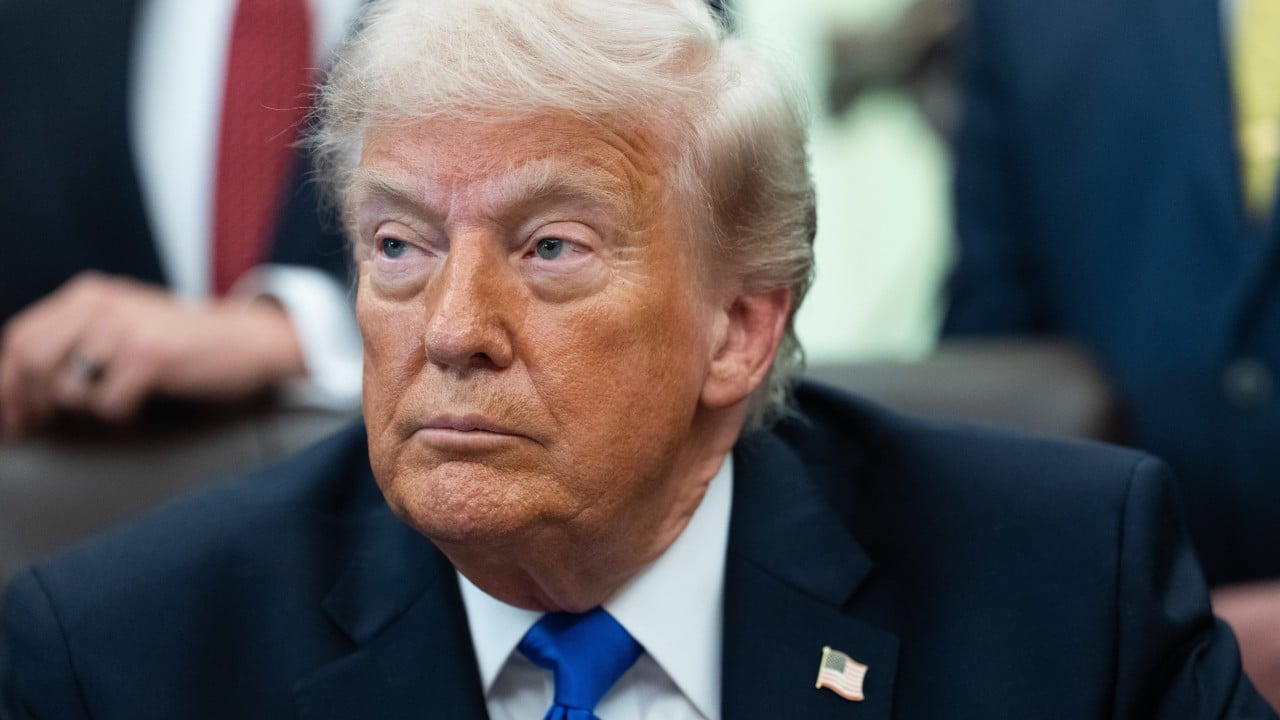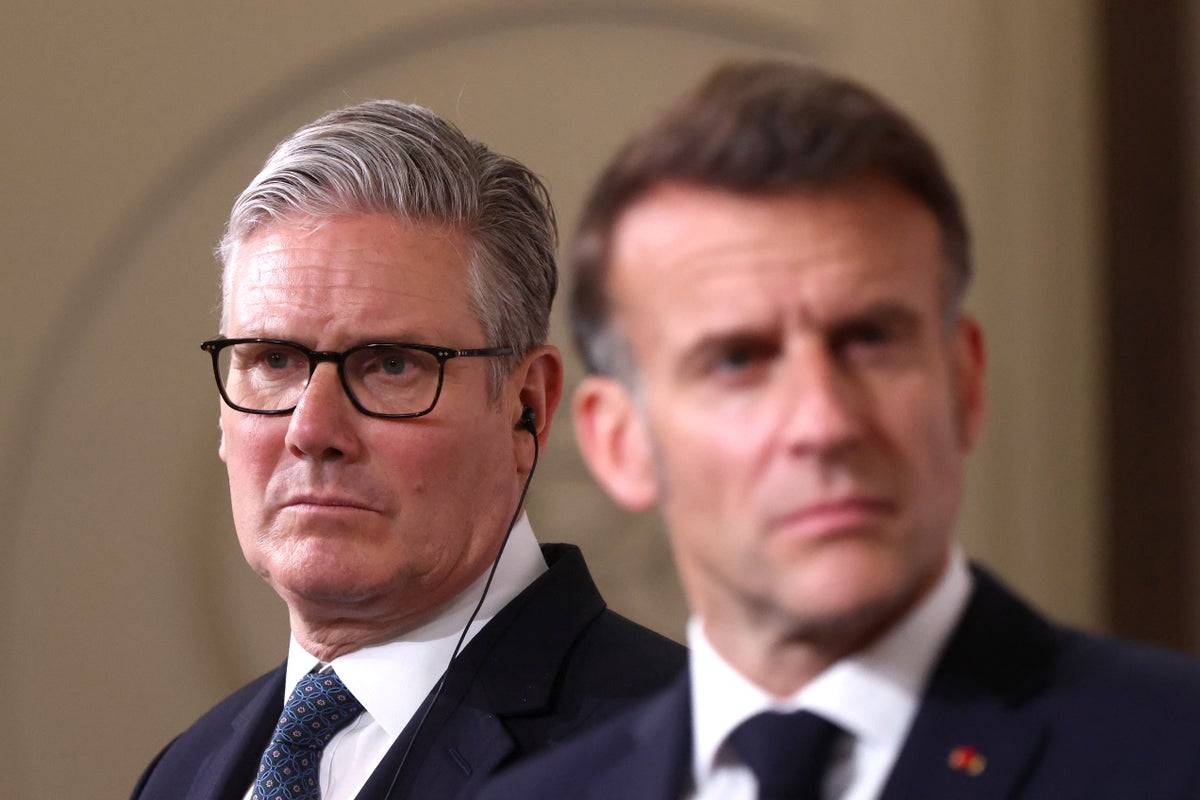
The legacy media is currently obsessed with a fairytale. They are painting a picture of a brave, independent Europe—led by London and Paris—stepping up to police the Strait of Hormuz while a "disruptive" Donald Trump tells NATO to take a hike. It is a neat, cinematic narrative. It is also a total fabrication of geopolitical reality.
When the UK and France vow to protect global shipping lanes without the heavy hand of the United States, they aren't showing strength. They are performing a high-stakes piece of theater for a domestic audience. They are pretending that a handful of frigates and some sternly worded diplomatic cables can secure the world’s most volatile energy chokepoint.
They can’t. And the "useless" label Trump throws at NATO isn't just a campaign slogan; it’s a blunt diagnosis of a dependency crisis that Europe refuses to acknowledge.
The Myth of the Independent Frigate
Let’s look at the math. The Strait of Hormuz is roughly 21 miles wide at its narrowest point. Through it flows about 20% of the world's total oil consumption. To "protect" this, you don't just need a boat with a flag on it. You need a massive, integrated network of signals intelligence, satellite surveillance, subsurface detection, and—most importantly—the credible threat of overwhelming escalatory force.
The Royal Navy is currently at its smallest size in centuries. The French Marine Nationale is capable, but stretched thin across global territories. When these powers talk about a "European-led" mission, they are ignoring the plumbing. Who provides the high-altitude persistent surveillance? Who owns the deep-water salvage assets? Who provides the Aegis-level missile defense umbrella that prevents a swarm of fast-attack craft from turning a billion-dollar destroyer into a burning hulk?
The answer is always the Americans.
I have watched policy wonks in Brussels and London talk about "Strategic Autonomy" for a decade. It is a buzzword used to mask a lack of investment. By claiming they can handle the Strait of Hormuz, the UK and France are engaging in a dangerous bluff. They are betting that Iran or non-state actors won't call it. If a British tanker is seized and the US Navy stays over the horizon because the Europeans "have this," the sheer inadequacy of European power projection will be exposed in hours, not days.
Trump is Right About the Incentive Structure
The outrage over Trump’s rhetoric regarding NATO is performative. Critics claim he is undermining the "rules-based order." In reality, he is highlighting a classic economic problem: the Free Rider Effect.
NATO was designed as a collective defense pact against a monolithic land power. It has been repurposed as a general-purpose security blanket for nations that would rather fund expansive social programs than maintain a functional blue-water navy. When Trump calls the alliance "useless" in the context of out-of-area operations like the Strait of Hormuz, he is pointing out that the current structure incentivizes European weakness.
If you know the neighbor will pay for the security system and the patrol dogs, you aren't going to buy a lock for your own door.
The UK and France vowing to protect shipping is a desperate attempt to prove they are still "Great Powers." But true power isn't a vow. It’s the ability to sustain a combat presence for six months without begging for American mid-air refueling. Right now, most European NATO members can’t even move an armored division across their own continent without US logistical support.
The Hormuz Reality Check
People also ask: "Can Europe secure the Strait of Hormuz?"
The honest, brutal answer is no. Not without the US Fifth Fleet providing the backbone.
Shipping insurance markets know this. Lloyd’s of London doesn't set premiums based on French diplomatic "vows." They set them based on the presence of Carrier Strike Groups. If the US actually followed Trump’s isolationist impulse and "stayed away," the cost of shipping oil through that strait would triple overnight, regardless of how many European flags were flying in the water.
This is the nuance the competitor article missed. They framed it as a clash of personalities—Trump vs. the Statesmen. It isn't. It is a clash between the reality of power and the fantasy of prestige.
The British and French are trying to use a 19th-century maritime strategy in a 21st-century asymmetric environment. In the 1800s, showing the flag was enough. In 2026, showing the flag against anti-ship ballistic missiles and autonomous drone swarms is just providing a target.
The Cost of the Bluff
There is a downside to my cynical view. If Europe stops pretending and admits it can't do this, it gives the US total leverage over European energy security. It confirms that the "European Project" is a subsidiary of the American security state.
But honesty is cheaper than a sunken frigate.
By pretending they can handle the Strait of Hormuz, London and Paris are giving Washington an excuse to leave. They are handing the "America First" crowd exactly what they want: a reason to say, "Fine, you handle it."
We saw this in Libya in 2011. France and the UK pushed for the mission. Within weeks, they ran out of precision-guided munitions. They had to go to the Pentagon with their hats in their hands to ask for more bombs. That was against a third-rate military power on Europe's doorstep. The Strait of Hormuz is a different league entirely.
Stop Asking for Autonomy, Start Buying Capability
The conversation shouldn't be about whether NATO is "useless" or if Europe should "protect" shipping. Those are the wrong questions.
The real question is: Are European taxpayers willing to double their defense budgets to actually achieve the autonomy their leaders keep bragging about?
If the answer is no—and it almost certainly is—then the UK and France need to stop making "vows" they can't keep. They should stop trying to "disrupt" the US-led security architecture with half-baked maritime missions that only serve to irritate their primary protector.
The Strait of Hormuz is not a stage for post-Brexit British relevance or French "Grandeur." It is a vital artery of the global economy. Treating it like a PR opportunity to clap back at Trump is the height of strategic illiteracy.
Europe doesn't need a "European-led mission." It needs a reality check. It needs to realize that you cannot outsource your soul to the American military-industrial complex for 80 years and then expect to be taken seriously as an independent guardian of the seas.
If you want to play the game of empires, you have to bring more than just a vow to the table. You have to bring the steel. Until then, stay out of the way and pray the "useless" alliance stays intact.
Stop pretending the frigates are enough. They aren't. And the world knows it.