European taxpayers are footing a massive bill because organized crime groups treat national borders like minor speed bumps. A recent report from the European Court of Auditors reveals a staggering annual fiscal loss of roughly 13 billion euros due to illegal tobacco. When governments crank up excise duties to push smoking rates down, they inadvertently build a goldmine for counterfeiters and smugglers. You end up with a severe economic paradox where higher taxes fail to fill public coffers, feeding criminal networks instead.
The Anatomy of Europe's Illicit Trade
Smuggling isn't just about someone bringing an extra carton back from a holiday trip. It involves industrial-scale operations. Transnational criminal networks now set up hidden manufacturing hubs directly inside European Union territory. They import raw leaf tobacco, buy heavy-duty cutting machinery, and churn out counterfeit versions of major cigarette brands close to major consumer markets.
The incentives are ridiculously high. Producing a pack of cigarettes costs very little, but selling it on the streets of Paris, Berlin, or Madrid yields enormous profit margins once you bypass local taxes.
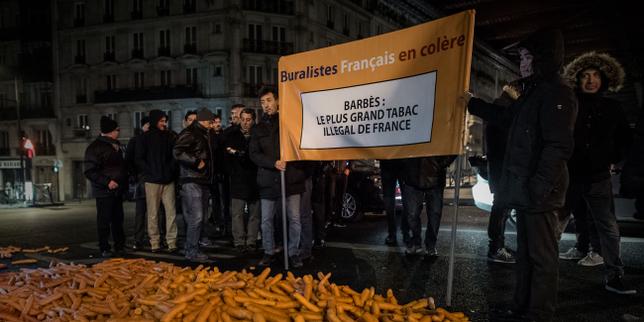
Consider how the math works in places like France, where a standard pack crosses the 13 euro threshold. More than 80 percent of that price consists of government taxes and levies. If you can undercut that official price by selling untaxed or counterfeit goods for half the cost, buyers on tight budgets will naturally look away from licensed tobacconists. The legal retail networks shrink, official sales volume drops, and expected tax revenues vanish into thin air.
Why Current Border Controls Fall Short
National customs agencies are trying to plug a leaky dam with their bare hands. While the European Union possesses framework agreements and anti-fraud offices like OLAF, enforcement remains heavily fragmented.
Each member state guards its own borders and manages its own tax collection priorities. Smugglers exploit these structural seams ruthlessly. If port security tightens in Rotterdam, containers simply shift toward smaller harbors in Southern or Eastern Europe.
Corruption plays a quiet but devastating role here. Billions in illicit cash allow criminal syndicates to bribe logistics workers, freight operators, and border guards. When local enforcement lacks coordinated intelligence sharing across borders, catching a few street-level dealers becomes a hollow victory. The masterminds simply replace their supply chains overnight.
The Policy Trap Facing Brussels
Brussels finds itself caught in an impossible balancing act. Public health advocates demand continuous tax hikes to make smoking economically unviable, especially for younger demographics. Finance ministries rely on those exact same sin taxes to balance national budgets.
Yet, economic reality keeps breaking theoretical models. Once tax pressure pushes retail prices past a certain psychological tipping point, the parallel market explodes. Consumers don't necessarily quit; they adapt. They buy cheap imports from neighboring regions with lower duties, or they purchase illegal counterfeits from underground channels.
Fixing this crisis requires more than just printing harsher warnings on legal packaging or raising duties another notch. Lawmakers need a unified European approach that targets the actual financial flows and raw material suppliers feeding the underground factories. Until enforcement agencies dismantle the industrial infrastructure behind the black market, those billions will keep leaking straight out of the EU budget.