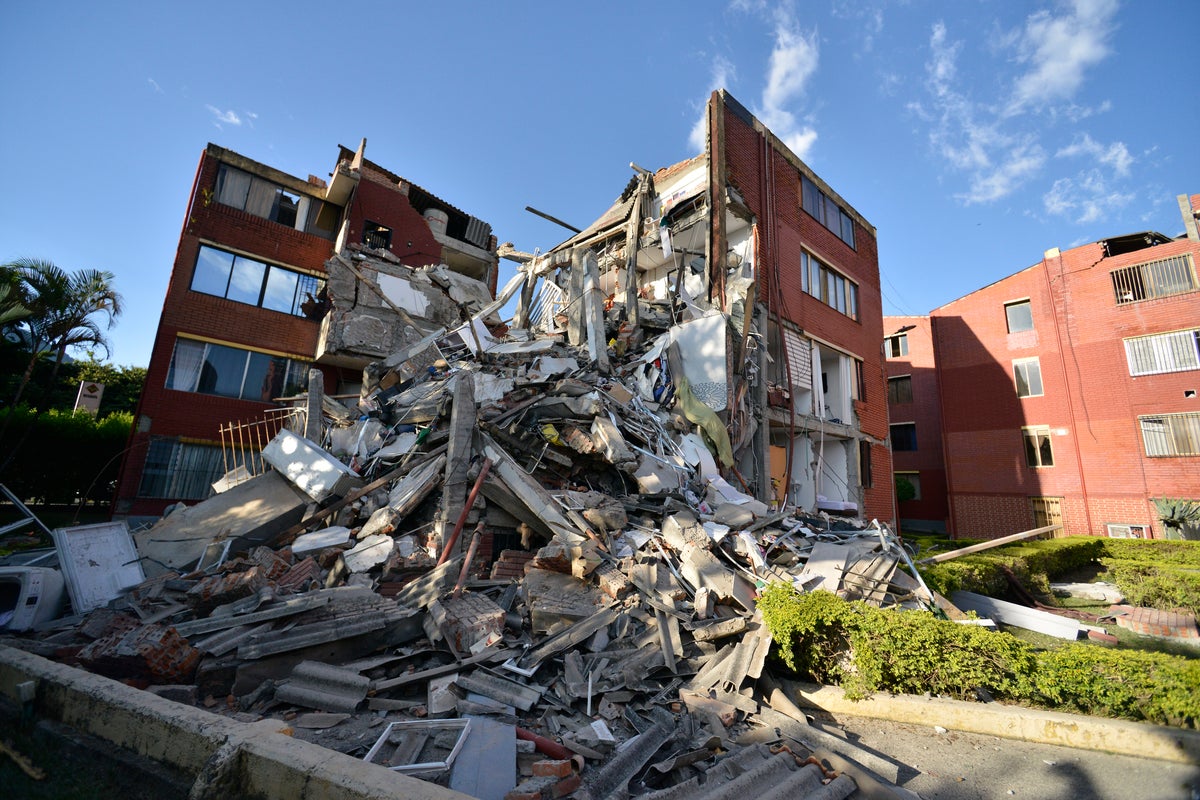
The Death Toll is a Symptom of Architectural Ignorance Not Nature
Every single time the ground shakes and buildings pancake, the media rolls out the exact same exhausted script. We get grainy helicopter footage of dust clouds, a somber anchor standing in front of a jagged pile of concrete, and a chorus of politicians offering thoughts and prayers for the victims of a natural disaster.
Stop calling earthquakes natural disasters.
They are man-made structural failures. When a 7.4 tremor rips through a region like Colombia and leaves a trail of over 160 dead, the lazy consensus blames the tectonic plates. We treat the magnitude scale as an absolute death sentence, as if Mother Nature personally targeted masonry schools and unreinforced brick apartments.
I have spent two decades walking through disaster zones after the dust settles. I have watched engineers weep over code violations that should have landed contractors in prison long before a fault line shifted. The geology is indifferent. The human engineering decisions are lethal.
When you look at the recent headlines screaming about the latest Colombian earthquake, notice what the mainstream coverage conveniently omits. They report the casualty count like a lottery draw of fate. They never ask why a magnitude 7.4 in a seismically active belt causes catastrophic structural collapse while identical energy releases in regions with stringent seismic codes result in zero fatalities and cracked drywall.
The lazy narrative says we are helpless against subterranean violence. The reality is far more cynical: we refuse to pay for what we know works because concrete is cheap, permits are negotiable, and dead people do not file lawsuits.
The Myth of Seismic Preparedness
Let us dismantle the core falsehood driving disaster management today: the belief that emergency response is more important than seismic prevention.
Governments pour billions into post-disaster relief funds, search and rescue squads, and temporary tent cities. It makes for fantastic photo-ops. A president in a hard hat surveying rubble looks decisive. But emergency response is an admission of failure. If you are deploying rescue dogs, your building codes already failed ten years prior.
Consider the economics of construction. Developers love to cut corners on shear walls and steel reinforcement because those elements do not rent for an extra dollar per square foot. Buyers and tenants do not probe foundation integrity with an ultrasound scanner; they look at granite countertops and open-concept floor plans.
When a major tremor hits, gravity exploits every single shortcut taken by the lowest bidder. The physics are simple and unforgiving. Unreinforced masonry has virtually zero tensile strength. When horizontal shear waves hit an aging brick structure, the walls blow outward, the roof drops like a guillotine, and the interior becomes a tomb.
Yet, public discourse fixates on evacuation drills. Duck and cover. Drop, hold on, and pray.
Imagine a scenario where a corporate CEO tells their shareholders that instead of installing fire suppression systems, they will just train employees to run faster toward the exit. You would call them criminally negligent. Yet that is precisely our national policy for earthquakes. We spend our collective budget on band-aids while ignoring the hemorrhage.
The Cost of Complacency
People love to ask why high-risk countries do not simply retrofit every building overnight. The usual excuse is economic paralysis. Retrofitting is expensive, disruptive, and politically unpopular.
Let us be brutally honest about those priorities. We can fund multi-billion-dollar vanity projects, sports stadiums, and bloated bureaucratic agencies, but upgrading the structural integrity of residential housing stock is deemed too costly. We are not short on capital. We are short on spine.
When buildings collapse in a 7.4 tremor, the blood is on the ledger of municipal regulators who looked the other way during inspection sign-offs. Bribery, lax enforcement, and grandfathered exemptions for historical or low-income housing create zones of absolute vulnerability.
The disparity in survival rates along fault lines is almost entirely a function of income inequality and regulatory corruption. Wealthy enclaves mandate base isolation pads, viscous dampers, and high-grade ductile steel frames. Impoverished neighborhoods get hollow-core cinder blocks and hand-mixed mortar that turns to powder under a moderate shake.
The media calls this a tragedy. It is a class audit.
Unconventional Truths for the Next Tremor
If we want to stop writing obituaries for hundreds of people every time the earth moves, we have to flip our entire framework upside down.
First, criminalize structural negligence. If a commercial or residential building collapses under a predictable seismic load because the owner skimped on rebar or ignored code, treat it as manslaughter. The corporate veil must tear just as easily as substandard concrete. Once jail time replaces administrative fines for negligent developers, structural integrity will improve overnight.
Second, pivot every dollar of post-disaster relief lobbying into pre-disaster retrofitting grants. Subsidize shear wall installations and seismic bracing for vulnerable structures before the fault line ruptures. It is cheaper to retrofit a school today than to rebuild it and bury its students tomorrow.
Third, ban the phrase natural disaster from official reporting. Language matters. When we categorize earthquakes as acts of God, we absolve ourselves of responsibility. Call them what they are: structural homicide caused by municipal greed and engineering cowardice.
The ground is going to shake again. That is a geological certainty. Whether the next 7.4 tremor results in a graveyard or a minor inconvenience is entirely up to us.
Stop building tombs. Stop accepting the body count as inevitable.
Tear down the buildings that will kill us next, and build something that actually stands.