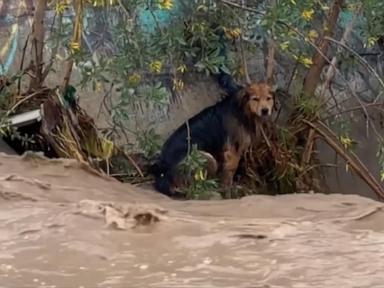
Every single time a heavy downpour turns a suburban street into a navigable rapid, the media treats us to the exact same theatrical performance. A drone hovers above churning brown water. A local news anchor adopts a breathless, trembling cadence. They point a collective finger at a stranded dog shivering on a porch roof or clinging to a submerged mailbox. Then comes the triumphant climax. A boat of orange-clad technicians paddles through the chaos, hoists the animal into safety, and the nation exhales in unison. Cue the heartwarming music.
Stop cheering. Also making headlines in this space: Stop Blaming The Police For Broken Tech Laws.
That rescue is not a victory. It is an indictment.
Every viral video of a heroic pet extraction from raging floodwaters represents a systemic breakdown of municipal planning, civil engineering, and basic ecological stewardship. We have normalized building in retention basins, paving over natural drainage corridors, and ignoring watershed management to the point where Mother Nature treats our subdivisions like spillways. Then, instead of fixing the concrete-bound choke points causing the flood in the first place, we turn a blind eye to the structural rot and award ourselves medals for pulling a Golden Retriever out of a six-foot vortex. Additional information regarding the matter are covered by The Washington Post.
We love the theater of the rescue because it absolves us of the responsibility for the catastrophe.
The Problem With Our Obsession Over Symptoms
When a dog gets stranded in a flash flood, the internet floods with sympathy. Rightfully so. No one wants to see an animal drown. But look closer at the discourse surrounding these viral moments. The entire narrative focuses on individual heroism—the guy with the kayak, the firefighter wading through chest-high debris, the shelter taking in wet-furred refugees.
Notice what is missing from every single one of those reports? Accountability.
Nobody asks why the creek behind the subdivision rose six feet in forty minutes. Nobody investigates why the local zoning board approved high-density townhomes on a designated wetland twenty years ago. Nobody holds the municipal drainage district responsible for blocked culverts choked with decades of accumulated municipal litter and silt.
Instead, we treat recurring urban floods like acts of God. They are not acts of God. They are acts of municipal negligence wrapped in cheap asphalt and poor zoning laws.
I have watched cities spend millions of dollars in emergency response overtime, boat fuel, and animal control resources for a single storm event, while the local public works department consistently defunds routine drainage clearing. It is a shell game. We underinvest in preventative infrastructure so we can over-dramatize emergency responses for the evening news cycle.
Imagine a scenario where a city invests one-tenth of its emergency disaster budget into upgrading permeable pavement mandates and restoring upstream wetlands. The floodwaters never reach the front porch. The dog stays dry on the living room rug. The kayak stays in the garage. But that model doesn't generate likes on social media, so the asphalt keeps pouring and the creeks keep rising.
Decoding the Reality of Flash Flooding
To understand why these rescues are happening with terrifying frequency, you have to look at how water moves through an engineered landscape. Water does not care about your property tax bracket or your homeowners association rules. It obeys gravity and saturation limits.
When developers replace soil, trees, and native grasses with roofs, parking lots, and concrete, they eliminate the earth's natural sponge. Hydrologists call this impervious surface cover. In many modern suburban developments, impervious cover exceeds sixty to eighty percent. When a heavy rain event hits, that water has nowhere to soak in. It accelerates off roofs and asphalt, channeling directly into local streams at velocities those channels were never designed to handle.
The result is the urban flash flood. A storm that fifty years ago would have resulted in a gentle rise in a creek now turns that same creek into a battering ram of debris and silt within minutes.
When people ask why flash floods are happening in neighborhoods that never used to flood, the answer is simple: upstream development stole your margin of safety. Every new strip mall parking lot paved five miles upstream is a down payment on your dog getting stranded on a roof downstream.
Yet, when the water recedes, the conversation immediately pivots back to how sweet the firefighters were to the rescued poodle. We praise the band-aid while the wound festers.
The Uncomfortable Truth About Pet Disaster Preparedness
Let us talk about the pet owners for a moment. This is where my contrarian stance cuts both ways, because the public loves to blame the weather, but pet owners often commit cardinal sins of negligence under the guise of being surprised.
If you live in a designated flood zone—or anywhere near a body of water that has a history of seasonal overflow—and you leave your dog tied to a chain in the backyard when a flash flood warning is issued, you are not a victim of circumstance. You are an irresponsible guardian.
Emergency management agencies publish flood maps, issue severe weather alerts days in advance, and broadcast evacuation warnings via cell towers. If you are waiting until the water is lapping at your back door to figure out how to get your German Shepherd into a crate or a boat, you have failed the fundamental contract of pet ownership.
Animals do not possess the cognitive architecture to assess regional hydrological threats. They rely entirely on human foresight. When a dog is shivering on a roof, it is almost always because a human being failed to evacuate early, failed to secure an emergency pet kit, or failed to recognize that a basement apartment or ground-floor patio is a death trap during a localized cloudburst.
We excuse this behavior because of the happy ending. The dog is saved, the owner cries tears of relief on camera, and everyone goes home to dry off. But the underlying incompetence gets rewarded.
Dismantling the Rescue Industry Complex
There is another uncomfortable layer to this phenomenon: the disaster tourism and savior complex that social media has birthed.
In the age of viral video algorithms, an animal rescue is high-yield content. Organizations, independent influencers, and local agencies quickly learn that dramatic footage of a swift-water extraction drives engagement, donations, and brand visibility. While many rescue workers are genuinely dedicated professionals operating out of altruism, the broader ecosystem profits from catastrophe.
When emergency response budgets swell precisely because disasters are frequent and dramatic, the financial incentive to invest in preventative infrastructure quietly evaporates. Why fix a drainage basin when a dramatic boat rescue gets your department featured on the national news?
This perverse incentive structure keeps us trapped in a loop of reactive firefighting. We spend billions on emergency recovery and zero on resilience.
How to Actually Stop the Crisis
If you are tired of watching helpless animals pulled from rising waters while local politicians nod solemnly and promise to "look into it," you need to stop accepting the narrative of inevitability.
Here is what needs to happen, starting today:
First, audit your local zoning laws. Push your city council to ban further development within five hundred feet of natural waterways unless developers can prove zero net increase in runoff volume.
Second, demand green infrastructure bonds instead of more retention ponds that double as mosquito breeding grounds. Bioswales, rain gardens, and restored wetlands absorb water at the source rather than funneling it downstream into someone's backyard.
Third, take personal inventory. If your home or apartment is susceptible to rapid flooding, build a disaster plan that includes your pets before the sky turns black. Do not wait for a man in a wetsuit to paddle up to your porch.
The next time you see a viral video of a dog rescued from a raging flood, do not smile and scroll away. Look at the churning brown water. Realize it is there because we valued concrete over common sense. And resolve to fix the system that put that animal on the roof in the first place.
Stop celebrating the rescue. Fix the flood.