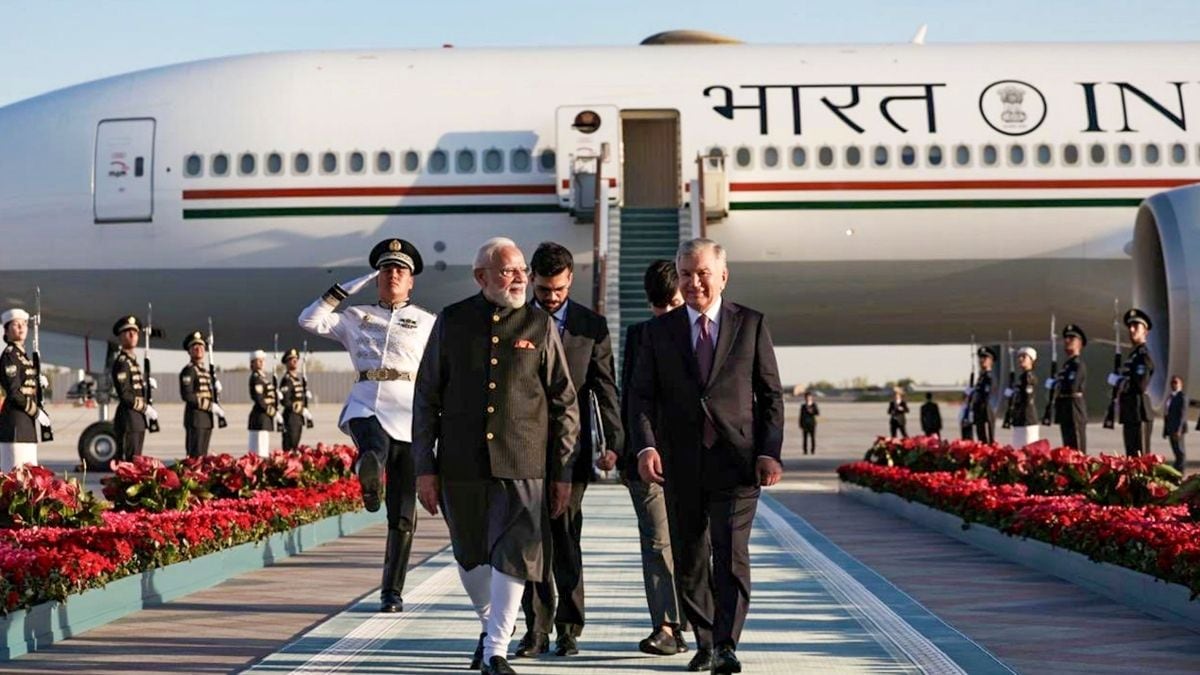
Every mainstream column written about Prime Minister Modi touching down in Tashkent reads like a high school civics textbook printed in 1995. You get the standard bureaucratic boilerplate. Strategic partnerships. Shared civilizational ties. Enhanced connectivity corridors. Handshakes on red carpets, carefully orchestrated photo-ops, and solemn nods toward regional stability.
It is completely, uselessly off base.
When leaders of major economies fly to Tashkent to meet Shavkat Mirziyoyev, the conversation is not about poetry, shared history along the Silk Road, or cultural exchanges. It is a raw, unvarnished scramble for resource logistics and hard-nosed supply chain hedging. Uzbekistan sits at the geographical hinge of Eurasia. If you think New Delhi’s primary driver in Central Asia is diplomatic vanity, you have completely missed how modern trade actually survives a fracturing global economy.
I have spent the better part of two decades watching foreign ministries misread regional diplomacy through the soft lens of friendship while corporate risk officers quietly sweat over transit bottlenecks. Let us clear away the diplomatic fog and look at the brutal mechanics of what is actually happening behind closed doors.
The Faulty Premise Of Historical Brotherhood
The laziest narrative in international journalism is the "historical ties" trope. Commentators love to point out that Babur, founder of the Mughal Empire, started his journey in Fergana, right in modern Uzbekistan. They talk about Sufi shrines, Bollywood films playing in Tashkent bazaars, and ancient trade routes.
None of that moves a single ton of cargo across a hostile border.
Geopolitics is not driven by nostalgia. It is driven by geographic claustrophobia. India is a massive manufacturing aspirant trapped behind a geopolitical wall. To its west sits a permanently hostile neighbor that blocks direct overland access to Central Asia and energy-rich markets beyond. To its east and north lie Himalayan flashpoints. New Delhi’s land route to the resources it desperately needs is effectively severed.
When Modi shakes hands with Mirziyoyev, India is not celebrating a shared past. India is desperately trying to punch a hole through a landlocked barrier.
The Logistics Nightmare Nobody Wants To Discuss
To understand why these bilateral summits matter, you have to look at a map with the eyes of a supply chain director rather than a diplomat. The International North-South Transport Corridor and the Chabahar Port in Iran are frequently touted as the magic keys unlocking Central Asia.
They are moving at a glacial pace.
Talk to anyone who has tried to ship commercial containers from Mumbai through Iran's Bandar Abbas, up through Turkmenistan or directly into Uzbekistan, and you will hear a different story. Sanctions compliance headaches, disjointed rail gauges, fragmented insurance regimes, and atrocious turnaround times turn every shipment into a gamble.
Uzbekistan understands this better than anyone else. Mirziyoyev has quietly transformed his country from an inward-looking Soviet relic into a hyper-active transit reformer. Tashkent wants to be the logistics hub of the interior continent. They are pushing hard for the Trans-Afghan railway project—a rail line connecting Termez in Uzbekistan through Afghanistan to Pakistan’s ports.
Here is the cynical reality check the mainstream press ignores: that railway relies on stability in Kabul. Anyone telling you that trade routes through Afghanistan are secure anytime soon is selling you a fantasy. Yet, New Delhi has to hedge its bets anyway. Engaging Uzbekistan is the only viable political lever India has to keep a foot in the Central Asian door while major powers like China and Russia carve up the northern sectors of the continent.
Energy Is Only Half The Equation
When pundits discuss India-Uzbekistan talks, they usually mutter something about uranium. It is true. India signed long-term uranium supply deals with Tashkent years ago to fuel its civilian nuclear program. But reducing this bilateral relationship to yellowcake uranium is dangerously shortsighted.
The real game is critical minerals and pharmaceuticals.
Uzbekistan sits on immense, largely underexplored deposits of copper, gold, molybdenum, and lithium. As global electronics and electric vehicle supply chains decouple from single-nation dominance, every industrial economy is hunting for alternative mineral sources that are not tied to Beijing's industrial chokehold.
At the same time, Indian pharmaceutical companies have spent years building a massive footprint in Tashkent. Generic drugs from Indian manufacturers form a staggering share of the Uzbek healthcare market. This is not charity; it is high-margin economic dominance disguised as health cooperation.
The Regional Chessboard
We need to talk about the elephant in the room that everyone politely avoids mentioning in official communiques: Beijing.
China’s Belt and Road Initiative has deeply embedded Chinese infrastructure and debt across Central Asia. For decades, Russia treated the region as its exclusive backyard, while Beijing quietly bought up energy rights and built pipelines running east.
Where does India fit into this duopoly?
India cannot out-spend China in Central Asia. New Delhi does not possess the state-directed capital reserves or the appetite to fund massive, unviable infrastructure projects the way Beijing does. India’s strategy has to be surgical. It relies on digital public infrastructure, pharmaceutical reliability, educational ties, and targeted high-tech investments.
When Modi engages Mirziyoyev, he is offering an alternative center of gravity. It is a minor pole, certainly, but for a nation like Uzbekistan, balancing between Russia, China, and India is a matter of basic national survival. Tashkent does not want to be a vassal state to Beijing or Moscow. Partnering with India provides a crucial diversification vector.
What Actually Matters Moving Forward
If you are evaluating the success of these high-level diplomatic visits, ignore the joint statements promising enhanced cultural cooperation and youth exchanges. Those are written by middle-ranking bureaucrats to fill press quotas.
Look at three metrics only:
- Progress on simplified transit protocols that bypass bureaucratic extortion at border crossings.
- Direct banking and currency settlement mechanisms that sidestep Western sanctions regimes without triggering secondary penalties.
- Actual extraction and processing agreements for critical industrial metals rather than loose memoranda of understanding.
Stop treating international summits as social mixers for heads of state. They are high-stakes corporate boardrooms where sovereign nations negotiate their survival in a collapsing unipolar order.
India’s engagement with Uzbekistan is a desperate, calculated gamble against geography. Either New Delhi succeeds in carving out a secure overland corridor to the heart of Eurasia, or it remains permanently caged on the edge of its own continent.
That is the story. The rest is just noise.