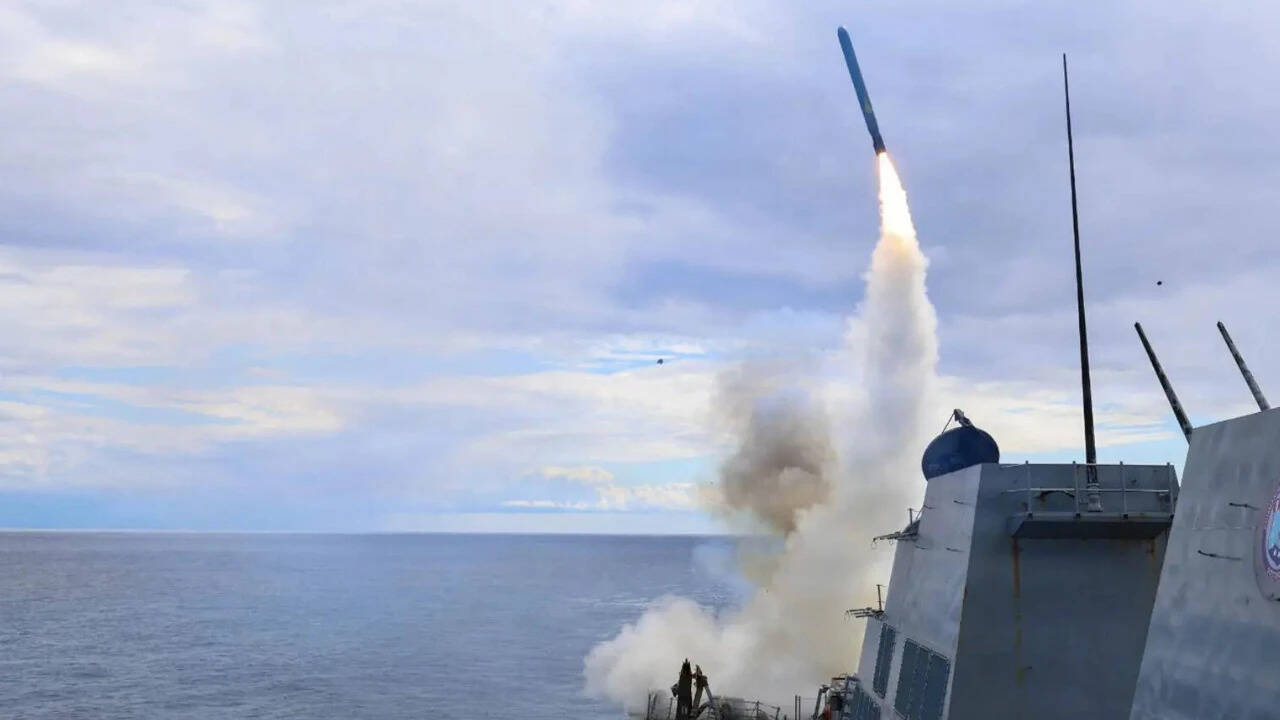
The media wants you to believe that a cruise missile slamming into Larak Island or a drone scratching paint off a regional logistics hub marks a dangerous escalation in a long-standing tit-for-tat. That narrative is lazy, comfortable, and fundamentally wrong.
When the nightly news blares about broken ceasefires and weeks-long lulls ending with dramatic nocturnal flashes in the Strait of Hormuz, they are selling a movie script. Real statecraft and modern military logistics operate on a colder, much less cinematic wavelength. The conventional analysis treats every exchange as an emotional outburst, a diplomatic failure, or a step closer to total regional combustion.
Strip away the theater. Look at the actual telemetry, the maritime insurance spikes, and the quiet redirection of container ships around the Cape of Good Hope. You will find that these strikes are not escalations of chaos. They are calculated boundary checks within a deeply rigid, highly institutionalized economic cage.
The Myth of the Unpredictable Middle East Theater
Every time a military installation absorbs a barrage or an offshore island takes a hit, pundits dust off the same tired cliches about powder kegs and volatile flashpoints. They talk as if commanders wake up, roll dice, and decide which patch of sand to incinerate next.
I have spent years watching supply chains fracture and re-route while bureaucrats in Washington and Tehran exchange choreographed salvos designed strictly for domestic consumption. The reality is that modern kinetic exchanges between heavily sanctioned states and superpower expeditionary forces are bounded by strict parameters. Both sides know exactly where the red lines sit because they drew them together through years of silent, bloody negotiation.
When a strike hits Larak Island, it is not a random act of aggression. It is a localized pressure release valve. It communicates tactical reach without crossing the threshold that invites total financial annihilation or systemic oil supply collapse. To call this an unpredictable escalation is to misunderstand the entire machinery of modern asymmetric deterrence.
Why the Retaliation Cycle is Actually a Stabilizing Mechanism
Here is the counter-intuitive truth that nobody in the foreign policy establishment wants to admit: controlled kinetic exchanges keep the peace by preventing a much worse catastrophe.
Imagine a scenario where one side absorbs endless economic strangulation or regional proxy pressure without ever answering back kinetically. Total war breaks out within six months because the aggrieved party feels backed into a corner with zero face-saving exits. Controlled, low-casualty strikes act as a pressure valve. They allow a regime to check a box for domestic hardliners, prove capability to adversaries, and immediately return to the negotiating table through back channels.
The lazy consensus is that every explosion brings us closer to midnight. The empirical reality is that predictable, limited violence absorbs the energy that would otherwise accumulate into a catastrophic conflagration.
Conventional View: Strike -> Escalation -> Total War
Actual Reality:    Strike -> Signaling -> De-escalation via Backchannels
We need to stop confusing noise with signal. A missile strike that damages an empty warehouse or a barren stretch of coastline is not a sign that deterrence has failed. It is a sign that deterrence is working precisely as intended. Both capitals are shouting at the top of their lungs while carefully avoiding touching each other's throats.
The Logistics Nobody is Talking About
While the talking heads obsess over the fireball graphics on cable news, the real battle is happening in spreadsheet cells tracking insurance premiums and bunker fuel costs.
Insurance syndicates in London do not care about political rhetoric. They care about hull risk. The moment a strike hits anywhere near the Strait of Hormuz, the cost of moving a supertanker ticks upward by a calculated percentage. That is the real tax of this conflict. It is paid not in blood, but in basis points added to global energy imports and consumer inflation.
Tehran knows it cannot win a conventional naval engagement against the Fifth Fleet. Washington knows it cannot occupy a hostile, mountainous nation of eighty-five million people without triggering an economic depression that would topple three successive administrations. Therefore, the conflict settles into a war of economic attrition fought with expensive hardware and cheap rhetoric.
When you read that a strike broke a weeks-long lull, ask yourself who benefits from that framing. Defense contractors love a fresh panic. Media executives love a ticking clock. Politicians love a foreign villain to distract from domestic policy failures. The lull never mattered because the underlying structural conflict never stopped.
Stop Asking the Wrong Questions
People ask when this cycle will end as if it is a disease waiting for a cure. That is the wrong question entirely. You do not cure a permanent geopolitical friction point; you manage it.
The relationship between the United States and Iran in the Gulf is not a temporary diplomatic crisis. It is a permanent feature of the twenty-first-century security architecture. It operates like a cold war with intermittent thermal spikes. Expecting a grand bargain or a sudden permanent peace is like expecting the weather to stop changing.
Stop looking for the final battle in the Middle East. There is no grand climax coming. There is only the endless, grinding management of maritime choke points, cyber skirmishes, and calibrated explosions designed to remind everyone involved who holds the pen.
Next time a headline screams about a broken lull, look past the fire and check the oil futures. That is where the actual score is being kept.