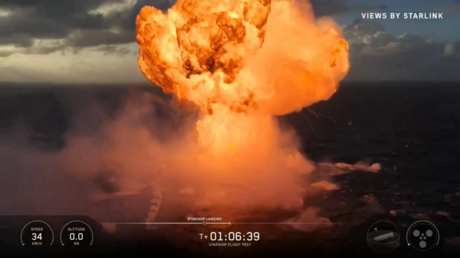
Stop looking at the explosion as a failure. When the massive Starship Version 3 vehicle slammed into the Indian Ocean and erupted into a giant fireball, mainstream media headlines immediately jumped on the word explosion. They love the drama. But if you actually understand how aerospace development works, that fiery finale wasn't a mistake. It was the plan.
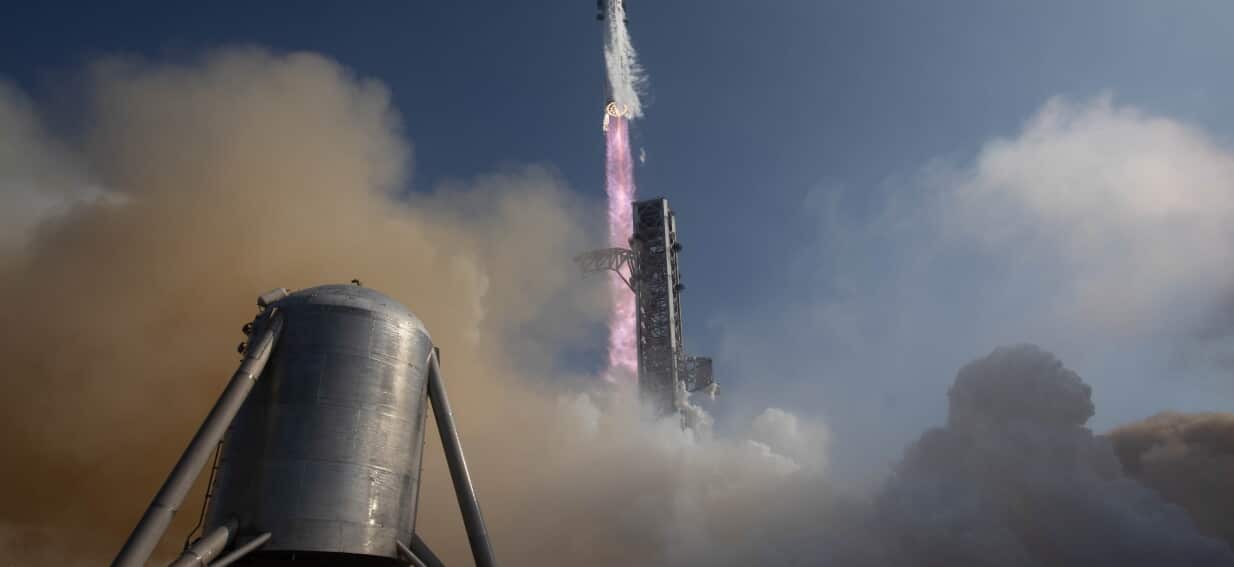
SpaceX successfully pulled off the first-ever suborbital flight of its heavily upgraded Starship V3 on Flight 12. The 408-foot-tall megarocket cleared the Texas launch pad, sent its upper stage into space, endured a brutal atmospheric reentry, and executed a complex landing burn. It stood upright on the water for a brief moment before tipping over and exploding.
You aren't watching a disaster when Starship blows up at sea. You're watching a data harvest.
The Art of Intentional Destruction
Traditional aerospace companies build rockets for years, test every single part in a cleanroom, and pray nothing goes wrong on launch day. If it does, the program gets delayed by half a decade. SpaceX does the opposite. They build fast, fly often, and push the hardware until it breaks.
The Flight 12 mission was a hardware-stressing laboratory. The upper stage, Ship 39, carried out explicit exercises during its descent to deliberately test the structural limits of the new V3 architecture. It even attempted a brand-new banking maneuver during the landing burn to test the exact flight path needed for future launch tower catches back at Starbase.
When a stainless steel vehicle filled with residual propellant hits ocean water at high speed and tips over, it's going to ignite. The explosion happens because the structural integrity fails upon impact, causing the remaining liquid methane and liquid oxygen to mix. SpaceX doesn't spend money trying to gently salvage a vehicle meant for the ocean floor anyway. They want to see how much heat and physical pressure the hull can take before it gives up.
What Upgraded on Starship Version 3
Flight 12 wasn't just another launch. It was the debut of the Version 3 (V3) design, which completely overhauls the rocket's architecture. If you've been tracking the program since the early flight tests or even the mid-2025 flights, the differences are staggering.
- Massive Scale: The rocket now stands at 408 feet tall. The stretched tanks allow for significantly more propellant.
- Engine Upgrades: The vehicle utilizes next-generation Raptor engines, aiming to streamline the plumbing and increase raw thrust.
- Payload Changes: Ship 39 successfully deployed 20 mock satellites alongside two specialized Starlink test units. These specific Starlink units turned their own cameras inward to record the heat shield performance during the peak of atmospheric friction.
It wasn't a flawless flight. One of the engines shut down early during liftoff, which forced the landing burn to adapt on the fly by igniting two engines instead of the planned three. The Super Heavy booster also faced some engine issues during its controlled return descent. But the onboard software adapted. The vehicle made it to its destination.
Why the Indian Ocean Explodes but Texas Catches
I see a lot of confusion about why SpaceX allows the ship to blow up in the ocean while they try to catch the booster with giant mechanical arms back in Texas. It comes down to risk management.
You don't try to catch a brand-new iteration of a spacecraft on a residential launch site until you know the guidance software can nail the landing coordinates within inches. A mistake over the Indian Ocean costs nothing but steel. A mistake at Starbase destroys a multi-billion-dollar launch tower and sets the entire Mars program back by two years.
NASA Administrator Jared Isaacman and Elon Musk both echoed the same sentiment after the splashdown. The mission wasn't scored by whether the ship survived the water impact; it was scored by the telemetry sent back before the impact.
The Path to Rapid Reusability
If you want to understand what happens next, look at how SpaceX handled the fallout from earlier flights. When Flight 8 suffered a hardware failure in its central engine that led to a self-destruct sequence, the team analyzed the data, added nitrogen purge systems, improved insulation, and flew again.
The data gathered from the V3 heat shield cameras and the final banking maneuver on Flight 12 will directly inform the build of the next batch of vehicles already sitting in the high bays at Starbase.
The next step isn't making a prettier splashdown. It's eliminating the splashdown entirely. Once the engineering team reviews the stress limits from this ocean impact, they'll move toward bringing the upper stage back to the Texas coast for a mechanical catch. Until then, expect more fireballs. They're a sign of progress, not a problem.