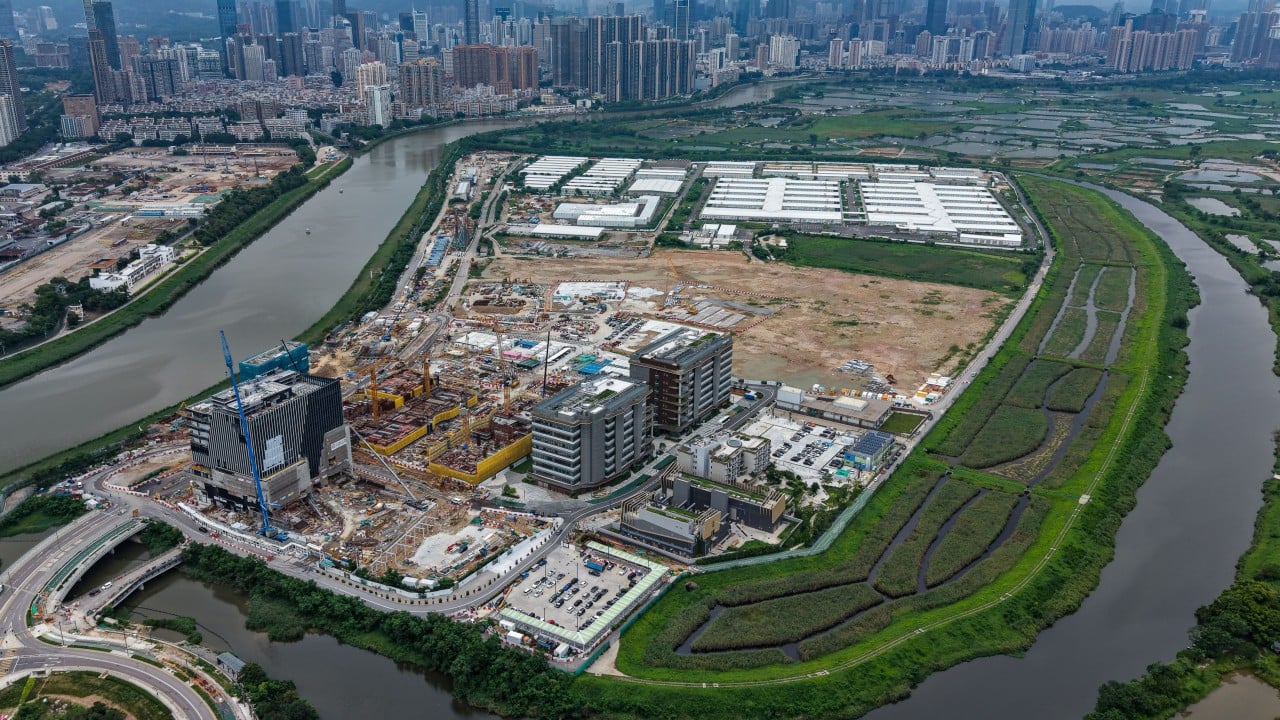
The race for high-spec laboratory space in Asia is officially over, and the winner is sitting right on the border between Hong Kong and Shenzhen. If you've been watching the Greater Bay Area tech boom, the recent occupancy numbers from the Hetao Shenzhen-Hong Kong Science and Technology Innovation Co-operation Zone shouldn't surprise you. The first two wet laboratory buildings in the Hong Kong Park are fully leased out.
Let's put this into perspective. These facilities officially opened their doors recently, and companies scrambled to snap up space. We aren't just talking about local startups looking for cheap desks. Tech giants and heavy-hitting global enterprises are setting up shop right next to early-stage disruptors. The demand is so intense that the government is already moving up construction timelines for the next batch of buildings.
If you think this is just another standard commercial real estate play, you're missing the bigger picture. Hetao is turning into a blueprint for how cross-border scientific collaboration actually works when you stop overthinking the logistics and build for actual market demand.
What is Driving the Insane Demand for Wet Labs
Most people don't realize how difficult it is to build and operate a proper wet laboratory. You can't just throw some desks and computers into a standard office building and call it a tech hub. That works for software engineering, but biotech and life sciences require heavy-duty infrastructure.
The buildings at the Lok Ma Chau Loop were engineered from day one to handle the messy, complex realities of deep tech research. We're talking about massive ceiling heights, specialized floor loading capacities, complex fume exhaust ducts, dedicated wastewater treatment facilities, and advanced fire safety systems. If a biotech firm wants to test new therapeutics or run high-throughput screening, they need access to specialized gas lines, deionized water, and massive electrical grids that won't blink during a peak load.
Building this kind of infrastructure takes years and costs a fortune. By delivering turnkey, high-spec wet labs right on the geographic seam of two massive economic engines, the park solved a major bottleneck for the region's life science industry. Companies aren't leasing this space because it looks pretty; they're leasing it because they can't find these exact technical specifications anywhere else with the same geographic advantages.
The Surprising Corporate Mix Filling the Space
The assumption was that Hetao would either be a playground for massive Chinese tech conglomerates or a subsidized haven for local Hong Kong startups. The actual tenant mix proves both assumptions wrong. It's a highly diverse ecosystem that balances scale, agility, and geography.
Mainland Chinese enterprises make up about 50 percent of the tenants. Local Hong Kong firms account for roughly 30 percent. The remaining 20 percent comes from international players hailing from countries like Switzerland, South Korea, and Finland.
The breakdown between established giants and hungry newcomers is even more interesting:
- The Heavyweights (10%): Around ten massive, publicly listed tech corporations and industry leaders have anchored themselves here. Think AstraZeneca, Lenovo, and Goertek.
- The Agility Engine (70%): Startups dominate the overall landscape, making up the vast majority of the individual firms inside the park.
This split is entirely intentional. Permanent Secretary for Innovation, Technology and Industry Kevin Choi pointed out that the goal is to build a self-sustaining ecosystem. You want the massive corporations to provide market access, mentorship, and industrial scale, while the startups inject raw innovation, agility, and new intellectual property. To make sure these startups don't drown, the park brought in industry heavyweights like BGI Group to run targeted incubation programs focused heavily on life sciences and artificial intelligence. Out of 700 global applications, only 108 startups made the cut for these initial programs.
The Cross Border Arbitrage That Competitors Can't Match
Why would a European biotech firm or a Shenzhen AI giant choose the Lok Ma Chau Loop over established hubs in Shanghai, Singapore, or Boston? It comes down to a very specific type of regulatory and geographic arbitrage.
The Hetao zone operates under a unique framework: "one country, two systems," but also "one river, two banks" and "one zone, two parks." By physically occupying the border zone, companies inside the Hong Kong Park get the best of both worlds. They operate within Hong Kong's legal system, data privacy protections, and capital markets, but they sit literally steps away from Shenzhen's unmatched supply chain, manufacturing speed, and talent pool.
The physical connectivity is getting a major upgrade too. Work is already underway on a dedicated cross-boundary bridge linking the Hong Kong and Shenzhen sides of the park, using a low-carbon, single-span design across the river that's scheduled for completion by mid-2027. Combine that with 24-hour border crossing services and policies aimed at the free flow of research materials, capital, and data, and you eliminate the friction that usually kills international joint ventures.
Moving Beyond Property Speculation
Hong Kong has a reputation for turning every piece of available land into a real estate play. The government knew that if Hetao became a playground for property speculators, the scientific mission would die before it even started.
To prevent this, authorities are using a "two-envelope" tendering system for the remaining phase-one land parcels. When private developers bid to build out the rest of the site, the financial premium they offer only accounts for 30 percent of their overall score. The remaining 70 percent is judged purely on their technical proposal, their operational strategy, and their concrete plans for attracting world-class scientific tenants.
This approach shifts the focus away from maximizing rent toward maximizing scientific output. The hardware side is moving fast. The flagship ten-story "Building 1" has already been topped out and is expected to open by the end of this year—months ahead of its original schedule. Even before its doors open, 70 percent of its floor space is pre-leased. It's set to house a massive joint life and health research headquarters run by three local universities, alongside international research heavyweights operating via the InnoHK collaborative platform.
What You Should Do Next
If you're managing a life sciences firm, an AI startup, or an investment portfolio targeting deep tech in Asia, sitting on the sidelines isn't an option anymore. The speed at which Phase 1 is filling up means the window for securing primary positioning in this specific corridor is closing fast.
First, evaluate your infrastructure needs against the remaining allocations. While the initial wet labs are full, the next five buildings are moving toward completion, and pre-leasing strategies for the remaining spaces are actively being deployed. Don't wait for the official handover dates to start the application process; the data shows that the companies winning these spaces are locking down commitments while the concrete is still drying.
Second, look closely at the accelerated incubation programs if you're an early-stage firm. Getting space is one thing, but getting embedded into an environment where you're actively mentored by companies like BGI Group provides immediate commercial validation.
Analyze how your operational flow can benefit from the cross-border bridge and the unified data/material sharing policies. If your business model relies on Western intellectual property standards but requires rapid prototyping or clinical validation inside the mainland Chinese ecosystem, layout your operational roadmap now. The infrastructure is built, the labs are full, and the ecosystem is live. It's time to get your team on the ground.