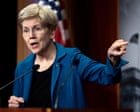
The conflict between the Department of Justice and Senator Elizabeth Warren regarding investigations into Donald Trump represents a recurring constitutional collision between Article I legislative oversight and Article II executive enforcement. Standard political coverage reduces this friction to partisan theater, obscuring the operational mechanics of separation of powers, prosecutorial independence, and statutory authority. Understanding this standoff requires decomposing the institutional incentives driving both branches, the legal doctrines governing investigative boundaries, and the specific procedural tools used to enforce compliance or assert autonomy.
The Structural Architecture of Inter-Branch Friction
At the core of any Department of Justice (DOJ) warning to a sitting United States Senator lies a fundamental asymmetry in constitutional design. Congress possesses broad investigative authority implied by its legislative power under Article I, yet it lacks an independent enforcement mechanism to compel executive branch compliance without judicial intervention or political escalation. Conversely, the executive branch controls the prosecutorial apparatus under Article II, granting the DOJ functional autonomy over active criminal inquiries, grand jury secrecy, and law enforcement deliberations. Learn more on a similar subject: this related article.
When Senator Warren directs inquiries toward the DOJ concerning the scope, conduct, or personnel decisions of investigations involving former President Donald Trump, the interaction triggers established departmental protocols. Historically, under both Democratic and Republican administrations, the DOJ maintains a strict boundary against disclosing non-public investigative details to lawmakers. This posture rests on three distinct institutional pillars:
- Preservation of Prosecutorial Integrity: Public or legislative scrutiny of ongoing investigations risks tainting witness testimony, alerting targets to evidentiary trails, and compromising grand jury secrecy mandated under Federal Rule of Criminal Procedure 6(e).
- Insulation from Political Interference: The DOJ operates under internal guidelines—most notably the policies codified in the Justice Manual and successive Attorney General memoranda—designed to prevent the appearance or reality of partisan influence over charging decisions.
- Protection of Deliberative Process: Executive branch officials assert that internal communications regarding prosecutorial strategy fall under the deliberative process privilege, a subset of executive privilege intended to ensure candid internal debate without fear of premature external exposure.
A formal warning or pushback from the DOJ to a high-profile senator like Warren is rarely an ad hoc reaction. It functions as a calibrated institutional boundary-setting exercise. By formally objecting to the framing, demands, or potential interference of congressional correspondence, the DOJ establishes a documented record that its prosecutorial decisions remain insulated from legislative pressure—a record that becomes legally relevant if defense counsel later raises claims of selective or vindictive prosecution. Additional analysis by Associated Press explores similar perspectives on the subject.
Deconstructing the Oversight vs. Independence Matrix
To analyze the dispute objectively, one must separate the political rhetoric surrounding Donald Trump from the underlying administrative law and constitutional precedent. Both Senator Warren and the Department of Justice operate within well-defined, albeit competing, legal frameworks.
The Legislative Mandate Under Article I
Senator Warren’s oversight posture relies on the established principle that Congress cannot legislate effectively without information. In landmark rulings such as McGrain v. Daugherty (1927) and Watkins v. United States (1957), the Supreme Court affirmed that the power of inquiry is an essential and appropriate auxiliary to the legislative function. From the legislative perspective, oversight of the DOJ is warranted to evaluate:
- Whether existing federal statutes governing campaign finance, obstruction of justice, ethics, or the handling of classified records require legislative amendment.
- Whether appropriations allocated to special counsels or specific DOJ divisions are being utilized efficiently and within statutory mandates.
- Whether institutional norms and conflict-of-interest regulations within the Justice Department are sufficient to maintain public trust when investigating high-ranking political figures.
When lawmakers press the DOJ on matters involving Trump, they frame their requests around systemic accountability and statutory adequacy. However, when those inquiries touch upon specific investigative targets, charging timelines, or internal personnel deliberations, they cross into territory the executive branch views as an encroachment on core Article II functions.
The Executive Boundary Under Article II
The Department of Justice’s resistance to congressional inquiries regarding active or recently concluded investigations is rooted in the Take Care Clause of Article II, which vests the President with the duty to ensure that the laws are faithfully executed. Over decades, the DOJ’s Office of Legal Counsel (OLC) has constructed a consistent body of opinions asserting that open criminal investigative files are largely off-limits to Congress.
According to OLC doctrine, sharing active investigative materials with lawmakers creates an unacceptable risk of turning Congress into a parallel investigative body that lacks the procedural safeguards of the judicial system. Furthermore, DOJ leadership recognizes a critical litigation hazard: if a senator publicly demands specific investigative outcomes or criticizes prosecutorial restraint, and the DOJ subsequently takes action aligned with those demands, defense attorneys will cite the congressional correspondence as evidence of improper political motivation. Consequently, a DOJ warning to a senator serves as an immediate prophylactic measure to sever any perceived causal link between legislative pressure and prosecutorial action.
The Litigation Risk of Congressional Commentary
A frequently overlooked variable in high-profile political investigations is how legislative oversight impacts courtroom viability. In complex federal prosecutions involving former executives or prominent political figures, defense strategy invariably targets the integrity of the investigative process itself.
When members of Congress issue public letters, hold press conferences, or demand updates regarding investigations into Donald Trump, they inadvertently generate potential ammunition for defense motions. Specifically, vocal congressional involvement intersects with three legal vulnerabilities:
- Motions to Dismiss for Vindictive or Selective Prosecution: While the evidentiary threshold for proving selective prosecution is extraordinarily high under United States v. Armstrong (1996), defense teams routinely compile public statements from lawmakers to argue that the prosecution was driven by political animus rather than neutral application of the law.
- Prejudicial Pretrial Publicity: Extensive commentary from powerful senators amplifies media saturation, complicating jury selection and bolstering defense arguments for a change of venue or extended continuances.
- Separation of Powers Challenges: In disputes over subpoenas or executive privilege, defense counsel may argue that legislative interference distorted the executive branch’s independent judgment, thereby tainting the resulting indictment.
The Department of Justice’s institutional sensitivity to these dynamics explains why its Office of Legislative Affairs (OLA) responds forcefully when congressional inquiries cross perceived boundaries. The warning is not merely defensive; it is an operational necessity aimed at protecting the viability of potential or ongoing legal proceedings from collateral attack.
Historical Precedents and Institutional Symmetry
Evaluating the friction between the DOJ and Senator Warren requires situating it within the broader historical continuum of executive-legislative conflicts. This dynamic is structural rather than partisan, recurring whenever high-stakes investigations intersect with congressional oversight agendas.
During the Watergate investigation, the Teapot Dome scandal, the Iran-Contra affair, and the Whitewater inquiry, the DOJ consistently resisted premature congressional access to grand jury materials and active prosecutorial files. In each instance, lawmakers argued that the public interest and legislative duty superseded departmental confidentiality, while Attorneys General and Special Prosecutors maintained that premature disclosure would jeopardize criminal accountability.
Similarly, during the investigations into Russian interference in the 2016 election and subsequent inquiries into the handling of classified documents, the DOJ repeatedly clashed with both Democratic and Republican lawmakers. Whether the requests originated from conservative House committee chairs seeking internal FBI communications or progressive senators demanding accountability regarding executive misconduct, the institutional response from Main Justice followed an identical script: acknowledge Congress’s general oversight interest, decline to comment on non-public investigative specifics, and warn against actions that could compromise prosecutorial independence.
This symmetry demonstrates that the conflict is driven by institutional roles rather than individual personalities. Senator Warren, acting as a senior legislator with a focus on institutional accountability and ethics reform, naturally pushes the outer envelope of Article I oversight. The DOJ, tasked with defending executive prerogatives and maintaining courtroom integrity, naturally pushes back to enforce Article II boundaries.
Operational Mechanics of a DOJ-Congress Standoff
When an impasse occurs between a senator’s office and the Department of Justice, the interaction follows a predictable escalation ladder governed by administrative protocol and political leverage.
Phase 1: The Inquiry and Information Request
The process begins with a formal letter from the senator or committee outlining specific questions, requesting documents, or demanding briefings regarding a particular matter—such as the DOJ’s handling of Trump-related investigations, ethics compliance, or potential conflicts of interest. These letters are typically released to the press simultaneously, serving both an informational purpose and a public signaling function.
Phase 2: The Office of Legislative Affairs Response
The DOJ’s Office of Legislative Affairs processes the incoming correspondence. Rather than addressing the substantive investigative questions, the initial response generally relies on standardized institutional language. It cites long-standing departmental policy against confirming, denying, or commenting on the existence or status of non-public investigations, while offering limited, high-level summaries of publicly available policies or statutory frameworks.
Phase 3: Escalation and Formal Warnings
If the lawmaker persists—by issuing follow-up demands, threatening to hold up departmental nominations, or publicly criticizing DOJ leadership—the Department escalates its posture. A formal warning from the DOJ typically articulates the specific institutional risks posed by the lawmaker’s demands. It reminds the member of Congress of the constitutional separation of powers, the statutory protections surrounding grand jury and law enforcement sensitive information, and the necessity of keeping prosecutorial decision-making free from legislative coercion.
Phase 4: Leverage Deployment
At this stage, resolution depends on institutional leverage rather than pure legal adjudication, as courts are notoriously reluctant to referee political disputes between Congress and the executive branch unless a formal subpoena enforcement action reaches a constitutional breaking point.
- Congressional Leverage: Senators can place holds on DOJ nominees awaiting confirmation in the Senate Judiciary Committee, attach restrictive riders to annual appropriations bills, or convene public oversight hearings designed to extract testimony from senior officials under oath.
- Executive Leverage: The DOJ can invoke executive privilege, slow-walk document production through extensive redaction protocols, or rely on the timeline of the legislative calendar to outlast the immediate political pressure.
Strategic Limits of Both Positions
Neither the legislative oversight model pursued by Senator Warren nor the strict autonomy model defended by the DOJ operates without significant structural limitations.
For Congress, the primary constraint is enforcement latency. Even when a committee issues a formal subpoena, litigating executive privilege claims through federal district and appellate courts routinely takes years—often extending beyond the two-year congressional term or the four-year presidential cycle. Consequently, individual senators lacking committee chair subpoena authority rely heavily on public pressure, media amplification, and confirmation holds, tools that generate visibility but rarely compel the release of closely held prosecutorial files.
For the Department of Justice, absolute reliance on institutional opacity carries a severe reputational cost. In eras of intense political polarization, declining to explain prosecutorial decisions or investigative timelines fuels public skepticism. When the DOJ warns lawmakers to step back without providing transparent benchmarks for accountability, critics across the political spectrum interpret the silence as either partisan protectionism or unaccountable bureaucratic power. The Department must continuously balance the legal necessity of confidentiality against the democratic necessity of public legitimacy.
The Trajectory of Executive-Legislative Oversight
The friction between the Department of Justice and Senator Warren over Trump-related investigations underscores a permanent tension in American governance. As long as high-stakes legal inquiries intersect with national political figures, the boundary between legitimate legislative oversight and improper political interference will remain contested terrain.
To navigate these collisions effectively, institutional actors on both sides must adhere to strict procedural discipline. Lawmakers seeking meaningful systemic reform must focus their inquiries on structural statutes, resource allocation, and post-investigation policy reviews rather than real-time prosecutorial decisions—thereby denying defense counsel any basis to allege political taint while preserving the constitutional legitimacy of Article I oversight. Simultaneously, the Department of Justice must pair its rigorous defense of investigative independence with standardized, transparent post-closure reporting mechanisms so that institutional confidentiality does not erode public confidence in the rule of law.