Dawn in Los Angeles rarely arrives with a gentle whisper. It arrives as a sudden, hard glare bouncing off millions of windshields on the 405, a restless hum of asphalt and combustion that starts before the stars have even finished dissolving. Up there, miles above the gridlock, another kind of morning was already underway. Rotor blades sliced through the cool, damp upper air, catching the very first amber slivers of sunlight over the Verdugo Mountains.
To the millions crawling along the freeways below, that low, rhythmic thrumming was just part of the urban soundtrack. A news helicopter. An electronic eye keeping vigil over the morning commute, searching for the inevitable crumpled metal and flashing red lights that would define the noon broadcast.
Then, the sound stopped.
Not fade-out. Not a stuttered mechanical gasp. Just an abrupt, violent silence that left a void in the morning sky.
Three lives ended in that sudden silence. Three human beings who woke up before dawn, drank their coffee in the dark, kissed their loved ones goodbye with the casual assumption of an ordinary Tuesday, and climbed into a cockpit that was meant to return them home by lunchtime.
We talk about news in headlines. We consume tragedy in thirty-second bites between sips of cold brew. We look at a smoldering wreckage on a screen and process it as a graphic, a statistic, a momentary jolt of adrenaline before we scroll down to the sports scores or the weather. But behind the flat glare of the monitor lies a raw, bruising human reality.
Consider what it takes to do what they did.
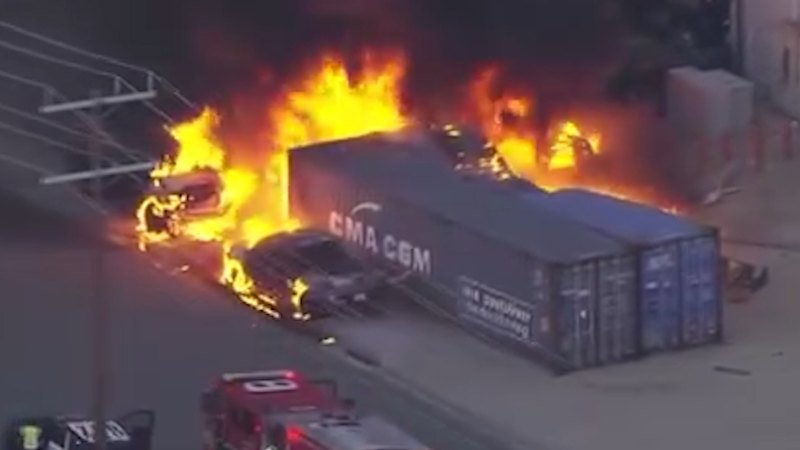
To strap yourself into a helicopter hovering three hundred feet above a burning tanker truck on the Santa Ana Freeway. To manage radio frequencies while banking hard against a sudden gust of wind howling through a canyon. To look down through a plexiglass bubble at human misery and mechanical chaos, and somehow translate it into calm, coherent sentences for people safe in their kitchens. It is a strange, high-wire performance art performed daily in the skies above America's most congested cities.
A news helicopter is essentially a mobile broadcast studio dangling from a spinning rotor, operating under aerodynamic conditions that would terrify a commercial pilot. They fly low. They fly slow. They loiter over narrow corridors where the wind whips unpredictably between concrete skyscrapers and jagged hillsides. They hover in the dead zones where airspace is crowded with flight schools, private charters, police units, and commercial airliners.
Statistically, aerial reporting has long carried an invisible ledger. It is a tax paid in risk, collected quietly over decades. Whenever an engine sputters or a tail rotor catches a stray thermal draft, the margin for error shrinks to zero in a fraction of a second.
When the news broke about the crash, the notifications flashed across millions of pockets. Words like tragedy, fatality, incident. Cold, administrative terms designed to sanitize the horror of a falling machine.
But scale down the lens.
Imagine the empty coffee mug left sitting on a desk in the hangar. Imagine the phone that will ring with a text message that nobody will ever read. Imagine the sudden, sickening drop in the stomach of a spouse who sees breaking news crawl across the bottom of the television screen, realizing with a cold jolt of terror that the call sign belongs to the person who kissed them goodbye four hours earlier.
That is where the real story lives. Not in the twisted metal or the FAA investigation reports that will follow months later in sterile government offices. It lives in the quiet spaces left behind when public spectacles turn into private grief.
Los Angeles is a city built on manufactured dreams and televised illusions. We look up at the sky and see traffic reporters, weather eyes, cinematic backdrops. We forget that every lens pointed at our world is held by someone with a heartbeat, a family history, a favorite song, and a quiet Tuesday routine that was supposed to end with dinner.
The sky over the Southland is busy again. The rotors turn. The cameras roll. The morning commute flows like liquid concrete down the valley.
But somewhere above the haze, the air feels a little thinner today. A reminder that behind every screen we watch, real people are trading their days, and sometimes everything else, to show us where we are going.