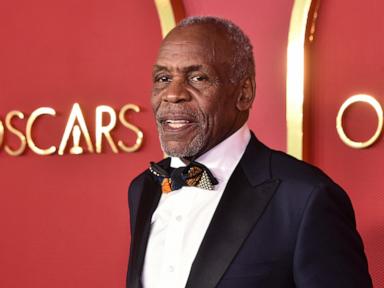
The room is quiet, but the silence carries a weight it never used to have. For more than fifty years, Danny Glover filled spaces with a presence that felt entirely permanent. When he spoke, whether commanding the screen as a tired detective or standing on a makeshift stage in front of striking workers, his voice arrived like thunder. It was deep, textured, and certain.
Now, there is a new kind of pause between his words. It is not the calculated hesitation of a seasoned actor timing a dramatic line. It is the quiet, frustrating search for a thread that has slipped just out of reach.
When news broke that the legendary actor and civil rights activist had been diagnosed with Alzheimer’s disease, the public reaction followed a familiar script. Shock. Sadness. A sudden flood of nostalgic movie clips across social media feeds. But behind the headlines lies a stark, deeply personal reality that millions of families recognize instantly. The diagnosis does not just affect an icon; it alters the landscape of a family, rewriting the daily rhythms of life for a man who spent his entire existence fighting for the future of others.
Alzheimer’s does not care about legacy. It is an indifferent thief, stealing the architecture of the mind brick by brick, starting with the most recent memories and slowly working its way backward into the foundations of who we are. For a man whose life is built on a massive repository of scripts, historical dates, names of activists, and speeches, the diagnosis carries a particularly cruel irony.
The Anatomy of a Quiet Thief
To understand what is happening inside the mind of an individual facing this diagnosis, we have to look past the clinical definitions. Medical textbooks will tell you about beta-amyloid plaques and neurofibrillary tangles. They will explain how these abnormal protein accumulations destroy neurons, disrupting communication within the brain.
But science alone cannot capture the lived experience.
Imagine a grand library. For decades, the librarian has known exactly where every volume sits. A history of the labor movement is on the third shelf. A monologue from a classic play rests near the window. The names of old friends are cataloged perfectly in the front room.
Then, someone begins misplacing the books.
At first, it is barely noticeable. A volume of recent memories is found in the wrong aisle. The librarian laughs it off, attributes it to fatigue, and moves on. But as time passes, entire shelves go missing. The lights in the back corners of the building begin to flicker and die. The librarian is left standing in the dimming light, holding a map that no longer matches the building around him.
This is the daily reality for more than six million Americans currently living with the disease. It is a number that is projected to nearly double by the middle of the century. It is an epidemic hidden in plain sight, unfolding behind the closed doors of suburban homes and high-rise apartments alike.
A Life Written in Struggle and Spotlight
To appreciate the gravity of Glover's diagnosis, one must understand the sheer scale of the life he has lived. Born in San Francisco to postal workers who were active in the NAACP, activism was not a later-life hobby for Glover; it was his birthright. Long before he stepped onto a Hollywood set, he was participating in the longest student strike in American history at San Francisco State University, fighting for the creation of a Black Studies department.
When stardom found him, he refused to let the glitter of the entertainment industry blind him to the struggles of everyday people. He used his paycheck and his platform to fund labor unions, protest apartheid in South Africa, and march alongside stadium workers and farm laborers.
There is a unique tragedy in watching a man who remembered every injustice, who cataloged the dates of historical battles for human rights, confront a disease that targets memory itself.
Consider what happens next in the progression of this illness. The changes are rarely explosive. They are subtle. A routine walk around the neighborhood becomes confusing because a familiar landmark suddenly looks foreign. A conversation loops back on itself, the same question asked three times in the span of twenty minutes, not out of stubbornness, but because the brain failed to save the previous answer.
The emotional toll on the individual is immense. In the early stages, awareness remains intact. The patient knows they are forgetting. They can feel the edges of their world fraying. This awareness often brings a profound wave of anxiety and grief. They are mourning the loss of themselves while they are still here to witness it.
The Invisible Network of Care
Behind every public figure dealing with a neurological condition is a network of people whose lives have also been fundamentally transformed. We often focus entirely on the person with the diagnosis, but the ripples extend far wider.
Family members step into the role of caregivers, a position that requires an exhausting blend of patience, grief management, and logistical coordination. It means watching someone you love look at you with a momentary blankness before the recognition clicks back into place. Those brief seconds of non-recognition are like a physical blow to the chest.
The financial and physical demands of caregiving are staggering. While a high-profile actor has access to premium medical care and support systems, the vast majority of families facing this disease do not. They are forced to navigate a confusing maze of insurance policies, specialized care facilities, and the grueling physical demands of around-the-clock supervision.
Caregivers frequently suffer from high rates of depression, physical exhaustion, and social isolation. They are tethered to a reality where tomorrow will likely be slightly harder than today. There is no recovery to look forward to, no finish line where the patient gets well. The goal shifts from curing the illness to preserving dignity, comfort, and moments of joy for as long as possible.
The Power of the Public Ledger
When a public figure like Danny Glover discloses a diagnosis of this nature, it is more than a piece of celebrity news. It is an act of vulnerability that has the potential to shift public perception. For generations, cognitive decline was treated as a shameful secret, something to be hidden away in back rooms and whispered about in hushed tones.
By stepping forward, individuals of note strip away some of the stigma that still clings to dementia. They remind the world that this is a biological illness, not a moral failing or a source of shame. It places a familiar, beloved face on an abstract medical condition.
This kind of visibility matters immensely for research and funding. Historically, diseases that are stigmatized or hidden receive less public attention and fewer research dollars. When the public sees a man who embodied strength, resilience, and intellect on the big screen navigating this condition, it creates a sense of urgency.
Science is making progress, but the road is long. Recent advancements in treatments have focused on clearing the amyloid plaques from the brain, aiming to slow the progression of the disease rather than reverse it. These developments offer a glimmer of hope, but they are far from a cure. They represent a modest down payment on a future where Alzheimer's might finally be manageable.
For now, the best tools available are early detection, lifestyle interventions to support brain health, and a robust system of social support.
The Remaining Light
The story of a life with Alzheimer’s is often told entirely through the lens of loss. But that is an incomplete narrative.
Even as the specific details of a life begin to blur, the core of a person’s spirit often endures. The muscle memory of a lifetime of kindness, humor, and connection does not vanish overnight. A man who spent fifty years caring about the plight of vulnerable people still possesses that fundamental empathy, even if he cannot recall the name of the specific bill he championed decades ago.
Moments of clarity become precious commodities. A shared laugh over an old photograph, the comfort of a familiar piece of music, the warmth of a hand held tight—these things carry an extraordinary weight. They are reminders that the person is still there, inhabiting the spaces between the fog.
Danny Glover’s legacy is already secure. It is written in the films that defined a generation, the laws he helped influence through his activism, and the generations of artists who looked at his career and saw what was possible. An illness cannot erase the footprint a man leaves on the world.
The fight has changed, shifting from the grand stages of public defiance to the quiet, intimate spaces of a private home. But the dignity with which it is fought remains entirely the same. The voice may grow quieter, and the pauses may lengthen, but the echo of what that voice stood for will remain loud enough to outlast the darkness.