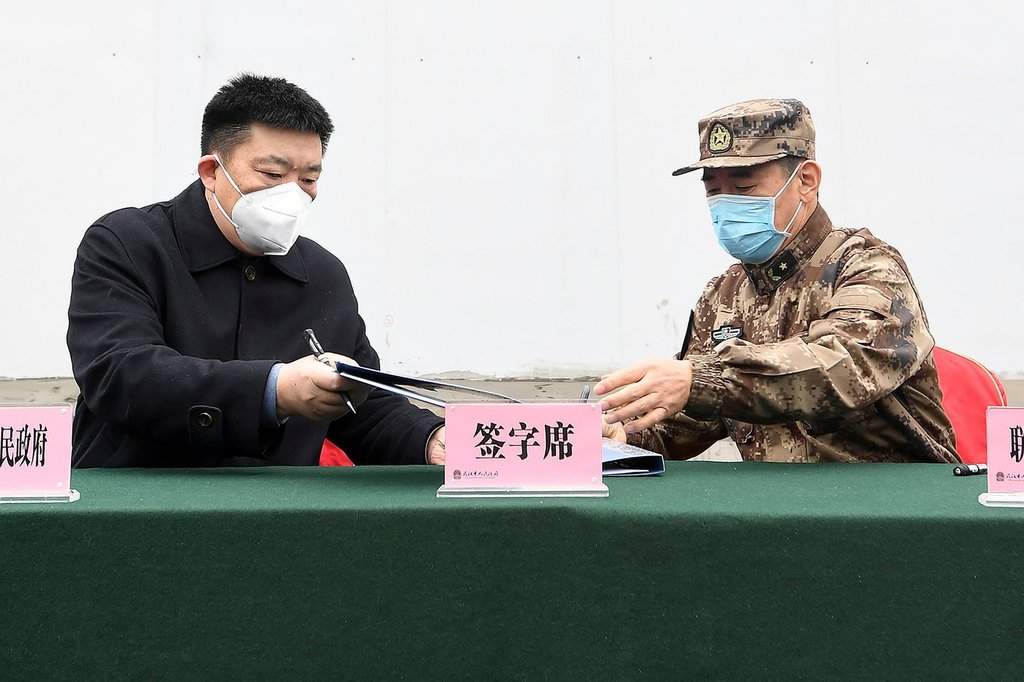
Power changes hands quickly, but accountability takes its time. When Zhou Xianwang, the former mayor of Wuhan, stood before a Chinese court and received a fourteen-year prison sentence for bribery, it marked another chapter in a sprawling political reckoning. You might remember Zhou from the headlines of early 2020. Back then, he was the face of a city suddenly thrust into the global spotlight as the epicenter of a historic health crisis. Years later, his downfall isn't just about a local official taking cash; it highlights how deep-rooted corruption investigations unfold long after the immediate crisis fades from the nightly news.
The court laid out numbers that boggle the mind. Between 2003 and 2025, Zhou used his various official positions—spanning his rise through Hubei province—to smooth over business operations and secure administrative approvals for favored associates. The total value of bribes accepted topped millions of dollars, pushing past sixty million yuan. When investigators from the Central Commission for Discipline Inspection finally caught up with him, the writing was on the wall. He pleaded guilty during a public hearing in July, returning his illicit gains in exchange for a slightly more lenient penalty that spared him a harsher fate. Fourteen years behind bars at age sixty-four basically means finishing his life stripped of political standing and personal freedom. Meanwhile, you can explore other stories here: Why Markwayne Mullin Wants You to Take the New Opioid Threat Seriously.
People often wonder why these high-profile corruption trials happen years after officials leave office. The reality of political systems like China's is that oversight operates on a long timeline. Officials who stumble during high-stakes emergencies often face scrutiny long after the dust settles. While Zhou's early tenure in Wuhan will forever be tied to the initial, chaotic weeks of the coronavirus outbreak and the subsequent seventy-six-day lockdown, his actual conviction centered squarely on financial graft. The dual pressure of managing a historic public health disaster while simultaneously lining pockets created a fragile house of cards that eventually collapsed.
Other top officials from that era have faced similar reckonings. Jiang Chaoliang, the former party secretary of Hubei, was hit with a suspended death sentence for bribery. Watching these cases play out reveals a strict playbook used by Beijing's anti-corruption apparatus. First comes the sudden investigation, followed by expulsion from the party, a public trial featuring a guilty plea, and finally, a heavy prison sentence paired with massive personal fines. Zhou was fined five million yuan alongside his fourteen-year sentence. To understand the full picture, check out the recent article by The Guardian.
If you are tracking how regional governance works in major economic hubs, cases like this offer a stark reminder. High-level administrative power without robust local transparency creates massive vulnerabilities for abuse. When systems rely heavily on top-down anti-corruption sweeps rather than everyday institutional checks, careers can vanish overnight based on investigations that probe decades into the past. Zhou Xianwang thought he could navigate the shifting currents of provincial politics, but the long arm of financial auditing eventually caught up with him.
Take a close look at how governance structures respond when pressure mounts. Accountability rarely happens in the heat of the moment; it catches up quietly, years down the road, when nobody is paying attention anymore.


