Every few months, the media churns out another glossy, emotionally manipulative feature about someone tracing their lineage across oceans to find a plaque, a grave, or a long-lost cousin who remembers a grandfather's wartime heroics. The narrative is always identical. A descendant from London, Kuala Lumpur, or Sydney travels to a ancestral village, sheds a cinematic tear on camera, and declares they have finally found their true identity.
It is high-grade sentimentality masquerading as historical reckoning.
Let us dispense with the warm fuzzies. The breathless coverage of individuals discovering honored ancestors in foreign archives is not an act of historical preservation. It is modern tourism accessorizing as genealogy. It turns geopolitical trauma, global displacement, and the horrific butcheries of the twentieth century into a personal branding exercise.
When a Chinese-Malaysian descendant flies thousands of miles to stand before a monument honoring a guerrilla fighter from the Second World War, the applause is instantaneous. Social media amplifies it. News outlets frame it as a triumph of cultural reconnection. But beneath the soft-focus photography lies a profound historical evasion. We celebrate the recovered memory of one man while actively ignoring the systemic chaos that forced his family into diaspora in the first place.
If you want to understand why this genre of journalism persists, you have to look at what it actually serves: an atomized modern populace desperate for a prefabricated identity.
The Comfort of Borrowed Valor
Human memory is lazy. We prefer our history packaged as a neat, linear fairy tale with clear heroes, legible villains, and a direct bloodline connecting us to the glory.
When a remote ancestor is posthumously decorated or recognized by a state apparatus decades after the smoke clears, descendants line up to bask in the reflected glow. They act as though surviving a war, hiding in jungles, or smuggling supplies across enemy lines is a genetic trait passed down through the mitochondria. It is not. Your grandfather's courage does not belong to you by right of birth. Inherited proximity to greatness is the cheapest currency on earth.
I have watched executives and artists alike spend small fortunes commissioning fixers, translators, and archivists in foreign provinces just to unearth a scrap of paper proving their great-grandfather fought in an anti-fascist resistance or a nationalist campaign. They frame it as a sacred duty. I call it genealogical tourism for the spiritually vacant.
The dirty secret of these transnational heritage quests is that they require zero actual skin in the game. You do not suffer the privations of the Malayan Emergency or the Second Sino-Japanese War by looking at a stone monument in Fujian or Guangdong. You are simply enjoying the aesthetic of sacrifice without paying any of the dues. It is a historical cosplay convention where the stakes are zero, the flights are business class, and the emotional payoff is guaranteed by a local public relations official eager for foreign attention.
The Myth of the Rooted Self
The underlying premise of every human interest story about ancestral homecoming is that geography equals destiny. We are told that you cannot truly know who you are until you stand on the soil where your ancestors bled.
This is romantic garbage.
Culture is not lodged in the topsoil of a specific valley. It is an ongoing, adaptive set of practices, languages, and shared norms that change every single generation. If your grandfather left a village in southern China in the 1940s and your family spent the next eighty years building a life in Kuala Lumpur, your cultural reality is Malaysian, Hokkien, Cantonese, or urban Southeast Asian. It is not rural twentieth-century mainland Chinese.
Flying back to perform grief at a memorial site does not bridge that gap. It paper-maches over it.
Consider the mechanics of the migration itself. Families did not scatter across the Nanyang because they hated home; they scattered because survival demanded it. They adapted, intermarried, built new institutions, and forged entirely new identities under brutal colonial and post-colonial pressures. That adaptation is the real achievement. That is the actual legacy.
Yet, contemporary narratives consistently treat the diaspora as a tragedy of disconnection that can only be resolved by looking backward toward the ancestral motherland. This is a deeply regressive way to view human history. It implies that where your bones happen to be buried matters more than where you built your life, fed your children, and made your compromises.
The State Machinery of Manufactured Nostalgia
Governments do not hand out posthumous medals or maintain sprawling war memorials out of pure, unadulterated historical benevolence. Memory is a tool of statecraft.
When a modern superpower or regional government highlights the wartime sacrifices of overseas Chinese fighters, they are executing a deliberate diplomatic and cultural strategy. They are knitting the global diaspora back into the ideological perimeter of the homeland. Every tearful descendant photographed in front of a newly polished plaque is a walking billboard for soft power projection.
You think you are uncovering a forgotten family secret. In reality, you are walking down a red carpet carefully laid out by bureaucrats who understand the immense value of transnational emotional leverage.
The state loves a returning prodigal because a prodigal is compliant. They bring foreign capital, they bring international validation, and most importantly, they bring an uncritical willingness to accept the official narrative of national glory. They do not ask uncomfortable questions about why their ancestors had to flee, why certain historical factions were erased from the textbooks, or how the current political regime treats internal dissidents who lack the good fortune of living safely abroad.
What Real Historical Engagement Looks Like
If you actually care about your family history, stop waiting for a state archive to validate your lineage with a shiny medal and a press release.
Real historical engagement is messy, ungl
Stop Glorifying Family WWII Secrets As Heritage When They Are Just State Convenience
news, lifestyle
We love a clean narrative. A descendant tracks down a forgotten ancestor. Archives open. Tears flow. Headlines cheer about identity reclaimed across oceans. It feels like closure. It feels like history working the way it is supposed to.
It is also an intellectual lazy shortcut that completely misses how geopolitics actually weaponizes memory.
The standard media machinery eats up stories of overseas descendants finding their grandfathers honored in China for secret World War II sacrifices with breathless awe. The lazy consensus says this is about healing cultural rifts, bridging diaspora identity, and honoring forgotten grit. The unspoken assumption is that states honor ghosts out of pure moral debt.
That is absolute nonsense. States do not honor ghosts; they honor current utility.
When a foreign government decides to unearth a Malayan-Chinese guerrilla fighter, a forgotten Kuomintang operator, or an underground intelligence asset decades after the fact, look at the calendar, look at the diplomatic climate, and look at what narrative is being bought. Memory is a managed asset. Heritage is curated collateral. When we pretend these emotional family reunions are purely personal moments of pride, we blind ourselves to the transactional nature of historical recognition.
The Mechanics Of Selective Memory
Let us look at how historical recovery actually operates. Archives do not spill their secrets because someone asked nicely. Bureaucracies release files when the political upside of remembering outweighs the institutional inertia of forgetting.
During the Malayan Emergency and the broader Pacific theater, underground networks were messy, ideologically fractured, and deeply inconvenient for modern state boundaries. Guerrillas did not fight with neat national flags pinned to their chests. They fought for survival, localized survival, or competing political factions that modern states routinely love or hate depending on the decade.
When a state suddenly discovers a long-lost overseas Chinese fighter to honor, ask yourself a simple question. Which version of history are they buying?
Are they honoring the actual chaos of anti-fascist resistance, or are they spotlighting a sanitized archetype that fits a modern diplomatic blueprint? The answer is obvious to anyone who has spent five minutes digging through regional intelligence declassifications. Real resistance is messy, full of ideological compromises, shifting loyalties, and operational gray zones. State-sponsored commemoration requires a clean hero.
When families accept these ceremonies at face value, they become unwitting props in a contemporary messaging strategy. You think you are burying your grandfather with the dignity he was denied. The ministry handing you the plaque thinks it is securing soft-power influence across Southeast Asian diasporas.
Why The Diaspora Falls For It Every Time
Identity tourism is a multi-billion-dollar emotional industry. Second and third-generation descendants living in Kuala Lumpur, Penang, or London carry a perpetual background hum of displacement. They want roots. They want a neat lineage that anchors them against the shifting sands of global uncertainty.
So when an ancestral village rolls out the red carpet, brings out the local television crews, and drapes a red ribbon over a newly minted memorial stone, the psychological defense mechanisms collapse. Of course you want to cry. Of course you want to feel like your family history matters on a grand stage.
Who wants to ruin that moment by pointing out that the same government machinery ignoring your grandfather thirty years ago is only finding his file now because it needs a bridge to the overseas Chinese business community?
I have watched companies, institutions, and governments orchestrate heritage diplomacy like a cold calculation. The emotional high of personal discovery is weaponized to build compliance and goodwill. We confuse genealogical validation with moral vindication. Just because a regime acknowledges your ancestor does not mean they endorse the values your ancestor actually bled for. Often, they have sanded down the rough edges of that person's life until nothing remains except a convenient cardboard cutout of patriotism.
The Real Cost Of Romanticizing The Past
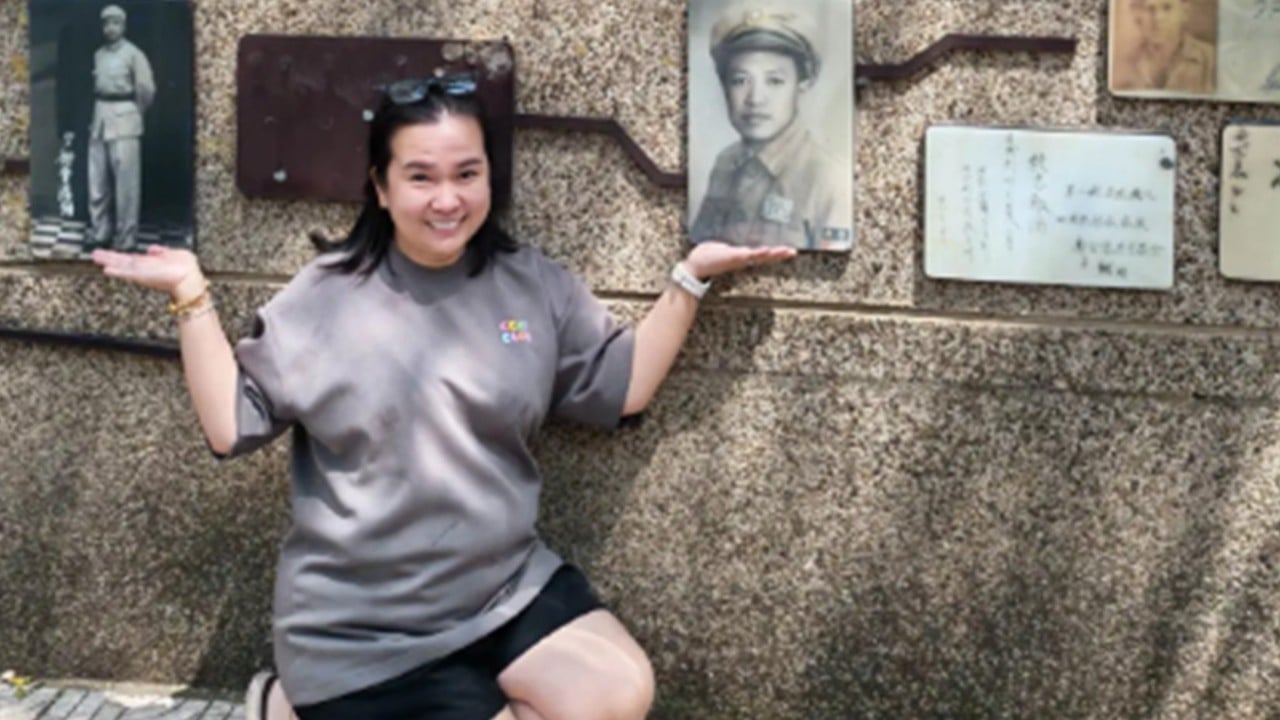
When we accept the mainstream media framing of these stories—that it is just a heartwarming tale of a proud granddaughter finding her roots—we sanitize history. We turn the brutal, morally ambiguous butcher's bill of the Pacific War into a feel-good Hallmark special.
Real WWII resistance in Southeast Asia involved betrayal, double agents, extortion, jungle rot, and ideological purges. It was not a Marvel movie. Men and women made terrifying choices under impossible pressure. To reduce their sacrifices to a prop for modern statecraft is an insult to their actual complexity.
If you want to honor an ancestor, stop looking for validation from the descendants of the bureaucracies that exploited them. Read the actual unit logs. Look up the logistical nightmares they survived. Understand that history is written by the survivors, but curated by the current regime in power.
Stop buying the fairy tale that states are suddenly growing a conscience about forgotten fighters. They are just updating their asset portfolios.