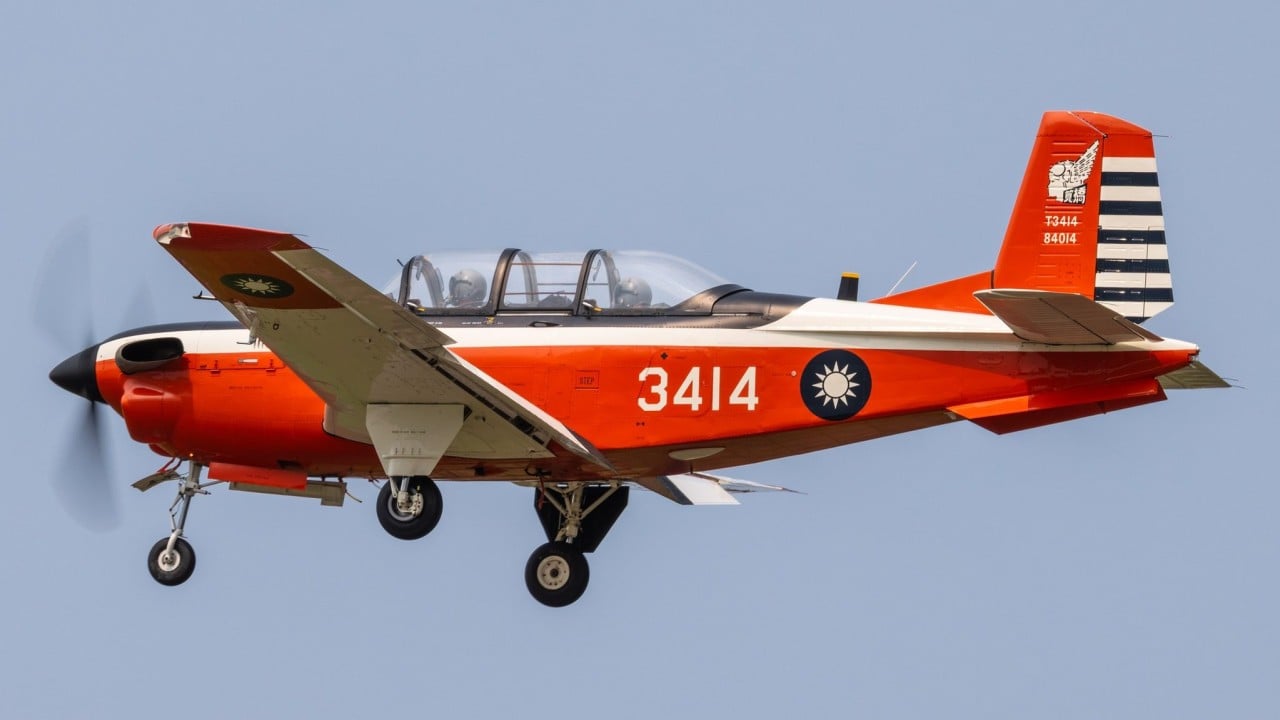
Military aviation safety debates suffer from a systemic intellectual laziness. Every time a trainer aircraft goes down, the media and armchair generals immediately default to a predictable script. They count the years since the airframe rolled off the assembly line. They point to its analog dials. They demand immediate groundings and expensive procurement cycles.
This knee-check reaction missed the point entirely during the investigation into the tragic Beechcraft T-34C Turbo Mentor crash in Taiwan. Recently making waves lately: Why Punjabi Truckers Are Facing Their Hardest Miles Yet.
The immediate public consensus was swift and wrong. The narrative claimed that because the T-34C has been flying for decades, it is inherently a flying coffin. Media reports fixated on the age of the fleet, implying that the air force is risking young lives on outdated junk.
This is a fundamentally flawed premise. In aviation, airframe age is a vanity metric. Airworthiness is determined by rigorous structural fatigue tracking, meticulous maintenance schedules, and component lifespans, not by the calendar year on the registration certificate. More insights into this topic are detailed by Reuters.
The Myth of the Dangerous Old Trainer
The United States Navy operated the T-34C for decades, logging millions of hours. The airframe itself is remarkably stable, predictable, and forgiving—the exact traits required for a primary trainer. When an accident occurs during basic flight training, the machine is rarely the root cause.
Let us be brutally honest about military flight training. Primary trainers operate in a high-stress environment defined by low-altitude maneuvers, constant stalls, spins, and student pilots who are actively learning where the edge of the envelope sits. The envelope is unforgiving.
When you look at aviation safety data from organizations like the U.S. Naval Safety Command or the flights safety foundations worldwide, a stark pattern emerges. Structural failure due to age is an extreme outlier in trainer aircraft. The overwhelming majority of mishaps in primary flight training occur due to spatial disorientation, aerodynamic stalls at altitudes too low for recovery, or catastrophic engine management errors.
Blaming the metal is easy. It allows politicians to promise new procurement budgets and gives the public a tangible villain. But buying a fleet of brand-new, glass-cockpit digital trainers does not magically erase the laws of aerodynamics or human error. In fact, it often introduces new failure modes.
The Glass Cockpit Paradox
The modern solution to an aging trainer fleet is always the same: buy a high-tech turboprop with digital displays, heads-up displays, and simulated weapons systems.
This approach introduces the Glass Cockpit Paradox.
Primary flight training is supposed to teach fundamental stick-and-rudder skills. A student pilot needs to learn to fly by the seat of their pants, looking outside the canopy, feeling the buffeting of the wings before a stall, and listening to the airflow.
When you put a novice inside a highly advanced digital cockpit, you change the nature of their cognitive load.
- Data Saturation: Instead of monitoring basic airspeed, altitude, and attitude, the student is bombarded with menus, sub-menus, and diagnostic data.
- Fixation: Novices tend to stare at the screens inside instead of looking at the horizon outside.
- False Security: Advanced automation can mask poor piloting technique until the aircraft enters an unrecoverable state.
I have spent years watching military organizations over-complicate basic training systems. They spend hundreds of millions on sophisticated platforms, only to find that their student pilots graduate with weak fundamental skills. They can program a flight management computer, but they cannot catch a wing drop during a crosswind landing.
The T-34C is an analog machine. That is its greatest strength, not its weakness. It forces a student to fly the airplane. There are no digital flight control laws to save you, and there are no screens to distract you from the reality of your energy state.
Dismantling the Ground Them All Argument
Whenever a crash occurs, the immediate political demand is to ground the entire fleet.
Grounding a fleet provides a false sense of security. It creates the illusion of decisive action while actively degrading flight safety over the long term.
Imagine a scenario where an entire training wing is grounded for three months while investigators tear apart perfectly good airframes looking for a non-existent systemic flaw. During those ninety days, instructor pilots lose their currency. Student pilots lose their muscle memory. The rhythm of operations is shattered.
When the fleet finally returns to service, you face a massive spike in risk. You now have rusty pilots flying complex maneuvers to make up for lost time in the syllabus. Aviation history shows that the period immediately following a prolonged grounding is often more dangerous than the period preceding it.
If an initial investigation shows no sign of uncontained fire, structural detachment, or systemic mechanical failure, keeping the fleet on the ground is a political stunt that endangers more pilots down the road.
The Real Cost of Institutional Risk Aversion
The harsh reality of military aviation is that it is inherently dangerous. You cannot train combat aviators in a zero-risk environment. If you make primary training so safe and sanitized that a student never experiences real aerodynamic risk, you are simply delaying the reckoning. They will just crash an expensive front-line fighter later in their career when the stakes are infinitely higher.
The focus of the probe following any trainer mishap must look past the maintenance logs and dive deep into the training syllabus itself.
- Are we rushing students through critical spin-recovery modules?
- Are instructor pilots being given enough flight hours to maintain absolute proficiency in emergency over-rides?
- Is the culture prioritizing syllabus progression over basic airmanship?
These are uncomfortable questions because they point the finger at human systems, management, and leadership rather than a piece of metal manufactured in the 1980s. It is far more convenient to write a check for a new fleet than to reform an institutional culture.
Stop looking at the year the aircraft was built. Start looking at the hours allocated to basic, unglamorous stick-and-rudder proficiency. The T-34C does not need a replacement; the industry needs a reality check on how it trains the people inside it.