When the FBI starts investigating a potential breach of its own crime database, most people assume someone cracked a Hollywood-style digital vault. That's rarely how government data exposure actually works.
News that federal investigators are looking into unauthorized access or a potential compromise of FBI criminal justice records immediately triggers panic about leaked Social Security numbers, exposed witness identities, and compromised ongoing investigations. The reality is both narrower and far more unsettling. The FBI doesn't maintain a single monolithic file cabinet of secrets; it operates an interconnected web of information-sharing networks used daily by tens of thousands of local police officers, court clerks, and federal agents. If you enjoyed this article, you should check out: this related article.
Understanding what is actually at risk requires looking at how law enforcement databases function, why third-party access points are almost always the weakest link, and what history tells us about how these breaches unfold.
How the FBI Crime Database Ecosystem Actually Works
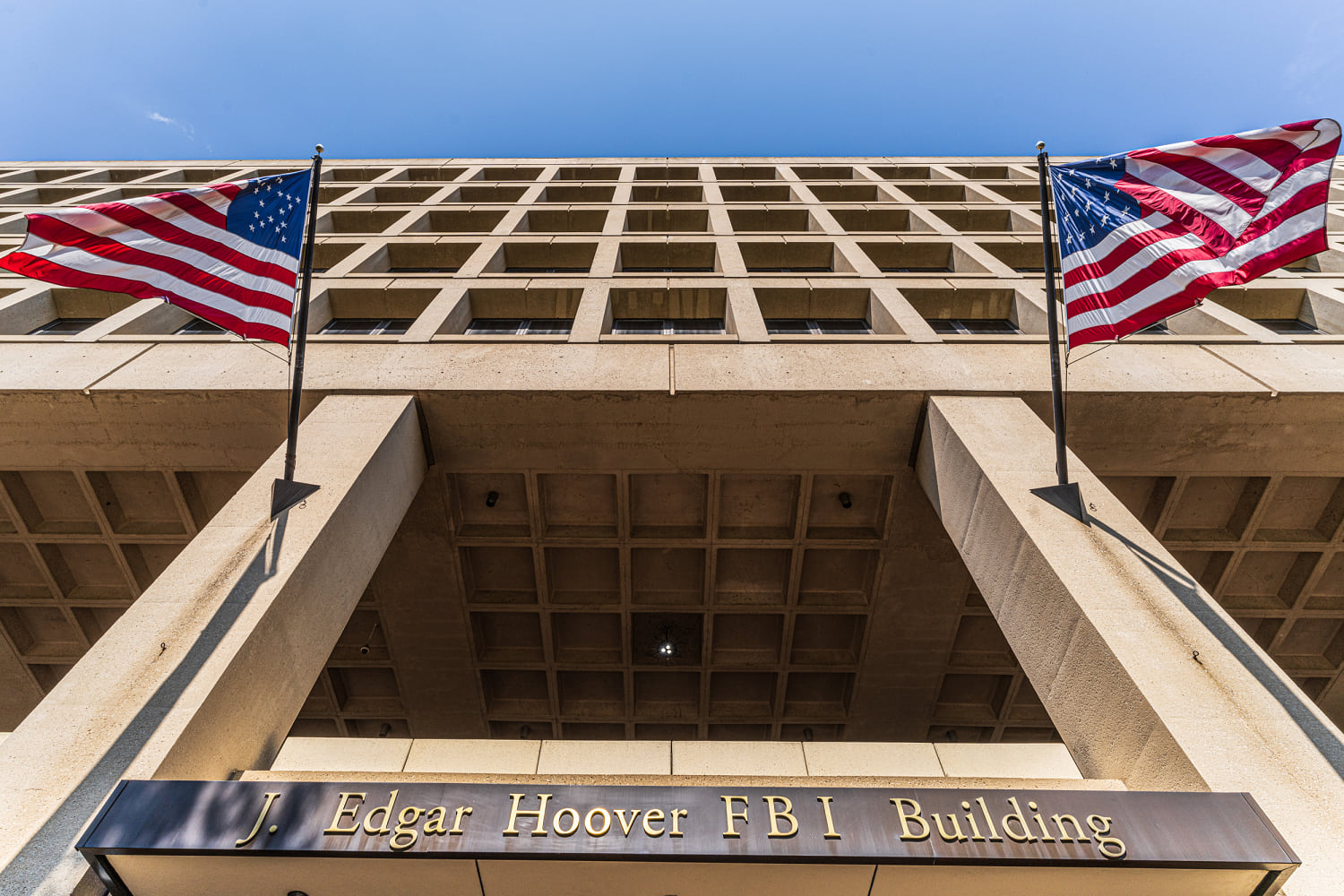
If you picture the FBI crime database as one giant hard drive sitting under J. Edgar Hoover Building in Washington, D.C., you're looking at the wrong architecture. The bureau's primary criminal data infrastructure is the Criminal Justice Information Services (CJIS) division, based in Clarksburg, West Virginia. For another angle on this event, refer to the latest coverage from Wired.
CJIS manages several distinct systems that form the backbone of American policing:
- The National Crime Information Center (NCIC): This is the real-time computerized index of criminal justice information. When a state trooper pulls you over for a broken taillight and runs your license plate, they're querying NCIC. It tracks stolen vehicles, missing persons, gang affiliations, terrorist watchlists, and active warrants.
- The National Incident-Based Reporting System (NIBRS): Unlike NCIC, which is tactical and immediate, NIBRS collects detailed crime statistics from local, state, and federal agencies to track trends in offenses, victims, and offenders.
- Next Generation Identification (NGI): This is the biometric warehouse holding fingerprints, palm prints, iris scans, and facial recognition data.
Here is the catch. The FBI doesn't operate these systems in a vacuum. Over 18,000 federal, state, local, and tribal law enforcement agencies connect to CJIS networks every single day. Every municipal police department with a patrol car laptop, every county sheriff's office, and every state fusion center acts as a doorway into that broader ecosystem.
When reports surface of an FBI investigating potential breach of its crime database scenario, security researchers immediately look outward rather than inward. Breaking directly into CJIS core servers requires nation-state resources and extraordinary luck. Compromising a poorly funded rural police department's credential management system or exploiting an unpatched vendor portal connected to a state law enforcement network? That happens constantly.
Why Law Enforcement Databases Are Prime Targets
Cybercriminals and foreign intelligence services don't target law enforcement networks just to cause chaos. They target them because the data inside has immediate, high-leverage value.
Think about what sits inside an active criminal justice query log or an incident report. If a transnational criminal syndicate or a foreign intelligence agency wants to know whether the FBI is currently investigating one of their operatives, they don't need to steal the entire database. They just need to check whether a specific name, passport number, or vehicle identification number has been queried recently.
In intelligence circles, this is known as counter-surveillance through data compromise. Finding out who the police are looking at is often more valuable than stealing credit card numbers.
There is also the extortion angle. Local police departments and municipal networks have been hammered by ransomware groups over the past several years. When attackers breach a local agency, they frequently exfiltrate local case files, confidential informant notes, and cached records pulled from federal systems. Even if the core FBI servers remain untouched, the downstream exposure achieves the exact same result for the attacker.
The Difference Between a Core Breach and an Access-Point Compromise
Whenever federal authorities confirm an investigation into a potential database compromise, the language they use matters enormously. Officials rarely say "we were hacked" right away, not because they're trying to cover things up, but because forensic attribution inside a federated network takes months.
Consider the three most common ways an FBI-linked database incident occurs:
1. Compromised Partner Credentials
A local officer or civilian clerk falls for a phishing email, or reuses a password that was leaked in an unrelated commercial breach. If their agency hasn't strictly enforced hardware-based multi-factor authentication, an attacker walks right through the front door using legitimate credentials. Because the queries look like normal police work, automated alarms often miss them at first.
2. Third-Party Vendor Vulnerabilities
Law enforcement agencies rely heavily on private contractors for records management software, cloud storage, and dispatch systems. In recent years, major supply-chain vulnerabilities in enterprise file-transfer tools and cloud misconfigurations have exposed sensitive government communications without anyone ever touching a federal server directly.
3. Insider Threats and Misuse
Not every breach involves a hooded hacker overseas. Historically, some of the most damaging exposures of NCIC and state crime databases have come from vetted insiders abusing their access. Officers looking up ex-partners, clerks selling background check data to private investigators, or contractors downloading bulk records represent a persistent internal headache for CJIS auditors.
Every single terminal connected to NCIC is legally required to log every query, and CJIS conducts regular audits of state agencies. Still, auditing millions of daily transactions means anomalous behavior often gets caught after the fact rather than blocked in real time.
What Past Federal Data Incidents Teach Us
We don't have to guess how the FBI handles these investigations because the federal government has a long, documented track record of responding to network intrusions.
In 2021, attackers compromised an FBI external email system used to communicate with state and local law enforcement, sending out tens of thousands of fake warning emails purporting to come from the Department of Homeland Security. That incident didn't touch classified intelligence networks or core criminal databases, yet it demonstrated how quickly attackers can weaponize trust within law enforcement communication channels.
Going back further, the 2015 Office of Personnel Management (OPM) breach exposed background investigation records—including SF-86 forms packed with intimate personal details—for over 21 million people. That breach fundamentally changed how federal agencies segment their networks and encrypt data at rest.
What did those incidents prove? First, initial reports almost always overestimate the scope of technical destruction while underestimating the long-term counterintelligence fallout. Second, federal agencies take an aggressively cautious approach to public disclosure while an investigation is active. If forensic teams are quietly monitoring an intruder to see what they're looking for and who is backing them, announcing technical details publicly ruins the operation.
Does This Mean Your Personal Data Is Exposed?
If you've never been arrested, fingerprinted for a government clearance, or listed in a police report, your exposure in a law enforcement database is minimal—though not zero.
Law enforcement databases don't just hold records on convicted criminals. They contain information on:
- Crime victims and witnesses who gave statements to local police
- Individuals who underwent background checks for employment, firearm purchases, or professional licensing
- People involved in routine traffic stops or wellness checks where license plates and driver's licenses were logged
- Missing persons reports and protective orders
If an unauthorized party gains access to an investigative portal or a state-level criminal justice switch, records tied to routine interactions can be swept up alongside felony case files.
That said, law enforcement databases generally don't hold your bank account credentials, your tax returns, or your medical history. If your data is caught up in a law enforcement incident, the primary risk isn't someone draining your checking account tomorrow morning. It's targeted phishing, identity impersonation, or—if you're involved in sensitive legal or government work—compromised operational security.
Why Securing Federated Policing Systems Is So Difficult
From the outside, fixing this looks simple. Lock down the servers, require hardware security keys for everyone, and monitor every byte leaving the network.
In practice, enforcing uniform cybersecurity across 18,000 independent police agencies is a logistical nightmare. A major metropolitan department like the NYPD or LAPD has a dedicated cybersecurity division and millions of dollars in IT funding. A ten-person police department in a rural county relies on a part-time IT contractor who also services the local school district and water plant.
CJIS publishes a massive, strict set of rules called the CJIS Security Policy, which mandates encryption standards, background checks for IT personnel, and multi-factor authentication. Yet compliance is uneven. Budget constraints, legacy software that can't easily be patched, and human error create gaps that sophisticated attackers actively hunt for.
You can't just unplug local police from federal databases without blinding officers on the street. When an officer approaches a car at two in the morning, they need to know within seconds if the driver is wanted for armed robbery. That need for instant, frictionless access directly collides with the strict compartmentalization required for rock-solid cybersecurity.
Practical Steps You Can Take Right Now
You can't patch an FBI server or audit your local sheriff's firewall, so don't waste energy worrying about things outside your control. Focus on the downstream risks that actually affect individuals when government or institutional databases come under scrutiny.
- Freeze your credit across all three bureaus. If an incident involves personal identifiers like names, dates of birth, and Social Security numbers from background check records, a credit freeze at Equifax, Experian, and TransUnion stops attackers from opening fraudulent lines of credit. It's free and takes ten minutes.
- Treat unsolicited law enforcement calls or emails as hostile. Whenever news breaks about a police or FBI database breach, scammers immediately launch phishing campaigns claiming to be federal agents calling about a warrant or compromised case file. The FBI does not call citizens demanding payment, gift cards, or wire transfers to clear a warrant. Hang up and call your local field office directly using a verified phone number.
- Lock down your personal email and phone carrier accounts. Attackers who obtain basic biographical data from breached records often use it to execute SIM-swapping attacks or reset passwords on primary email accounts. Move away from SMS text message codes and use an authenticator app or physical security key wherever possible.
- Watch official FBI and CISA advisories rather than social media rumors. Early reporting on federal cyber investigations is notorious for conflating minor portal compromises with total system meltdowns. Check verified updates from the FBI Newsroom or the Cybersecurity and Infrastructure Security Agency (CISA) for confirmed remediation guidance.
Federal cyber investigations move slowly because forensic certainty matters more than fast headlines. Keep your personal accounts hardened, stay skeptical of urgent messages claiming official authority, and let the forensic teams finish tracing the digital footprints.