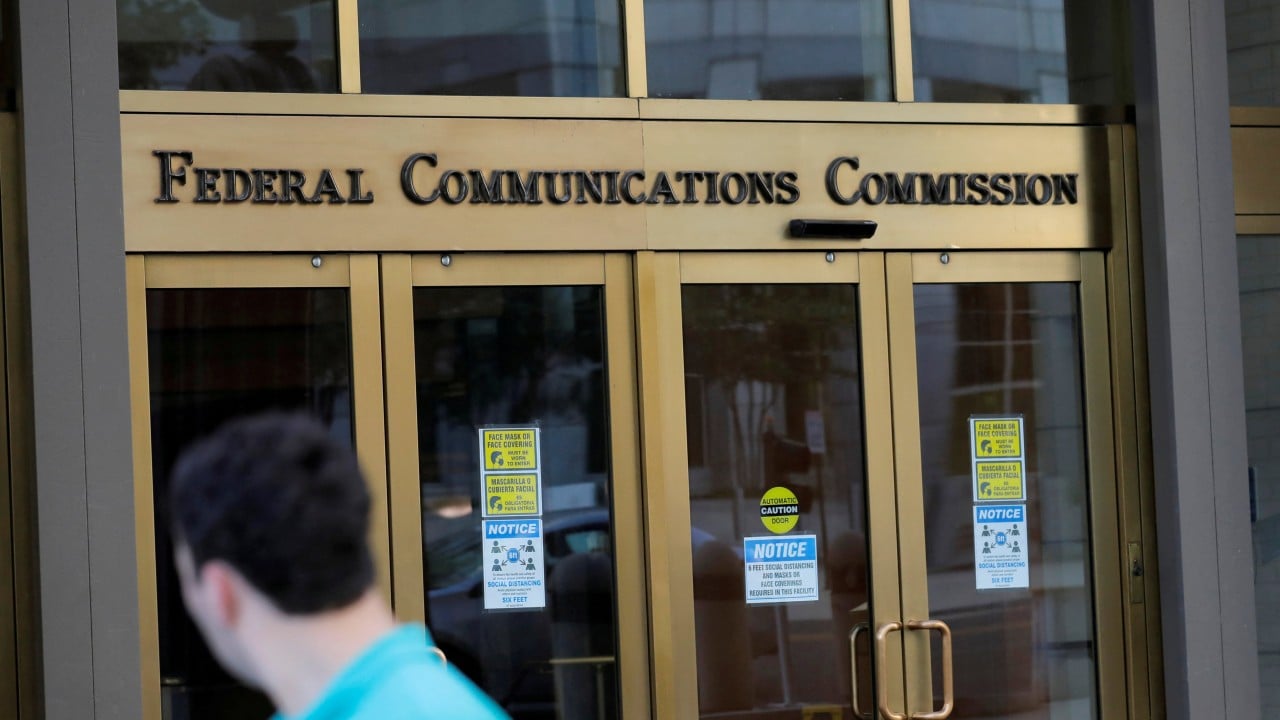
The federal government just sent a massive shockwave through the domestic tech sector, and if you think national security restrictions only apply to massive state-owned Chinese conglomerates, you are dead wrong. On July 7, 2026, the Federal Communications Commission threw down the hammer on a seemingly standard domestic business. They blacklisted a California-based company called Digitalsystem Technology Inc., banning it from providing international telecommunications services and slapping it onto the federal Covered List of national security threats.
This isn't just another routine regulatory update. It represents a massive shift in how Washington polices communication networks. For years, federal regulators focused their energy on foreign giants operating from overseas, names like Huawei, ZTE, or China Telecom. Now, the crosshairs have shifted to domestic entities operating right inside American borders. Digitalsystem Technology is based in Los Angeles. It presents itself as a standard IT solutions provider. Yet, because of its ownership ties to a Chinese national and strategic links to foreign telecom entities, the government treated it as an active threat vector.
If you run an enterprise IT network, buy telecom infrastructure, or manage compliance for a growing tech firm, this decision should make you sweat. The rules changed. Local corporate registration no longer offers a shield against national security vetting.
The Reality Behind the Digitalsystem Technology Ban
Let's look closely at what actually went down. The FCC officially denied Digitalsystem Technology's Section 214 application. In plain English, a Section 214 authorization is the mandatory golden ticket required by the Communications Act of 1934 to provide international telecommunication services within the United States. Without it, you cannot legally route traffic or manage international data lines connecting to American infrastructure.
The agency didn't just deny the application. They took the extraordinary step of adding the company to the formal list of equipment and services that pose an unacceptable risk to national security. The justification from the FCC was remarkably blunt. They stated that the firm's structure creates a significant risk that the Chinese government and foreign threat actors could exploit vulnerabilities to collect, disrupt, or misroute American communications.
Think about what that implies. The regulators are openly saying that a firm based in southern California could serve as a backdoor data pipeline for Beijing.
The Myth of the Domestic Safe Haven
Many tech executives operate under a false assumption. They believe that as long as a company is incorporated in Delaware or California, pays local taxes, and hires local staff, it bypasses the grueling national security scrutiny faced by foreign applicants. This case completely obliterates that myth.
Digitalsystem Technology operated within the American corporate ecosystem. However, deep ownership structures and operational partnerships are what matter to modern regulators. The FCC noted that the company is owned by a Chinese national and maintains deep ties with mainland Chinese telecom operations. In the eyes of the intelligence community, that makes the company a direct proxy, subject to China's strict national security laws which compel citizens and businesses to assist in state intelligence gathering.
The real surprise here is the speed and breadth of the enforcement. It proves that the investigative arm of the executive branch, often referred to as Team Telecom, is tracking smaller, domestic IT service firms with the same intensity they use for major international carriers.
A Timeline of Regulatory Aggression
To understand why this is happening now, you have to look at the escalating campaign over the last several years. The federal government has been systematically cleaning house, removing anything that smells like foreign state influence from American communications infrastructure.
The foundational shift happened back in May 2019, when the FCC completely denied China Mobile USA's application to enter the market. That was the first time the agency blocked a carrier outright based on national security recommendations from executive branch agencies. Critics back then wondered if it was a one-off geopolitical stunt. It wasn't.
By 2021 and 2022, the FCC shifted from blocking new entrants to kicking out established players. They revoked the existing operating licenses of China Telecom Americas and China Unicom Americas. They argued that the security environment had dramatically changed since those licenses were originally granted in the early 2000s. Then, in April 2024, the commission ordered the American subsidiaries of these state-backed giants to completely stop offering fixed and mobile broadband internet services inside the country.
Now, fast forward to 2026. The easy targets are gone. The major state-owned operators have been legally dismantled within the US market. The next logical phase of this policy is hunting down smaller, private IT intermediaries and domestic service providers that maintain underlying links to the mainland. Digitalsystem Technology is simply the first major casualty of this expanded dragnet.
Why Enterprise Data Centers Are the Next Battleground
The technical threat has shifted from simple hardware espionage to complex data routing vulnerabilities. Ten years ago, the primary concern was whether a Huawei router contained a physical backdoor hidden in its silicon chips. Today, the anxiety revolves around data transit, internet exchange points, and the physical facilities housing server racks.
Earlier this year, the FCC signaled that it wanted new restrictions targeting how foreign-linked firms operate data centers and internet exchange points on American soil. The underlying fear is data manipulation and traffic interception.
When a company like Digitalsystem Technology handles international data routing, they manage the pathways that data takes from point A to point B. If those pathways are compromised, an adversarial state doesn't need to hack your company mainframe. They can simply sniff the data packets as they transit through compromised infrastructure. The FCC pointed directly to this risk, highlighting the danger of misrouted communications. A single diverted data stream can expose sensitive corporate intellectual property, personal identifiable information, or law enforcement data to foreign intelligence collectors.
The Immediate Impact on Corporate Procurement
If you are a Chief Information Officer or an infrastructure buyer, you cannot afford to ignore this. The regulatory landscape is moving too fast. If your vendor gets added to the Covered List, your entire operational pipeline can gridlock overnight.
Federal subsidies and universal service funds cannot be spent on any gear or services provided by companies on the Covered List. While your private business might not use federal subsidies, your broader partners, data center providers, and upstream carriers definitely do. If you integrate a blacklisted vendor into your tech stack, you risk contaminating your entire network ecosystem, making your business toxic to enterprise clients and government contractors.
The Chinese Embassy in Washington routinely criticizes these moves, calling them an overextension of national security concepts designed to suppress Chinese enterprises. Legitimate or not, that political debate won't save your network if your vendor loses its operating license. You have to assume that any entity with significant Chinese ownership or deep corporate ties to the mainland is a ticking compliance clock.
Action Steps for IT Leaders and Risk Managers
Do not wait for the FCC to issue another press release before you audit your vendors. You need to protect your infrastructure immediately.
First, execute a comprehensive audit of your tier-two and tier-three IT service providers. Do not just look at the corporate logo or the California office address. Look at the ultimate beneficial ownership. If a critical service provider is controlled by foreign nationals from sensitive jurisdictions, you need a contingency plan.
Second, re-evaluate your data routing contracts. Ensure your international traffic uses verified, clean networks. You should explicitly demand transparent routing logs from your transit providers to prove your data isn't passing through flagged exchange points.
Third, update your procurement master service agreements. Insert strict clauses that allow for immediate contract termination without penalty if a vendor is added to the FCC Covered List, faces a Section 214 revocation, or becomes subject to a negative Team Telecom recommendation.
The era of trusting a tech vendor simply because they have an office in Los Angeles or Silicon Valley is completely over. The FCC showed its hand. They are willing to target domestic IT firms to wall off American data from foreign hands. If you aren't actively vetting the geopolitical risk of your tech stack, you are exposing your business to catastrophic operational and regulatory failure. Ensure your compliance teams are analyzing ownership records, not just corporate brochures. Your network security depends on it.