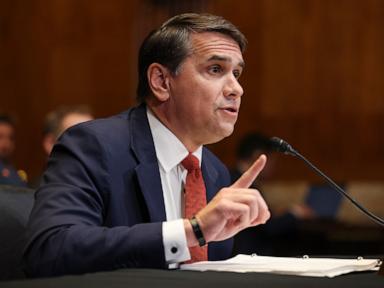
Acting Attorney General Todd Blanche established a $1.776 billion Anti-Weaponization Fund under the guise of settling a private family lawsuit against the Internal Revenue Service, quietly creating a mechanism that routes taxpayer money to individuals claiming political targeting. By bypassing the standard congressional appropriations process and anchoring the fund within the Treasury Department’s permanent Judgment Fund, the Justice Department has built a financial pipeline capable of issuing cash payouts and formal apologies to political allies, including pardoned January 6 defendants. This structural design insulates the fund from immediate legislative blockades while centralizing distribution authority within a five-member, executive-appointed commission.
The maneuver represents an unprecedented application of federal settlement law, converting a dispute over leaked tax records into an expansive administrative payout system.
The Judgment Fund Loophole
To understand how nearly $1.8 billion can vanish from the Treasury without a single vote on the house floor, one must examine the mechanics of the Federal Judgment Fund. Established by Congress to automatically pay out judicial awards and compromise settlements against the United States, the fund acts as a permanent, indefinite appropriation. It exists so the government can settle its valid legal debts without waiting for a specific legislative funding bill.
The Justice Department utilized this mechanism by tying the creation of the Anti-Weaponization Fund to the settlement of a civil lawsuit filed by Donald Trump, his sons, and the Trump Organization over the unlawful 2022 disclosure of their confidential tax information. Under normal parameters, a settlement compensates the specific plaintiffs for documented damages. In this instance, the plaintiffs agreed to drop their lawsuit, alongside administrative claims regarding the 2022 search of Mar-a-Lago, in exchange for the government establishing a broad compensation apparatus for third parties.
By routing the money through a compromise settlement, the executive branch avoided the need for congressional approval. The $1.776 billion sum was moved into a dedicated account under the total control of a panel appointed by the Acting Attorney General. It is an administrative bypass that turns a defensive legal shield into an offensive fiscal tool.
Comparative Funding Structures
The administration points to historical precedent to justify the structure, specifically referencing the Obama-era Keepseagle v. Vilsack settlement, which established a $760 million fund to address systemic discrimination against Native American farmers by the Department of Agriculture.
However, the structural differences between the two funds reveal a distinct operational shift:
| Feature | The Keepseagle Fund (2010) | The Anti-Weaponization Fund (2026) |
|---|---|---|
| Originating Dispute | Certified class-action lawsuit alleging decades of institutional credit discrimination. | Settlement of a private civil suit regarding localized tax record leaks. |
| Claimant Eligibility | Restricted to a legally defined class of applicants meeting specific historical criteria. | Open to any individual claiming vague "political, ideological, or personal" targeting. |
| Residual Capital | Unclaimed funds distributed to third-party agricultural non-profits and NGOs. | Unclaimed funds revert strictly back to the federal treasury upon expiration. |
| Oversight Panel | Court-approved claims administrator subject to judicial modification. | Five-member commission appointed entirely by the Acting Attorney General. |
Discretion Without Discovery
The operational framework of the fund strips away the standard evidentiary burdens required in a court of law. Under the guidelines established by the memorandum, claimants are not required to prove a violation of their constitutional rights to an independent judge. Instead, they submit voluntary claims to a five-member commission chosen by Blanche, with minimal consultation with congressional leadership.
During a Senate appropriations subcommittee hearing, Blanche confirmed the expansive scope of the program, explicitly refusing to rule out financial payouts for individuals convicted or pardoned in connection with the January 6 Capitol riot. Because the language governing the fund relies on subjective terms like "lawfare" and "weaponization," the panel possesses unilateral authority to define who qualifies as a victim.
This lack of strict statutory definitions transforms the traditional legal process. In a standard civil rights lawsuit against the government under a Bivens claim or the Federal Tort Claims Act, plaintiffs face rigorous legal hurdles, sovereign immunity defenses, and extensive discovery processes where they must present concrete evidence of state malice. The Anti-Weaponization Fund replaces this adversarial system with an internal administrative review. The commission functions as investigator, judge, and paymaster, operating with a pool of capital that requires no further sign-off from lawmakers.
"Based on what has come out so far, it is just a fund that the taxpayers are going to pay for to cover claims by people who feel mistreated, without them having to prove anything in a court of law," notes Liz Oyer, a former Justice Department pardon attorney.
💡 You might also like: Why Irans New Leader Wont Back Down on the Strait of Hormuz
The Sunset Clause and Insulated Oversight
The architectural design of the fund includes a built-in expiration date of December 15, 2028. This timeline is deliberate. By concluding all claims processing one month before the next presidential inauguration, the authors of the fund have ensured that its capital will be fully deployed, distributed, or legally committed before a subsequent administration can seize or freeze the account.
Oversight of the distributed funds remains strictly internal. While the commission is mandated to deliver quarterly reports to the Attorney General detailing the recipients and the financial scope of the relief granted, the text of the settlement agreement designates these internal reviews as confidential.
While Blanche testified to lawmakers that the awards would eventually become public through the Freedom of Information Act (FOIA) process, the reality of federal transparency litigation suggests otherwise. A FOIA request targeting sensitive Justice Department settlement records can take years to process, frequently resulting in heavily redacted disclosures that conceal the names of individual payees and the specific narratives used to justify their payouts.
This internal auditing structure effectively shields the day-to-day operations of the fund from real-time legislative scrutiny, leaving critics with few options outside of protracted structural litigation.
The Strategy of Attrition
The establishment of the fund occurs alongside a broader, structural overhaul within the Justice Department. Since taking the role of Acting Attorney General, Blanche has pursued aggressive legal campaigns against perceived institutional adversaries, including a second indictment of former FBI Director James Comey and fraud charges leveled against civil rights organizations like the Southern Poverty Law Center.
These cases have drawn sharp criticism from veteran prosecutors who point out that the underlying evidence appears thin, failing to meet the traditional department threshold of possessing sufficient evidence to secure and sustain a conviction. However, securing a conviction may not be the primary operational goal.
By utilizing the federal grand jury system to initiate prosecutions against political opponents while simultaneously deploying the Anti-Weaponization Fund to financially reward political allies, the department is executing a dual-track strategy. For adversaries, the punishment is the process itself—the financial ruin, reputational damage, and psychological exhaustion of defending against federal charges, even if those charges ultimately fail in court. For allies, the fund serves as an institutional safety net, offering a direct mechanism to recoup losses, collect federal apologies, and convert legal entanglements into taxpayer funded restitution.
The strategy fundamentally alters the risk calculus of political engagement with the state. By institutionalizing financial rewards for one faction while imposing systemic legal costs on another, the structure alters how federal law enforcement operates, using the permanent architecture of the state to validate personal grievances and distribute public funds outside the bounds of traditional governance.


