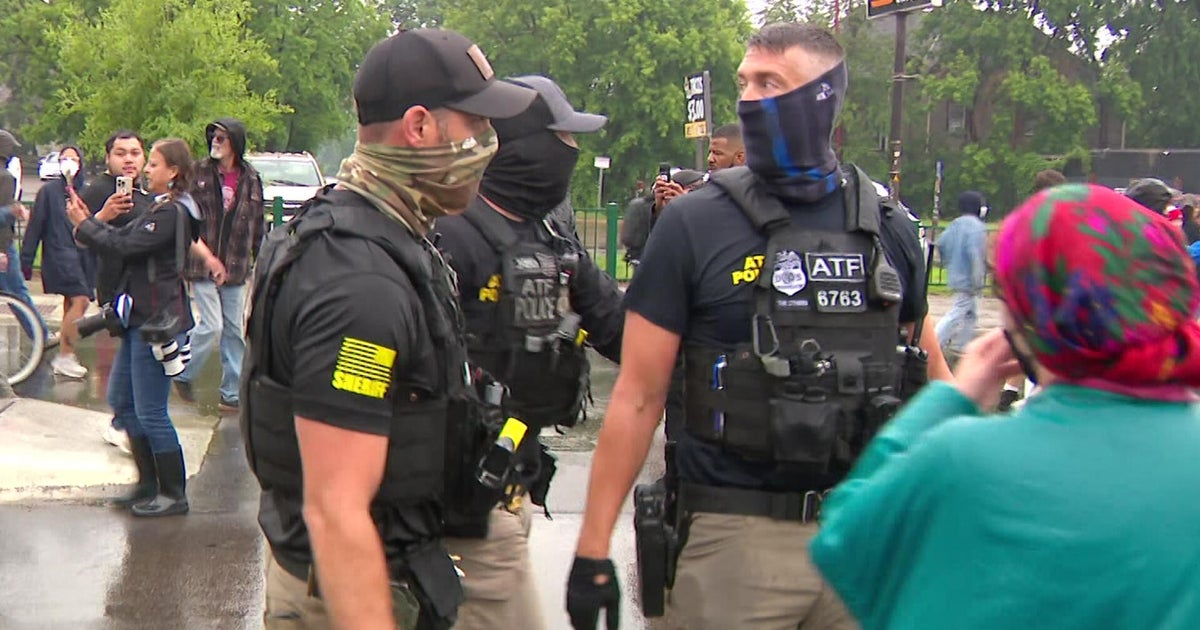
The traditional immunity that often protects federal agents from local prosecution just hit a wall in Hennepin County. When County Attorney Mary Moriarty announced assault charges against an Immigration and Customs Enforcement (ICE) officer, she didn't just file a criminal complaint; she threw a wrench into the long-standing machinery of intergovernmental deference. The case involves an off-duty altercation that escalated into physical violence, but its implications reach far into the legal friction between state police powers and federal supremacy.
For decades, the unwritten rule of law enforcement was simple: local DAs don't touch federal badges. That era is ending. This prosecution signals a shift where local officials are no longer willing to wait for federal internal affairs departments to police their own. Instead, they are asserting that a federal paycheck does not provide a permanent "get out of jail free" card for conduct that violates state law.
The Collision at the Heart of the Case
The incident itself is raw and uncomplicated, stripped of the usual bureaucratic layers. According to charging documents, the ICE agent was involved in a dispute that quickly turned physical. There was no high-stakes raid or complex sting operation gone wrong. This was a human interaction that failed, resulting in an assault charge that the Hennepin County Attorney’s Office believes is supported by clear evidence.
What makes this remarkable is the identity of the defendant. Under the Supremacy Clause of the U.S. Constitution, federal employees often claim "immunity" if they can prove they were performing their duties. However, that shield is not an absolute suit of armor. When an agent acts outside the scope of their official employment—especially in an off-duty capacity—they fall back into the same legal pool as any other citizen.
The Hennepin County prosecutors are betting that the facts of this case sit squarely outside federal protection. They are navigating a narrow path. If the defense can successfully argue that the agent’s actions were even tangentially related to their federal role, the case could be "removed" to federal court, where local prosecutors often find a much colder reception.
The Breakdown of Interagency Deference
To understand why this is happening now, you have to look at the deteriorating relationship between local progressive prosecutors and federal immigration authorities. In cities like Minneapolis, the political climate has turned sharply against the aggressive tactics often associated with ICE.
The Erosion of Trust
In the past, a local police department or a County Attorney might have handed this information over to the Department of Homeland Security's Office of Professional Responsibility and considered the matter closed. They would assume the federal government would handle its own "bad apples."
That trust has vanished.
Local officials now view federal oversight as a black box. They see agents who are reassigned rather than disciplined, and they see victims who are left without recourse in the local justice system. By filing these charges, Moriarty is sending a message to her constituents that the law in Hennepin County applies to everyone within its borders, regardless of who signs their paycheck.
The Legal Counter-Offensive
Expect the defense to swing hard. The legal strategy for a federal agent facing state charges almost always involves a motion for Removal under 28 U.S.C. § 1442. This allows federal officers to move state criminal or civil cases to federal court if the charges relate to acts done under "color of office."
If this case stays in state court, it is a disaster for the agent. Local juries in Hennepin County are not historically sympathetic to federal immigration enforcement officers. If it moves to federal court, the agent gains a home-court advantage where judges are more attuned to the nuances of federal immunity. This jurisdictional tug-of-war is where the real battle will be won or lost.
A Growing Trend of Local Assertion
Minnesota isn't an outlier; it's a bellwether. From Portland to New York, we are seeing a rise in local prosecutors willing to test the limits of their authority against federal actors. This isn't just about immigration. It’s about a broader movement to decentralize legal accountability.
The myth of the "untouchable fed" has been a staple of the American legal system for over a century. It stems from cases like In re Neagle (1890), where the Supreme Court held that a federal marshal couldn't be prosecuted by a state for a killing committed in the line of duty. But the Neagle standard requires the officer to be doing what is "necessary and proper" for their federal mission.
As the line between an agent's professional duties and their personal conduct blurs, local prosecutors are finding more room to maneuver. They are looking for the cracks in the Neagle armor. In this Minnesota case, the prosecutor is effectively arguing that the agent’s conduct was neither necessary nor proper, but a standard criminal act that demands a standard criminal response.
The Risks for Local Prosecutors
Taking on the federal government is an expensive and politically risky endeavor. The Department of Justice has nearly bottomless resources to defend its own interests. When a local DA files charges against a federal agent, they aren't just fighting one lawyer; they are potentially fighting the entire weight of the U.S. government's legal apparatus.
- Resource Drain: A single removal hearing can tie up a local prosecutor's office for months.
- Political Backlash: National law enforcement unions and federal agencies may retaliate by withholding cooperation on other task forces.
- Precedent Risk: If the local prosecutor loses, they might inadvertently create a stronger legal precedent for federal immunity that makes it harder to prosecute agents in the future.
Despite these risks, the Hennepin County Attorney’s Office is moving forward. This suggests they believe their evidence is not just "good enough," but overwhelming. In a high-profile case like this, a "not guilty" verdict or a dismissal on jurisdictional grounds would be a massive embarrassment that could chill similar prosecutions nationwide.
Behind the Bureaucracy
The internal culture of ICE often emphasizes a "siege mentality." Agents feel they are under attack from both the public and local governments. When one of their own is charged with a crime by a local prosecutor, it reinforces the internal narrative that the local legal system is biased against them.
On the other side, the community sees a system that has long ignored the misdeeds of those in power. For victims of assault or misconduct, the specific employer of their attacker matters less than the bruises left behind. The Minnesota case represents a collision between these two irreconcilable worldviews.
The outcome of this prosecution will serve as a roadmap for other jurisdictions. If Moriarty succeeds, expect a wave of similar charges in other "sanctuary" or progressive-leaning counties. If she fails, federal agencies will likely use the loss to reinforce their immunity claims, making the shield around their agents even thicker.
The Mechanics of Federal Immunity
Federal immunity is often misunderstood as a blanket protection. It is actually a functional immunity. It only exists to the extent that it allows the federal government to operate without being harassed by state lawsuits.
If an agent is driving to a raid and gets into a car accident because they were speeding, they might be immune. If that same agent gets into a bar fight after their shift, the law says they are just another person. The friction in the Minnesota case arises because the "off-duty" status is being scrutinized. Prosecutors are looking at the moment the agent stepped out of their federal role and into the role of an aggressor.
This isn't about policy; it's about physics. It’s about the physical reality of one person striking another and whether the state has the power to punish that act.
Redefining the Power Dynamic
The power dynamic between state and federal authorities is usually a top-down affair. The federal government sets the rules, and the states follow. This prosecution flips that script. It is an assertion of State Sovereignty in its most basic form: the power to keep the peace and protect residents from physical harm.
The charging of an ICE agent for assault is a signal that the "professional courtesy" that once governed law enforcement is dead. In its place is a new, more combative relationship where local prosecutors act as a check on federal power. They are no longer content to be junior partners in the justice system.
This case is a test of whether the U.S. legal system can actually hold its most powerful actors to the same standards it applies to everyone else. It forces a confrontation between the abstract concept of federal supremacy and the concrete reality of local criminal law.
The trial, should it reach that stage, will not just be about a single fight or a single agent. It will be a referendum on the limits of the federal badge. If a county attorney can successfully convict a federal agent for a violent crime, the invisible wall that has protected federal employees for over a century will have its first major breach.
Law enforcement agencies across the country are watching. They know that if this prosecution sticks, the rules of the game have changed forever. No one is coming to save the agent from the local courthouse.