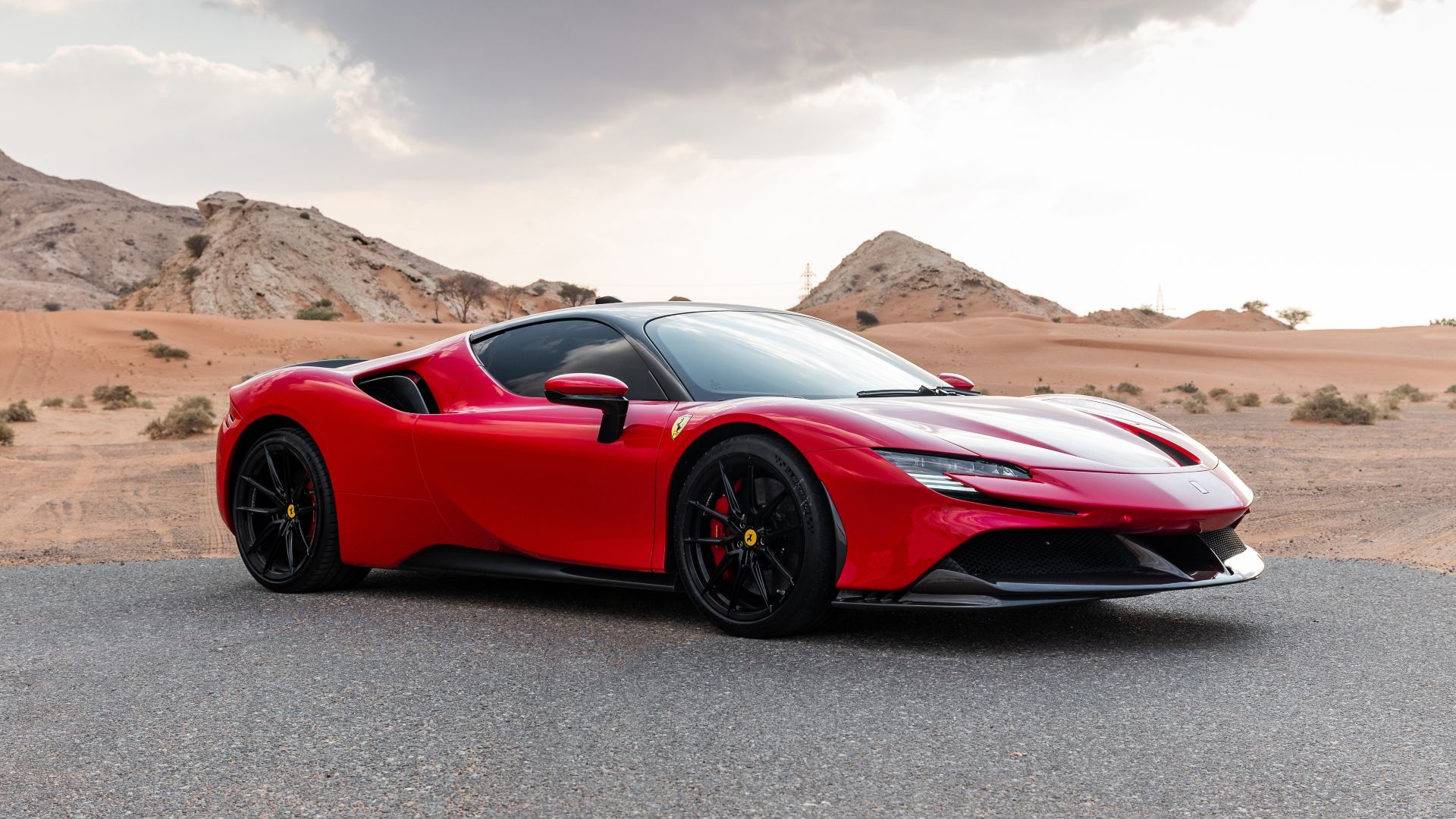
Wall Street is throwing a parade over Ferrari raising its 2026 guidance. Financial reporters are tripping over themselves to praise Maranello’s "pricing power" and "unstoppable momentum" after another Q3 earnings beat.
They are reading the balance sheet upside down. In other updates, take a look at: What MPs Miss About Poundland and Predatory Capitalism.
When a traditional automaker like Ford or Volkswagen beats earnings and raises full-year targets, you buy the stock. Volume is up, factories are humming, and market share is expanding. When an ultra-luxury monopoly like Ferrari does it, you should look closely at what is actually happening behind the curtain. You are not witnessing boundless growth. You are watching a company slowly mortgage its future scarcity to satisfy quarterly analyst spreadsheets.
The lazy consensus on the Street treats Ferrari like a high-margin tech stock or a standard luxury conglomerate. Analysts applaud the surging revenue per car, the bloated order books stretching into 2028, and the upward revisions to EBITDA. They completely miss the fundamental economic law that separates a Veblen good from a mere expensive product. The Wall Street Journal has provided coverage on this critical topic in extensive detail.
In ultra-luxury, beating earnings by squeezing more cash out of the same clients is not a sign of infinite runway. It is a sign that you are approaching the ceiling of exclusivity.
The Myth of Infinite Pricing Power
Financial commentators love the phrase "pricing power." They throw it around every time Ferrari posts an operating margin north of 28 percent. The assumption is simple: Ferrari can raise base prices, introduce a new "Icona" or "Special Series" model every eighteen months, and watch billionaires wire the deposits without blinking.
This is a fundamental misunderstanding of how ultra-high-net-worth buyers actually behave.
I have spent over a decade advising family offices and sitting across from the exact collectors who buy $3 million hypercars. These people are not price-sensitive in the traditional sense. They do not care if a Purosangue costs $400,000 or $500,000. What they care about—obsessively, pathologically—is residual value preservation and social signaling.
When you buy a Ferrari, you are not buying transportation. You are buying an entry ticket into a closed ecosystem where your asset is supposed to appreciate, or at the very least, hold its floor while you drive it for two years.
To beat Q3 expectations and raise 2026 guidance, Ferrari has leaned heavily on two levers:
- Hyper-aggressive personalization (Atelier and Tailor Made programs).
- Accelerated cadence of limited-edition, high-margin specials.
On paper, this looks brilliant. The average selling price (ASP) skyrockets without Ferrari having to drastically increase total unit shipments—keeping the sacred promise of "delivering one car less than the market demands," as Enzo Ferrari famously dictated.
In reality, this is a silent tax on their most loyal clientele.
When a collector has to spend $150,000 on exposed carbon fiber and bespoke stitching just to get an allocation for the next V12 flagship, the transaction stops feeling like a privilege and starts feeling like an extortion racket. If the secondary market softens—and in 2026, secondary prices for standard production hybrid supercars like the 296 GTB and SF90 Stradale have already shown clear signs of gravity—that illusion of "free money" evaporates. Once a collector realizes they are taking a $100,000 haircut the moment they drive off the lot, the order book dries up overnight.
Why Analysts Are Asking the Wrong Question
If you look at the standard financial coverage of Ferrari’s Q3 report, every analyst is asking the same predictable question: How high can Ferrari push its operating margins in 2026 and beyond?
That is the wrong question. The right question is: At what point does Ferrari’s relentless monetization destroy the brand equity that justifies its 45x price-to-earnings multiple?
Right now, Ferrari trades at a valuation multiple that makes LVMH and Hermès look like discount retailers. Investors are paying a massive premium for predictability. They look at a two-year waiting list and assume it is a concrete moat.
It isn't. A waiting list in the luxury sector is not guaranteed revenue; it is an option held by the buyer.
Imagine a scenario where the global equity markets hit a 20 percent correction in mid-2027, or luxury sentiment cools just as Ferrari’s first fully electric vehicle hits the road. Those "ironclad" order books are notoriously fluid when wealthy buyers decide to defer deliveries. We saw it with Swiss mechanical watches following the 2022 secondary market peak. For three years, watchmakers posted record earnings and raised guidance while claiming demand was insatiable. Then, secondary premiums collapsed, waiting lists vanished in six months, and authorized dealers were suddenly begging clients to take allocations.
Ferrari is not immune to the secondary market. In fact, Ferrari is entirely dependent on it.
The Personalization Trap
Let’s look closer at the engine driving this Q3 beat: personalization. Roughly 20 percent of Ferrari’s automotive revenue now comes from bespoke options.
In financial theory, high-margin add-ons are pure gold. In luxury brand management, unchecked personalization is a slow poison.
Compare Ferrari’s current strategy to Hermès—the undisputed gold standard of luxury economics. Hermès strictly controls the aesthetic output of its Birkin and Kelly bags. You do not walk into Rue du Faubourg Saint-Honoré and demand neon green stitching on a crocodile bag just because you are willing to pay triple. Hermès protects the visual integrity of the brand because they know that one tasteless billionaire can dilute the prestige for everyone else.
Ferrari, in its quest to juice Q3 numbers and raise 2026 guidance, has largely abandoned aesthetic gatekeeping. If a client wants a $600,000 supercar painted in a clashing two-tone livery with custom-dyed interior leather that looks like a highlighter exploded, Maranello takes the check and books the high-margin revenue.
This boosts quarterly EPS, sure. It also floods the pre-owned market with bizarre, un-sellable specifications that depress residual values across the entire model line. When those cars hit the auction block three years later and fail to meet reserve, it damages the entire brand's aura of invincibility.
The Electric Elephant in Maranello
There is another glaring omission in the celebratory coverage of Ferrari’s raised 2026 guidance: the transition to electrification.
Ferrari’s valuation is built on emotion, sound, and mechanical theater. For decades, the company sold the finest internal combustion engines on earth, wrapped in Italian coachbuilding. The engine was the soul of the product; everything else was just packaging.
As Ferrari ramps up its EV infrastructure and prepares to deliver its first full-electric model, the company faces an existential identity crisis that no Q3 earnings beat can paper over.
- Batteries are commodities. Ferrari does not have a century-long engineering moat in solid-state chemistry or electric motors. Rimac, Porsche, and even Chinese manufacturers like BYD have already demonstrated staggering straight-line electric performance.
- Depreciation on luxury EVs is brutal. Look at the residual curves of the Porsche Taycan or the Mercedes EQS. High-end buyers treat electric cars like smartphones—they want the newest tech, and they dump the old hardware at massive losses.
- The emotional disconnect. You cannot manufacture the visceral scream of a naturally aspirated 9,500-RPM V12 through external speakers.
By raising guidance now, management is setting an expectations trap. They are forcing themselves to squeeze maximum profit out of the tail end of the internal combustion era while the market still lets them. Investors cheering the 2026 numbers are applauding a sprint right before the terrain turns into a vertical cliff.
Dismantling the "Unstoppable" Narrative
Let’s break down the three most common arguments bulls use to defend Ferrari’s current trajectory—and why each one holds a hidden flaw.
1. "Ferrari limits volume, so they can never oversaturate the market."
The Reality: Volume is relative to the addressable market, not an arbitrary number. In 2010, Ferrari shipped roughly 6,500 cars a year. Today, they are shipping well over 13,500 units annually—more than double. Meanwhile, the Purosangue four-door utility vehicle has fundamentally altered the brand's street presence. Seeing a Ferrari used as a daily school-run vehicle in Miami, London, or Dubai normalizes the badge. When a product becomes common in affluent zip codes, the true apex predators move on to Pagani, Koenigsegg, or vintage coachbuilt classics.
2. "The order book covers the next two years, making earnings recession-proof."
The Reality: Order books measure intent, not settlement. In a liquidity crunch, wealthy buyers do not go bankrupt; they simply reallocate capital. Furthermore, Ferrari’s dealer network relies on rolling trade-ins. A client buys a new 12Cilindri by trading in their 812 Superfast. If the dealer cannot move the 812 at a strong price because the secondary market is clogged, the entire chain slows down. Ferrari books revenue when it wholesales the car to the dealer, not when the retail client takes delivery—a nuance that masks retail softening until inventory backs up on showroom floors.
3. "Luxury brands like Hermès prove you can raise prices forever."
The Reality: A $15,000 handbag does not require a $200 million R&D budget for battery thermal management, crash-test homologation, or global emissions compliance. Ferrari carries massive fixed capital expenditures (CapEx) that Hermès never has to touch. Comparing an automaker—even the most profitable one in history—to a leather goods house ignores the brutal reality of automotive manufacturing overhead. When Ferrari raises CapEx to build its e-building in Maranello while simultaneously pushing prices higher, they are increasing their operating leverage. If unit demand ever hiccups, those fixed costs will cut into margins just as fast as pricing power inflated them.
What Smart Investors Should Actually Watch
To be clear: betting against Ferrari outright has been a widow-maker trade for years. Benedetto Vigna and his leadership team are brilliant operators. Their execution on capital allocation, Formula 1 sponsorship monetization, and product mix optimization is unmatched in the automotive sector. If you short the stock simply because it looks expensive, you will likely get run over.
The flaw in the market's reaction isn't recognizing Ferrari's operational excellence—it's mistaking peak extraction for sustainable expansion.
If you want to know whether Ferrari’s raised 2026 guidance is a sign of enduring strength or the top of a cycle, stop reading the quarterly press releases and start tracking three real-world metrics:
- Secondary Market Spreads on V6 and V8 Hybrids: Watch the auction results and dealer asking prices for low-mileage 296 GTBs and SF90s. When standard-production Ferraris consistently trade 15 to 20 percent below MSRP within twelve months of delivery, the "free lease" psychology that fuels the order book breaks.
- The Ratio of Special Series to Core Models: Pay attention to how often Maranello announces "limited" editions. When every third car is a special series, nothing is special. Scarcity diluted is scarcity destroyed.
- Client Churn in the Top Tier: The top 1 percent of Ferrari collectors—the ones who own twenty or more cars and get first right of refusal on Icona models—are the canary in the coal mine. Many of these collectors are already quietly grumbling about being forced to buy models they don't want just to stay on the VIP list for the cars they actually desire.
Wall Street loves a clean upward revision. It makes for easy headlines and effortless buy ratings.
True luxury, however, is not built on maximizing quarterly extraction. It is built on restraint. Every time Ferrari beats earnings by pushing prices higher, expanding volume, and squeezing another hundred thousand dollars out of bespoke options, it trades a little bit of its mystique for a little bit of cash.
The spreadsheet looks better than ever. The magic is getting thinner by the quarter.


