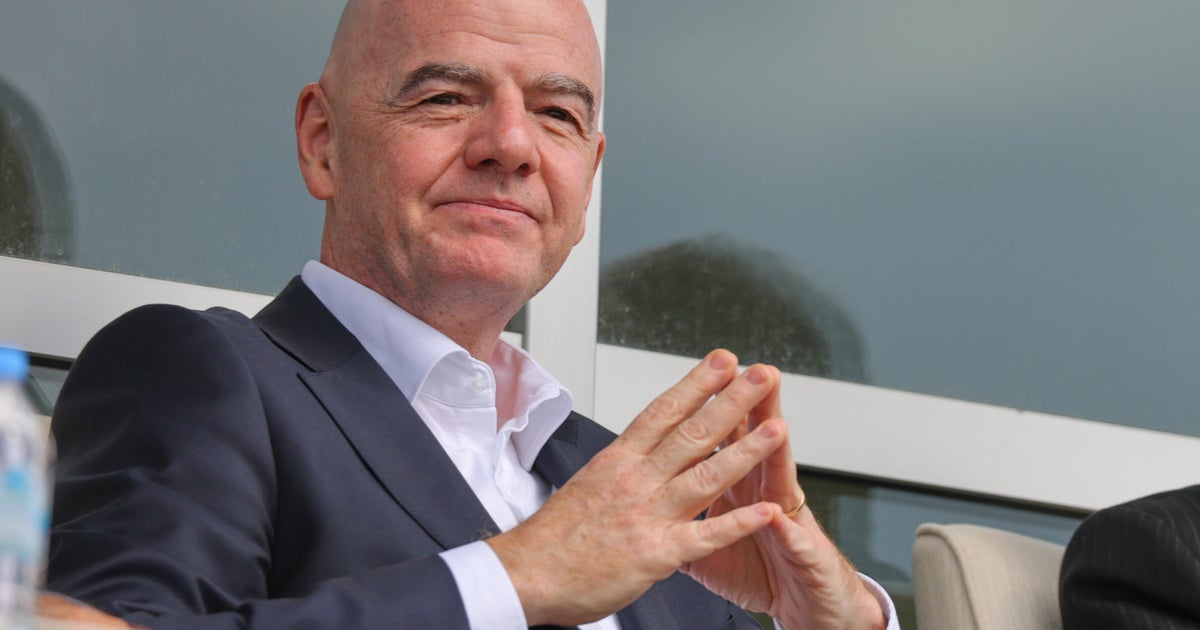
Gianni Infantino isn't budging. Despite a geopolitical storm that would make most diplomats quit, the FIFA president confirmed this week that Iran will play its 2026 World Cup group matches on American soil. There's no Plan B. There's no "neutral venue" in Mexico or Canada. If you're a fan expecting a last-minute schedule swap due to the current tensions between Washington and Tehran, you're going to be disappointed. FIFA’s stance is simple: football is the bridge, even when the bridge looks like it's on fire.
The announcement came during the 76th FIFA Congress in Vancouver, a meeting that started with a glaring empty chair. The Iranian delegation was absent. They didn't just miss the flight; their federation president, Mehdi Taj, and his colleagues were turned away at the Canadian border. It's a mess. But Infantino used his opening remarks to double down on the original plan. Iran is in Group G. They're playing in Los Angeles. They're playing in Seattle. And according to the man at the top, that's final.
Group G logistics and the California kickoff
Iran’s schedule is already locked into the West Coast. They open their campaign against New Zealand at SoFi Stadium in Los Angeles on June 16. It’s a massive logistical undertaking. Los Angeles has one of the largest Iranian diaspora populations in the world, which makes the choice of venue both a stroke of marketing genius and a security nightmare.
Here’s how the rest of their group stage looks:
- June 16: Iran vs. New Zealand at SoFi Stadium, Los Angeles.
- June 21: Belgium vs. Iran at SoFi Stadium, Los Angeles.
- June 27: Egypt vs. Iran at Lumen Field, Seattle.
The Iranian government originally floated the idea of moving these games to Mexico. It made sense on paper—fewer visa hurdles and a slightly less charged political atmosphere. Infantino killed that idea immediately. He’s betting on the "unifying power" of the tournament, a phrase he uses often, even while the US and Israel remain in a state of high alert following the military strikes in February.
The visa trap and the IRGC factor
The real reason for the empty seats at the Vancouver Congress tells you everything you need to know about the hurdles ahead. Canadian officials blocked Mehdi Taj because of his past ties to the Islamic Revolutionary Guard Corps (IRGC). Canada designates the IRGC as a terrorist organization. The US does the same.
So, while US Secretary of State Marco Rubio has said that the players themselves are welcome, the "support staff" is a different story. You can't run a World Cup team with just 26 guys in shorts. You need coaches, doctors, kit men, and federation officials. If the US starts denying visas to the "men in suits" because of IRGC affiliations, the Iranian government might decide to pull the team entirely as a matter of "national dignity."
I've seen this play out before in smaller tournaments, but the World Cup is a different beast. Trump has already chimed in, saying he’s "OK" with Iran playing because Infantino wants it. It’s a rare moment of alignment between the Oval Office and FIFA, likely smoothed over by that "FIFA Peace Prize" Infantino handed out last year. But don't let the rhetoric fool you; the security protocols for these three games will be the most intense in World Cup history.
What happens if they actually meet on the pitch?
If you think the group stage is tense, look at the bracket. There is a very real mathematical possibility that Iran and the USA could meet in the Round of 32 in Dallas. For that to happen, both teams would likely need to finish second in their respective groups. We saw this match-up in 1998 and again in 2022. In 1998, it was the "Most Politically Charged Match in History." In 2026, with the current conflict as a backdrop, it would be something else entirely.
FIFA is banking on the fact that the 2026 tournament is too big to fail. With 48 teams and an estimated $11 billion in revenue, the machine won't stop for a regional war. Infantino’s "Plan A" isn't just about optimism; it’s about protecting the bottom line. Moving games this late would disrupt ticket sales that have already hit record numbers. FIFA has already sold out nearly 90% of the available inventory. They aren't going to refund 70,000 people in Los Angeles because of a diplomatic spat.
Practical reality for fans
If you’re planning to attend these games, expect some friction. Security at SoFi and Lumen Field won't just be looking for flares; they’ll be managing massive protest groups and counter-protesters.
- Check your transit: Expect "frozen zones" around the stadiums hours earlier than usual.
- Visa delays: If you're traveling from abroad to support Team Melli, apply for your US visa yesterday. The "extreme vetting" isn't a myth in 2026.
- Stay updated: FIFA’s official platform is the only place where schedule changes—if they happen—will be legitimate. Ignore the rumors on social media about Mexico City.
Infantino wants a "total party," but right now, it looks more like a high-stakes standoff. The players want to play, the fans want to watch, and the politicians want to post. We’ll see who wins out when the whistle blows in LA on June 16. For now, keep your tickets and your travel plans. FIFA is holding the line.