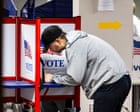
Surpassing 50 million early ballots three days prior to a midterm election does not signal a definitive partisan wave; it demonstrates a structural shift in voter participation logistics where high-propensity electorate segments cannibalize Election Day turnout. Standard political commentary treats raw early vote accumulation as a predictive scoreboard. In operational campaign management, raw volume without baseline propensity modeling creates severe resource misallocation. To extract actionable intelligence from pre-Election Day totals, analysts must separate total ballot volume from net electorate expansion, calculate channel substitution rates, and audit the partisan composition of the remaining uncast voter file.
The Fallacy of Raw Volume Metrics
Media coverage of early voting relies on absolute aggregate thresholds—such as crossing the 50-million-ballot mark—because large, round numbers generate immediate narrative momentum. However, an aggregate national figure obscures the fundamental mechanics of how modern elections are won. National totals conflate states with universal mail-in voting architectures, states with expansive in-person early voting windows, and states with restrictive absentee criteria.
When a campaign manager evaluates a 50-million-ballot milestone, three analytical failures typically occur:
- Aggregation Bias: Combining vote-by-mail (VBM) states like California, Washington, and Oregon with traditional Election Day states dilutes state-level variance. A surge in national early voting frequently reflects high automatic ballot distribution in safe states rather than competitive persuasion or mobilization in battleground districts.
- Temporal Distortion: Comparing raw totals at T-minus-three days across different election cycles ignores statutory changes. Between 2018, 2022, and 2026, dozens of state legislatures altered drop-box availability, mail-ballot request deadlines, and early in-person operating hours. Comparing raw volume across shifting regulatory baselines produces false positives regarding voter enthusiasm.
- The Zero-Sum Turnout Illusion: Campaigns often celebrate early vote milestones as "banked" votes that expand their total coalition. In reality, the vast majority of early voters are high-propensity participants who would have voted on Tuesday regardless of early access.
The Substitution Effect Versus Electorate Expansion
The core operational distinction in early vote analysis lies between channel substitution and net electorate expansion.
Channel substitution occurs when a voter who possesses a 90% or higher modeled probability of voting shifts their participation method from Election Day in-person to early in-person or mail-in voting. From a campaign's return-on-investment (ROI) perspective, channel substitution yields zero net margin gain. Its primary value is operational: once a high-propensity voter casts a ballot, the campaign can suppress that individual from Get-Out-The-Vote (GOTV) universes, reallocating paid media, door-knocking, and SMS budgets toward lower-propensity targets.
Net electorate expansion occurs when low-propensity or newly registered voters—individuals who historically abstain in midterm cycles—cast an early ballot. True electoral shifts happen only when early vote totals show a statistically significant over-index of low-propensity cohorts relative to historical midterm baselines.
Consider a hypothetical competitive House district where 120,000 ballots are cast early by the Saturday before Election Day. If 108,000 of those ballots belong to "four-of-four" voters (individuals who voted in the last four general elections), the campaign has merely front-loaded its existing base. If 35,000 of those ballots come from "zero-of-four" or "one-of-four" midterm voters, the underlying electorate has fundamentally expanded, rendering traditional polling turnout screens obsolete.
The Three-Pillar Early Vote Audit Framework
To convert raw early vote returns into tactical adjustments during the final 72 hours of a campaign, data teams must execute a structured three-pillar audit.
Pillar 1: Partisan Registration and Modeled Score Decomposition
In states with partisan voter registration (such as Pennsylvania, Florida, or North Carolina), public voter files report exact party breakdowns of returned mail ballots and early in-person check-ins. However, party registration is an increasingly lagging indicator of current vote choice due to realignment among non-college-educated voters and suburban independents.
Analysts must overlay individual-level partisanship scores (typically modeled on a 0-to-100 scale using consumer data, precinct history, and survey responses) onto the returned ballot file. A registered Democrat with a partisanship score of 35 in a rural county represents a probable Republican vote, regardless of their registration status. Auditing the early vote requires calculating the net modeled partisan margin of cast ballots, not simply counting registered D's versus R's.
Pillar 2: The Remaining Pool Calculation
The most critical metric at three days out is not who has voted, but who remains in the uncast universe. Campaign data directors construct a target universe of persuadable and mobilizable voters at the start of the cycle. Every evening, state election boards release an updated absentee/early vote file.
By matching the state file against the internal target universe, campaigns calculate their burn rate—the percentage of their total expected vote already secured.
- If Party A has banked 65% of its modeled Election Day goal while Party B has banked 40%, Party B faces an acute logistical bottleneck on Tuesday.
- High Election Day reliance exposes a campaign to exogenous shocks: inclement weather, localized ballot-printer malfunctions, long precinct lines that trigger voter balking, and last-minute news cycles.
Pillar 3: Mail Ballot Attrition and Cure Rates
A requested mail ballot is not a cast vote, and a returned mail ballot is not a counted vote. In every cycle, a predictable percentage of requested mail ballots go unreturned—a phenomenon known as mail attrition. Attrition rates spike among younger demographics and first-time mail voters who miss postal transit windows during the final 72 hours.
Furthermore, returned mail ballots face rejection due to technical defects: missing signatures, mismatched signature curves, missing witness attestations, or missing secrecy envelopes. In states that allow ballot curing, campaigns must deploy dedicated field teams during the final three days to contact voters with defective ballots and guide them through administrative remediation before statutory deadlines expire. Ignoring the gap between "ballots returned" and "ballots accepted" routinely leads campaigns to overestimate their banked margin by 1% to 3%—a fatal error in sub-point margin races.
Asymmetric Partisan Channel Preferences
Modern American elections exhibit stark operational asymmetry in how the two major coalitions utilize voting infrastructure. Since 2020, Democratic voters have consistently favored vote-by-mail and early absentee channels, driven by institutional messaging and urban density where in-person Election Day queues carry higher time costs. Republican voters have heavily concentrated in early in-person voting (specifically during the final weekend of early access) and traditional Election Day voting, influenced by skepticism toward mail-in chain-of-custody protocols and preference for direct machine tabulation.
This behavioral divergence creates predictable optical illusions during the final week of a midterm cycle:
- The Early Mail Mirage: Three weeks before Election Day, mail return numbers heavily favor Democrats, creating media narratives of overwhelming Democratic enthusiasm.
- The Early In-Person Correction: During the final 7 to 10 days before Election Day, in-person early voting sites open in suburban and rural jurisdictions. Republican turnout surges during this window, rapidly compressing the early mail deficit.
- The Tuesday Equilibrium: On Election Day itself, Republican voters historically outpace Democrats by wide margins, resolving the remaining gap.
When total early voting crosses 50 million three days before Election Day, the analytical question is not whether early turnout is "high." The question is whether the slope of the Republican in-person surge during the final week of early voting is steep enough to offset the accumulated Democratic mail advantage, and how much of each party's high-propensity base remains uncast for Tuesday.
Demographic Elasticity and Drop-Off Risk
Midterm elections are defined by electorate contraction relative to presidential cycles. In a presidential year, peripheral voters—younger cohorts, infrequent participants, and low-information independents—enter the electorate due to high media saturation. In a midterm cycle, turnout drops significantly, leaving an older, whiter, higher-income, and more ideologically polarized electorate.
Early voting data provides the earliest empirical test of demographic elasticity. By cross-referencing early check-ins with voter file age and race attributes, analysts measure whether under-30 voters or minority cohorts are tracking at midterm baseline levels (typically 10% to 13% of the total electorate for voters aged 18–29) or presidential baseline levels (16% to 19%).
If the 50-million-ballot pool shows that voters aged 65 and older account for 45% of all early ballots cast—well above their proportional share of the voting-age population—it indicates that early voting is functioning primarily as a convenience mechanism for retired, high-propensity voters. Conversely, if voters aged 18–34 represent an expanding share of early in-person check-ins during the final weekend, it signals genuine demographic mobilization that traditional midterm models fail to capture.
Operational Limitations of Early Vote Forecasting
Even the most sophisticated voter file decomposition faces strict epistemic boundaries. Relying on early vote data to predict final election outcomes carries four inherent limitations:
- The Secret Ballot Constraint: Voter files reveal who voted, when they voted, and how they voted. They never reveal for whom the ballot was cast. Modeled partisanship scores rely on probabilistic inference; if a specific demographic group undergoes a rapid, unmodeled persuasion shift in the final two weeks of a campaign (e.g., independent voters breaking 65–35 due to an economic shock), early vote turnout models will systematically miscalculate the net margin.
- State Reporting Latency: State election boards do not update early vote files uniformly. Some counties upload daily batches at midnight; others experience 48-to-72-hour processing lags during peak volume. Comparing incomplete county returns creates artificial geographic skews.
- Unaffiliated Voter Opacity: In states with closed primaries or high percentages of "No Party Affiliation" (NPA) registrations, independent voters often comprise 25% to 35% of the early vote pool. Without primary voting history to anchor their modeled scores, independents introduce wide confidence intervals into early vote margin projections.
- Cannibalization Ceiling: High early turnout does not guarantee high total turnout. Multiple empirical studies of state-level early voting expansions demonstrate that while convenience voting smooths administrative bottlenecks, it often produces negligible or even slightly negative effects on total aggregate turnout when unaccompanied by aggressive field mobilization, because campaigns spread their resources too thin over a multi-week voting window.
Tactical Execution for the Final 72 Hours
Campaigns and institutional analysts must abandon aggregate national milestones and reorient their final 72-hour operations around marginal ballot conversion and logistical friction reduction.
- Execute Immediate Universe Suppression: Every dollar spent contacting a voter who has already returned an early ballot is wasted capital. Data teams must run automated nightly matches against state early vote files to purge cast voters from digital ad audiences, peer-to-peer texting queues, and canvassing walk lists within 12 hours of check-in.
- Shift Mail-Chasing to In-Person Redirection: Within 72 hours of Election Day, postal transit times make mailing a ballot statistically risky. Field operations must immediately pivot away from encouraging mail ballot returns and instruct remaining uncast mail-ballot holders to either deposit their ballots in official, staffed drop boxes or surrender their unvoted mail ballots at an Election Day polling location to vote in person.
- Deploy Ballot Cure Strike Teams: Isolate all voters in the target universe whose mail ballots have been flagged as rejected or pending cure. Assign dedicated, trained volunteers—not general canvassers—to execute direct phone calls and door knocks with exact instructions on how to submit signature affidavits before the state's statutory cure window closes.
- Calculate Precinct-Level Tuesday Capacity: Map the remaining uncast high-propensity voters by individual precinct. Where the uncast density exceeds historical Election Day throughput capacity, deploy poll watchers and legal observers early Tuesday morning to monitor queue lengths, machine uptime, and provisional ballot distribution, ensuring that high Election Day reliance does not translate into structural disenfranchisement through wait-time attrition.