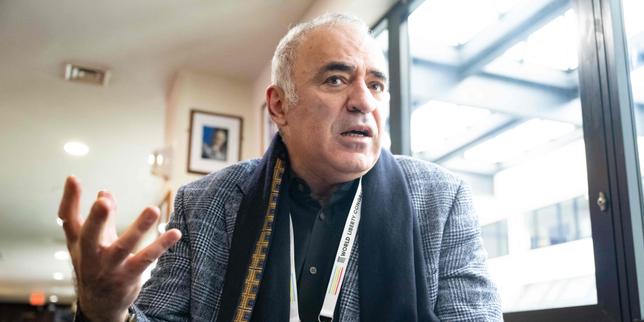
Garry Kasparov faces a stark reality in exile. The former world chess champion and prominent Russian dissident recently declared his life in imminent danger, signaling a dangerous escalation in the Kremlin’s transnational repression campaign against its most vocal critics. Operating from abroad, Kasparov remains a primary target for Russian state intelligence services, which have increasingly shifted from domestic suppression to targeted actions beyond state borders.
Exile has never offered safety for high-profile opponents of Vladimir Putin. Over the past two decades, the security apparatus of the Russian state has demonstrated both the capability and the intent to neutralize threats wherever they reside. For Kasparov, who transitioned from dominating international chess boards to spearheading the democratic opposition through the Human Rights Foundation, the threat profile has changed dramatically as geopolitical tensions have intensified.
The Architecture of Transnational Threat
Understanding why Kasparov remains vulnerable requires examining how Moscow projects power outside its sovereign territory. The modern playbook of Russian intelligence relies on a decentralized network of operatives, local proxies, and digital surveillance vectors. Dissidents living in Western European capitals and major American cities often underestimate the pervasive reach of these networks.
Physical security in exile is an illusion maintained by host governments that are frequently slow to recognize the sophistication of foreign intelligence operations. Poisonings, suspicious accidents, and coordinated surveillance campaigns are not relics of the Cold War; they are active instruments of statecraft. When a figure of Kasparov's stature sounds the alarm, it reflects intelligence assessments indicating that traditional deterrents no longer hold the same weight.
The risk extends beyond immediate physical harm. Reputational assassination, legal harassment through Interpol red notices, and financial strangulation form the preliminary waves of modern state-sponsored targeting. Physical elimination remains the final, absolute option, but the psychological warfare accompanying it aims to paralyze opposition movements before any physical strike occurs.
From the Boardroom to the Geopolitical Arena
Kasparov’s trajectory from grandmaster to political pariah is a study in ideological friction. In chess, every move is governed by strict rules, calculable probabilities, and transparent board states. Autocratic politics rejects these constraints. The confrontation between Kasparov and the Kremlin is asymmetric, defined by an adversary that operates outside international legal norms.
During his competitive career, Kasparov mastered the art of the attack, sacrificing material for long-term positional advantage. In his political life, he has applied a similar philosophy, accepting immense personal risk to expose the structural fragilities of the Putin regime. Yet, the state apparatus does not play by the rules of the tournament hall. It responds to strategic exposure with intimidation and violence.
When Kasparov warns that his life is in danger, he is assessing a risk matrix built on historical precedent. The list of exiled critics who met violent ends—from Alexander Litvinenko in London to Boris Nemtsov just outside the Kremlin walls—demonstrates that no exile is entirely beyond the reach of determined state actors.
The Cost of Persistent Dissent
The international community routinely offers rhetorical support to exiled dissidents while failing to provide the level of security required to counter modern state-sponsored threats. Diplomatic condemnation carries little deterrent value for a regime that has normalized extraterritorial operations.
For Kasparov, the challenge is maintaining an effective political platform without exposing himself or his associates to catastrophic risk. Every public appearance, every strategic briefing, and every policy paper published by his foundation serves as both a weapon against authoritarianism and a beacon for hostile intelligence analysts.
Security protocols that suffice for ordinary citizens or even standard politicians are wholly inadequate for figures who represent the ideological alternative to a nuclear-armed state. The insulation provided by foreign citizenship or permanent residency status offers only paper protection when faced with sophisticated intelligence operations.
The threat facing Garry Kasparov is a stark indicator of the state of global security. As long as opposition voices can be silenced across borders, international law remains an aspirational concept rather than an enforceable standard. Kasparov continues to play his game against an opponent willing to overturn the board, and the stakes could not be higher.