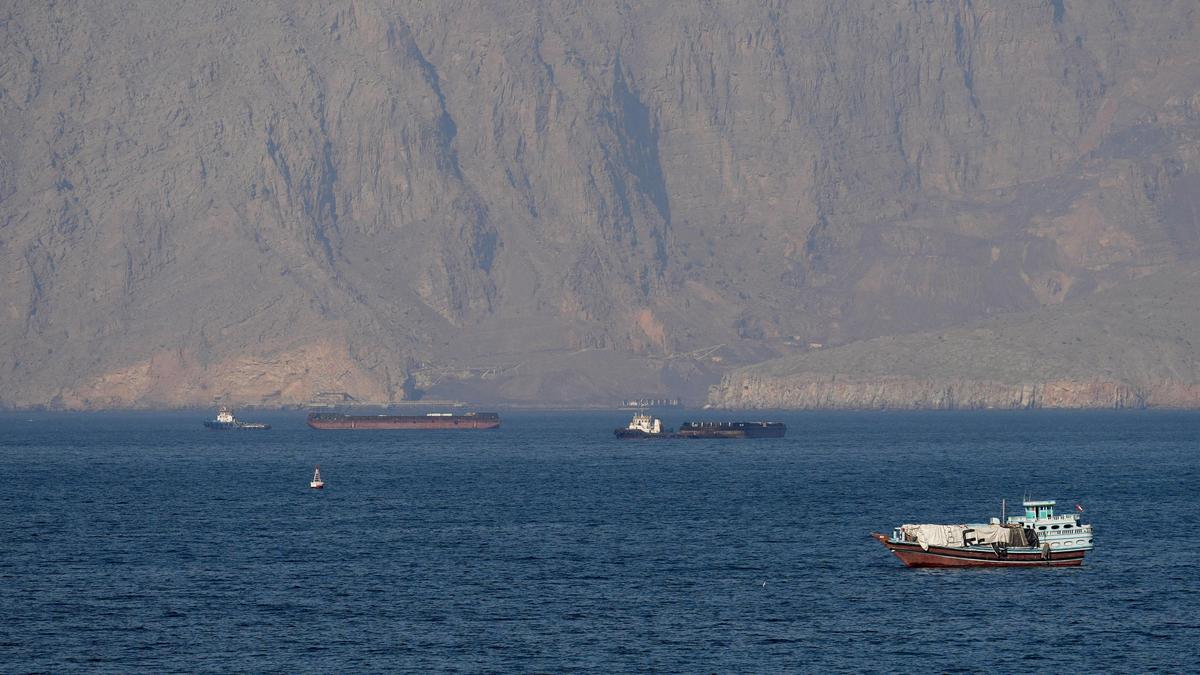
The Strait of Hormuz is the world's most sensitive windpipe. If it constricts, the global economy starts gasping for air. We're seeing that tension play out right now as Tehran signals that a final diplomatic resolution remains a distant dream. Negotiators in high-end hotels can talk all they want, but the reality on the water tells a much grittier story. Iran has essentially shuttered its willingness to compromise, using its geographic leverage over the Hormuz Strait to remind the world that they hold the cards in the Persian Gulf.
You've probably heard the talking points about "imminent deals" for years. Don't believe them. The gap between what the West demands and what Iran is willing to give has widened into a chasm. This isn't just about centrifuges or uranium enrichment anymore. It's about regional dominance and the cold, hard fact that twenty percent of the world's liquid petroleum passes through a narrow stretch of water that Iran can disrupt at a moment's notice.
The Hormuz Deadlock and Why Diplomacy Is Stalling
Energy markets hate uncertainty. When Tehran suggests a final deal is far off, it’s not just a pessimistic update; it’s a strategic choice. By keeping the Strait of Hormuz in a state of high alert, Iran ensures that oil prices stay volatile, which gives them a form of economic protection that sanctions can't touch. I've watched this pattern for decades. Whenever pressure builds in the diplomatic chambers, the naval activity in the Gulf spikes.
The math is simple. The strait is only about 21 miles wide at its narrowest point. The shipping lanes are even tighter. If Iran decides to make life difficult for tankers, they don't even need to sink a ship. Just increasing insurance premiums by creating a "high-risk" environment is enough to punish global markets. They're doing exactly that. They aren't just shuttering the physical waterway in a literal sense—though drills and seizures happen—they're shuttering the predictability of the passage.
Why the Western Strategy Is Failing
Sanctions were supposed to bring Iran to its knees. Instead, they’ve pushed the regime to find creative ways to survive. We see this in the "dark fleet" of tankers and the strengthening ties with Eastern powers. The West keeps looking for a return to the 2015 framework, but that world doesn't exist anymore. Iran knows it. They’ve watched the geopolitical shifts and decided that a "final deal" might actually be worse for them than the current state of "no war, no peace."
If they sign a deal, they lose their leverage. If they keep the status quo, they keep the world on edge. It's a calculated gamble. They're betting that the world's thirst for oil outweighs its stomach for another conflict in the Middle East.
The Real Numbers Behind the Hormuz Chokepoint
Let's look at what's actually at stake. We aren't just talking about a few boats.
- 20-21 million barrels of oil per day move through the strait.
- That’s roughly one-fifth of global petroleum consumption.
- Over one-quarter of global liquefied natural gas (LNG) trade passes here.
Most of this oil goes to Asian markets—China, Japan, India, and South Korea. If the Hormuz Strait is effectively shuttered, the economic ripple effects won't just hit gas stations in Ohio; they'll crash factories in Shanghai and power grids in Tokyo. Iran understands this better than anyone. They use this "energy sword" to parry any attempt at a final deal that doesn't meet their specific security requirements.
Misconceptions About the Final Deal
People often think a deal is just about the nuclear program. It's not. That’s the surface level. Underneath, it’s about ballistic missiles, regional proxies, and the legitimacy of the Islamic Republic itself. The reason a deal stays "far off" is that neither side can agree on what a "final" state even looks like.
For the U.S. and its allies, a deal means Iran becomes a "normal" country that doesn't threaten its neighbors. For Tehran, a deal is only acceptable if it guarantees the survival of the regime and recognizes its influence in Iraq, Syria, and Lebanon. These two visions are diametrically opposed. You can't bridge that with a few more rounds of meetings in Vienna or Geneva.
The Role of Naval Drills as a Message
When you see headlines about Iranian naval exercises in the Gulf, don't just see it as "practice." It's theater with live ammo. These drills are timed to coincide with diplomatic lulls. By shuttering parts of the strait for "military purposes," Tehran sends a physical reminder to the tankers passing by: "We are here, and we can stop you."
It's a psychological war. They're making the cost of not giving them what they want visible to the entire world. They want the shipping industry to scream so loud that Western politicians feel the heat at the ballot box. High gas prices flip elections. Iran knows how to play that card better than almost any other nation.
How to Track the Real Situation on the Ground
Stop looking at official press releases from foreign ministries. They're designed to mislead. If you want to know how close a deal actually is, look at these three things instead:
- Tanker Insurance Rates: When Lloyd’s of London or other insurers hike the cost of "War Risk" premiums in the Persian Gulf, you know the situation is deteriorating.
- Enrichment Levels: If the International Atomic Energy Agency (IAEA) reports a jump in 60% enriched uranium, a deal is moving further away, regardless of what the diplomats say.
- Regional Proxies: Watch the borders. If tensions rise in Lebanon or Yemen, the "big deal" in the Gulf is usually getting pushed to the back burner.
The reality is that we're stuck in a loop. Iran needs some relief, but they won't trade their primary defense for it. The West wants stability, but they won't give Iran a free hand in the region to get it. It’s a stalemate that happens to be located on top of the world’s most important gas station.
What Happens if the Shuttering Becomes Permanent
A full-scale closure of the Hormuz Strait is the "nuclear option" of conventional warfare. It would likely trigger a massive military response from the U.S. Fifth Fleet and its allies. Iran knows this, which is why they prefer "gray zone" tactics. They don't need to close the strait for a month. They just need to make it look dangerous for a week.
The friction we're seeing now—the "shuttered" diplomatic progress and the maritime posturing—is the new normal. We need to stop waiting for a "grand bargain" that fixes everything. It isn't coming. Instead, we're looking at a decade of managed tension where the Strait of Hormuz serves as the barometer for the world's geopolitical health.
Prepare for more volatility. If you're involved in logistics, energy, or global finance, you should be hedging for a world where the Persian Gulf is perpetually on the brink. The "final deal" is a mirage that keeps the talking heads busy while the real power moves happen in the dark waters of the strait. Keep your eye on the ship tracking data and ignore the optimistic spin from the negotiators. The water tells the truth that the diplomats can't afford to admit.