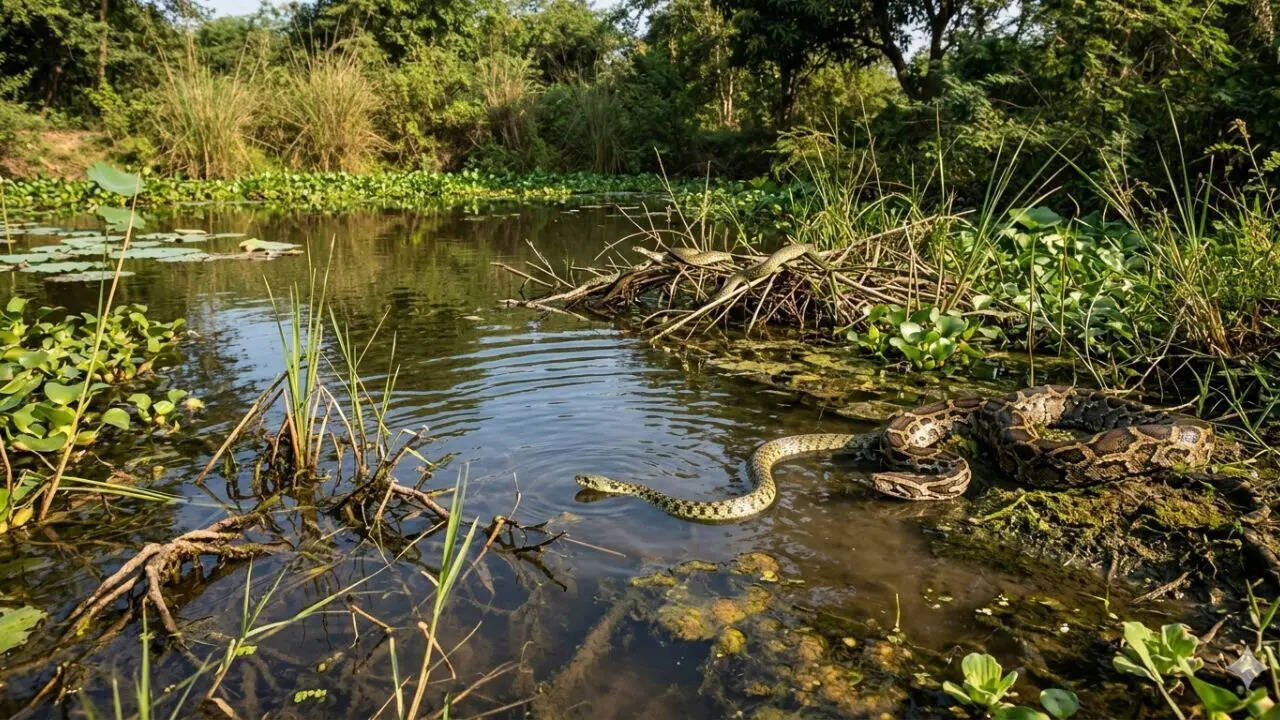
If you’re planning a dip in one of Ontario’s Great Lakes or a hike along a rocky shoreline, you might want to watch your step. Most people assume our waters are just home to trout and the occasional snapping turtle, but certain parts of the province are practically teeming with serpents. Some of these spots have the highest concentration of reptiles in the entire country.
I'm not talking about a lone garter snake in your garden. I’m talking about massive water snakes that look like cobras when they swim and shy rattlesnakes that blend perfectly into the limestone. If you’re looking to spot some—or if you’re looking to avoid them—you need to know exactly where the "hot zones" are.
Georgian Bay Islands National Park
This is the heavyweight champion of snake sightings. Georgian Bay Islands National Park, specifically Beausoleil Island, holds more reptile and amphibian species than any other national park in Canada. It’s a rugged landscape of wind-swept pines and ancient granite, which is basically a five-star resort for snakes.
You’ll find the Eastern Massasauga Rattlesnake here. It's Ontario’s only venomous snake. They love the transition zones between the rocky shore and the interior wetlands. Honestly, they’re quite timid and would rather hide than fight, but their camouflage is so good you’ll likely hear the "buzz" of their rattle before you see them. If you’re hiking the northern trails of Beausoleil, wear sturdy boots. Don’t go barefoot.
Pelee Island and the Western Lake Erie Archipelago
Pelee Island is the southernmost inhabited point in Canada, and the climate feels more like Ohio or Kentucky than typical Ontario. This warmth creates a massive haven for the Lake Erie Water Snake. At one point, these snakes were so common on the islands that people called them the "Serpent Islands."
They’re non-venomous but can be aggressive if you corner them while they’re sunning on the limestone docks. They’ve made a huge comeback recently, partly because they love eating the invasive Round Goby fish. You’ll also find the Eastern Fox Snake here—Ontario’s second-largest snake. They can grow up to five feet long. They aren’t dangerous, but they’ll shake their tails in dry leaves to mimic a rattlesnake when they feel threatened. It’s a pretty convincing act.
The Bruce Peninsula Shoreline
The Bruce Peninsula is a long finger of limestone that separates Georgian Bay from Lake Huron. The shoreline is a jagged mess of cliffs and cobble beaches—perfect for thermal regulation. Snakes use the sun-warmed rocks to jumpstart their metabolism in the morning.
Bruce Peninsula National Park is another major stronghold for the Massasauga Rattlesnake. You’ll often see them around the Grotto or along the Bruce Trail where the forest meets the water. Because the area gets massive foot traffic from tourists, the snakes have learned to be very discreet. You’re also likely to spot Northern Water Snakes along the shallow, rocky entries of Cyprus Lake. They look dark, almost black, when wet and can look quite intimidating as they glide through the water.
Wainfleet Bog near Lake Erie
While not a "lake" in the traditional sense, this massive wetland just north of Lake Erie is one of the last true bogs in Southern Ontario. It’s a soggy, peat-filled landscape that feels like it belongs in a different century. It’s also home to one of the few remaining inland populations of the Massasauga Rattlesnake.
Wainfleet is unique because the snakes here rely on the bog's specific acidity and sphagnum moss to survive the winter. It’s a critical habitat. If you’re exploring the conservation area, stay on the boardwalks. The high water table means snakes are often compressed into the few dry patches available, making the density of sightings much higher than in the surrounding farmland.
The Sydenham River Watershed
Located in Southwestern Ontario’s Carolinian Life Zone, the Sydenham River is one of the most biologically diverse waterways in the country. It’s muddy, slow-moving, and surrounded by dense vegetation. This is prime real estate for the Queen Snake.
The Queen Snake is a specialist. It almost exclusively eats freshly molted crayfish. Because of this, you’ll find them wherever there are rocky riverbeds and plenty of crustaceans. They’re slender, striped, and incredibly fast in the water. This river is also a haunt for the Eastern Spiny Softshell Turtle, so if you’re kayaking here, keep your eyes on the logs and muddy banks. You’ll see plenty of movement.
Lake Huron Southern Shoreline (Pinery Provincial Park)
Pinery Provincial Park is famous for its rare oak savanna and massive sand dunes, but the Old Ausable River channel that runs through it is a snake highway. There are seven different species recorded in the park.
The star here is the Eastern Hog-nosed Snake. It’s famous for being a "drama queen." If you startle one, it’ll puff up its neck like a cobra and hiss loudly. If that doesn't scare you off, it’ll flip onto its back, let its tongue hang out, and play dead. It’s a hilarious performance, but don't touch them—they're a species at risk. You’ll also find plenty of Northern Ribbon Snakes in the grassy fringes of the water, looking for frogs.
Identification Mistakes You’re Probably Making
Don't be the person who panics over a garter snake. Most "scary" sightings in Ontario waters are actually the Northern Water Snake. They’re thick-bodied and have dark bands, which leads people to mistake them for Water Moccasins (Cottonmouths).
Here’s the thing: there are no Water Moccasins in Canada. If you see a thick, dark snake in the water in Ontario, it’s a Northern Water Snake. They’re harmless, though they might give you a nip if you try to pick them up.
A real Massasauga Rattlesnake has a blunt, segmented rattle on its tail and a distinct bowtie or saddle-shaped pattern on its back. If the tail is pointy and it's swimming in open water, it’s not a rattlesnake.
How to Handle an Encounter
If you find yourself sharing a rock with a snake, just give it space. Most bites happen when people try to kill or move the animal. Use a flashlight if you're walking near water at night, especially in the Bruce or Georgian Bay. Snakes are often more active at dusk when the pavement or rocks are still holding the day’s heat.
If you’re heading to these spots, bring a pair of binoculars. Seeing these animals in their natural habitat is actually pretty cool once you get past the initial "snake!" reflex. Just don't expect them to move out of your way—they were here first.