Everyone in Hollywood is popping champagne over the wrong funeral.
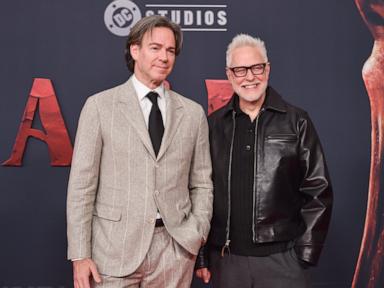
The trades are running victory laps, framing the ouster of James Gunn and Peter Safran—and Skydance’s swift installation of a Marvel veteran like Latchman—as the adult finally entering the room. The lazy consensus is predictable: DC was too chaotic, too creator-indulgent, too bogged down in weird auteur vanity projects, and it needed a seasoned corporate mechanic from the House of Mouse to finally build a functioning assembly line. Expanding on this theme, you can also read: The Architecture of Bureaucratic Complicity in Here There Are Blueberries.
That consensus isn't just wrong. It is suicidal.
If you think bringing in a Marvel vet fixes a broken cinematic universe, you haven't looked at a box office ledger since 2021. You are cheering for a regime change that replaces a messy creative gamble with the exact bureaucratic assembly-line thinking that turned the most profitable franchise in cinema history into a bloated, homework-heavy graveyard of diminishing returns. Observers at E! News have provided expertise on this matter.
The Myth of the "Marvel Formula" Savior
Let’s look at the actual mechanics of what just happened, minus the PR spin from Burbank and Santa Monica.
When Skydance steps into a legacy studio asset, they don't look for art. They look for predictability. Wall Street hates variance, and James Gunn is pure variance. A director-turned-studio-head is an anomaly in modern media precisely because directors care about tone, weirdness, and emotional specificity—things that terrify risk-averse institutional investors. So, when a corporate parent consolidates power, the first thing they do is purge the creatives and install an executive who speaks fluent franchise management.
Here is the problem with that playbook: the Marvel production model is dead.
For a decade, Marvel succeeded because Kevin Feige operated as a singular creative filter before the corporate machine grew too big for one person to police. Once Disney demanded volume—feeding the streaming maw with endless interconnected content—the "Marvel veteran" skillset stopped being about storytelling and became entirely about asset management. It became about pre-viz action sequences locked in two years before a script was finished. It became about homogenizing visual styles so directors were interchangeable cogs. It became about "fixing it in post" to the tune of nine-figure reshoot budgets.
I have sat in development rooms where studios blew tens of millions of dollars chasing this exact ghost. They hire a mid-level or senior executive from a rival hit factory, assuming the magic lives in the org chart rather than the lightning-in-a-bottle timing of the original run. They mistake process for vision.
By handing the keys to a Marvel vet, Skydance isn't buying the 2012 Avengers magic. They are buying the 2023 Quantumania bloat. They are importing a system designed to minimize risk, which in theatrical entertainment is the fastest way to guarantee irrelevance. Audiences today don't reject DC because it lacks "connectivity." They reject comic book movies because they can smell a committee-approved product from a mile away.
Why the Gunn and Safran Experiment Was Misunderstood
To understand why this pivot is so dangerous, you have to strip away the fanboy tribalism surrounding Gunn and Safran. Were they flawless? Hardly.
Splitting a studio between a creative (Gunn) and a traditional producer/business operator (Safran) sounds clean on a press release, but in practice, it creates a brutal bottleneck. When your chief creative officer is also writing and directing your flagship tentpole, the rest of the slate inevitably starves for attention. Development slows down. Outside filmmakers wonder if they are actually making their movie or just auditioning to mimic the boss's needle-drop sensibilities.
That was a real structural flaw. Admit it. Move on.
But what Gunn and Safran understood—and what corporate regime changes consistently obliterate—is that IP is worthless without tonal distinction.
Look at the history of Warner Bros. and DC. Every single time they tried to copy Marvel’s interconnected homework model—from the reactionary panic-edits of Suicide Squad to the Frankenstein assembly of Justice League—they burned hundreds of millions of dollars and eroded brand trust. Conversely, every time DC actually printed money and cultural prestige over the last fifteen years, it was through singular, un-Marvel-like swings: Christopher Nolan’s grounded crime epics, Todd Phillips’ gritty character study in Joker, Matt Reeves’ noir detective slow-burn in The Batman.
Gunn’s core thesis for the DCU wasn't "let's copy Marvel." It was "let's treat comics like Star Wars or Game of Thrones—a sprawling world where radically different genres coexist, and nothing gets greenlit until the script is actually finished."
In Hollywood, refusing to shoot without a finished script is practically an act of domestic terrorism. The Marvel machine normalized starting production with forty pages of dialogue and a third-act CGI battle already rendered by an outsourced VFX house. Gunn tried to kill that toxic habit. Now, with a Marvel vet at the helm under a new corporate mandate, watch how fast "script-first" gets quietly buried in favor of "hitting the Q3 release window."
The Questions Everyone Is Asking—And Why They Are Wrong
Whenever a major studio shakeup hits the headlines, search engines light up with the exact same predictable queries. Let’s dismantle them with actual industry reality instead of trade-paper fluff.
"Does this mean the Snyderverse is coming back?"
No. Stop asking.
Corporate mergers and executive coups are forward-looking financial exercises, not nostalgia charities. When a new leadership team takes over an intellectual property library, the absolute last thing they want to do is resurrect a creative regime that already failed to hit corporate profit targets nearly a decade ago—especially when the principal actors have aged out, moved on, or become too expensive for a rebooted balance sheet. A Marvel veteran wasn't hired to restore an old DC auteur’s vision; they were hired to build a clean, controllable balance sheet from scratch.
"Will DC movies finally be as consistent as Marvel?"
You are asking for the wrong thing. "Consistency" in a creative industry is just a polite corporate euphemism for mediocrity.
When audiences say they want consistency, what they actually mean is they don't want to feel cheated out of twenty dollars. Marvel delivered a baseline floor of competence for years, which trained audiences to accept "pretty good" as the ceiling. Today, with ticket prices inflated and streaming windows compressed to forty-five days, "pretty good" is a death sentence at the box office. A movie has to feel like an urgent, singular cultural event to get people off their couches. You do not get singular cultural events from an executive trained to sand off every sharp edge until a film tests at an 84 across all four quadrants.
"Is a shared cinematic universe even possible anymore?"
Only if you stop treating it like a television show.
Imagine a scenario where a studio launches five movies over three years, and none of them require you to watch the others to understand the plot. No post-credit scenes teasing a villain who won't show up for six years. No obligatory cameos that stop the story dead so the audience can clap at a recognizable costume. Just elite filmmakers making standalone genre films that happen to share a map.
That is the only version of a shared universe that survives the next decade. The serialized, interlocking movie model was a historical anomaly pulled off once under hyper-specific market conditions that no longer exist. Trying to recreate it in the late 2020s is like trying to launch a broadcast network sitcom empire in the middle of the TikTok era.
The Hidden Cost of Corporate "Stability"
Let’s give Skydance and their new leadership credit where it’s due: they will bring operational discipline.
Under a traditional franchise executive, budgets will likely be policed harder. Marketing campaigns will align neatly with consumer product rollouts. Toys, theme park integrations, and video game licensing will be baked into the greenlight process from day one. If your metric for success is turning DC into a predictable, mid-margin licensing engine that keeps shareholders calm during quarterly earnings calls, this hire makes total sense.
I’ll even admit the brutal downside to my own argument: auteur-driven studio management is nearly impossible to scale. You cannot release four movies and three shows a year if one guy has to personally rewrite half the scripts and micromanage every frame. The market demands volume from major IP holders, and Gunn’s boutique, handcrafted approach was always going to collide with the brutal math of corporate debt service. A franchise mechanic can deliver volume on time and on budget.
That is the exact trap.
When you optimize a movie studio for operational efficiency, you slowly starve the very thing that makes the IP valuable in the first place. Look at Pixar over the last decade. Look at Lucasfilm. Look at Marvel itself. Every single time a creative-led powerhouse gets absorbed, restructured, and handed over to "adults" who prioritize pipeline efficiency over dangerous ideas, the brand enters a slow, lucrative, soul-crushing decline. The stock price holds steady for three years while they burn through the goodwill built by the previous regime—and then, suddenly, nobody cares anymore.
What Actually Fixes a Broken IP Factory
If Skydance actually wanted to disrupt the superhero industrial complex instead of buying a used car from Burbank, they wouldn't have raided Marvel’s executive suite. They would have looked at what is actually winning in modern entertainment.
- Slash the output by 60%. Scarcity creates value. Two genuinely distinct DC films a year—one massive theatrical spectacle, one mid-budget genre play—will generate higher profit margins than four bloated, interconnected CGI slogs fighting each other for IMAX screens.
- Cap production budgets at $125 million for non-event films. The moment a movie costs $250 million before marketing, it ceases to be a creative endeavor and becomes a hostage negotiation with global markets. Lower budgets force clever writing, practical locations, and real tension instead of weightless digital third acts.
- Fire the pre-viz department before hiring the director. Let filmmakers actually block scenes on set with real actors and real cameras. Audiences are starved for tactile, human cinema. The first comic book studio to ditch the digital assembly line and make movies that actually look and feel like movies again will own the next decade.
Skydance had a rare chance to burn the old playbook and build something agile, dangerous, and built for the actual modern audience. Instead, they looked at a crumbling empire across town, hired one of its architects, and called it progress.
Enjoy the neat spreadsheets and on-time delivery dates—just don't act surprised when the theaters are empty.