Education Minister Choi Kyo-jin is out of a job, yet South Korea’s examination system is in deeper trouble than before he resigned.
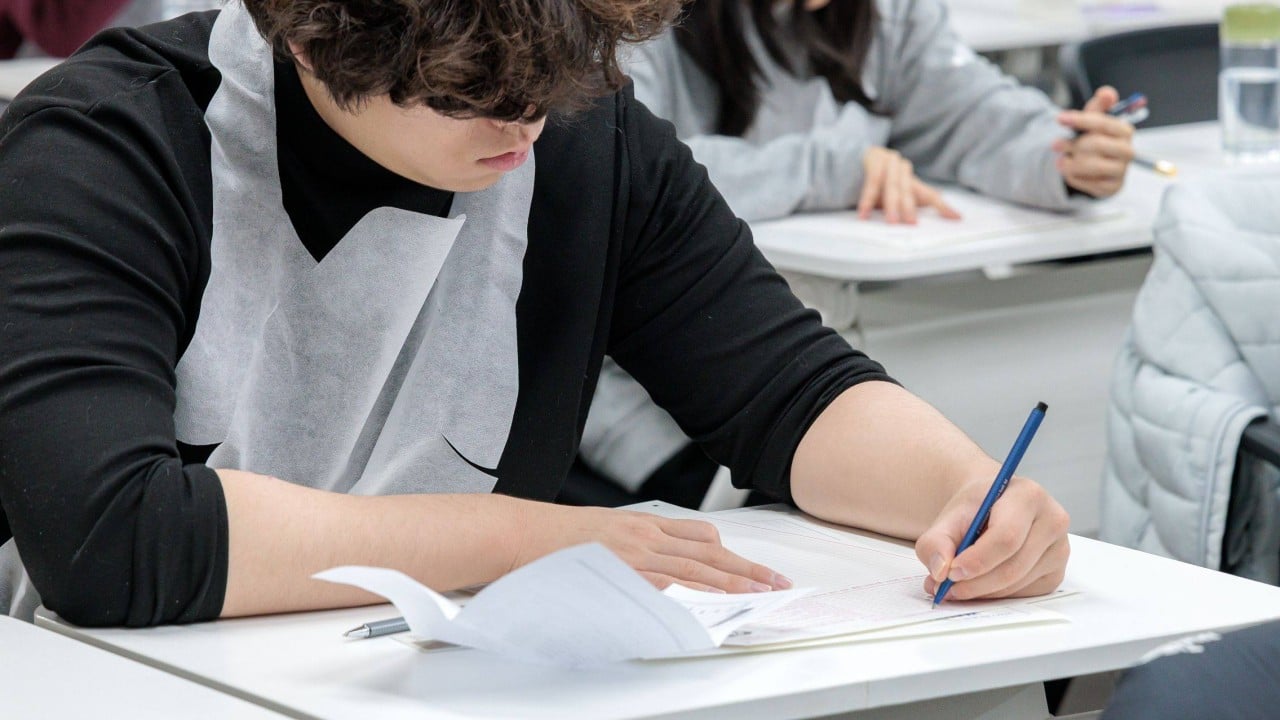
On November 22, 2026, Choi stepped down just three days after half a million high schoolers sat for the Suneung—the brutal, once-a-year College Scholastic Ability Test that dictates university admissions and career trajectories across the country. President Lee Jae Myung accepted the resignation within an hour. Choi admitted his ministry had failed to prepare adequately, apologizing for a frantic, last-minute security crackdown that left test-takers rattled and teachers furious.
Replacing a cabinet minister is classic political damage control. It’s also completely beside the point. South Korea’s real problem isn't one minister's bad timing—it’s that a multi-billion-dollar testing culture built on memorization and rigid standardization just collided with pocket-sized generative AI.
How a Tax Exam Confession Triggered National Panic
To understand why the Suneung descended into security theater on November 19, you have to look back four days earlier.
On November 15, Han Won-seok, a 34-year-old candidate who had just been named the overall top scorer on South Korea’s 63rd certified tax accountant exam, appeared masked on his lawyer’s YouTube channel and confessed to cheating. He didn't bribe a grader or steal an answer key. He bought a miniature camera for roughly 110,000 won, snapped photos of his exam booklet under the noses of two proctors in a 20-seat room, fed the images to a generative AI model, and read the solutions off his smartphone.
The math behind his score had already made fellow test-takers suspicious. In the first round, Han scored 397.5 out of 400—missing just one out of 160 multiple-choice questions and landing a perfect mark in tax law, a brutal section where three out of four candidates normally fail the cutoff. The previous two top scorers on that exam had topped out at 342.5 and 327.5. In the second-round written portion, he averaged 82.87 out of 100 against a 49.75 passing mark.
Human proctors missed him completely. Statistical anomalies didn't stop him from being publicly crowned the top scorer on October 28. Only intense peer scrutiny on online forums pushed him to confess.
And here’s the detail that should terrify every testing board on the planet. At 2.5 points per question, if Han had intentionally missed 24 questions, he would have finished with 340 points—right in line with past top scorers. Nobody would have blinked.
Emergency Sirens and Button Stickers on Exam Day
Han’s confession detonated a powder keg right before the November 19 Suneung. Within 48 hours, nearly 700 angry posts flooded the online Q&A board of the Korea Institute for Curriculum and Evaluation, demanding tighter anti-AI safeguards or an outright postponement of the test. Earlier Education Ministry data had already logged four cases of students using AI-enabled smart glasses in school exams over the past year, plus two university applicants caught with smart glasses during Seoul entrance tests.
Under immense public pressure, Choi’s ministry rolled out emergency rules two days before the exam. They sounded less like academic administration and more like airport security:
- Students had to roll up their sleeves and place tamper-evident stickers over their shirt buttons to block potential micro-cameras.
- Every test-taker had to hand over their eyeglasses for physical inspection to screen out hidden smart tech.
- Personal erasers, correction tape, and most pens—items permitted right up until the day before—were suddenly banned in favor of black pencils and center-issued supplies.
- Roughly 75,000 invigilators were deployed across 1,312 test centers, many receiving rushed video training just 24 hours before the doors opened.
- Authorities throttled public Wi-Fi around exam sites and triggered three nationwide civil defense emergency alerts on mobile phones between 8 a.m. and 3 p.m. to expose hidden devices.
Think about what those civil defense alerts actually do. In South Korea, emergency cell broadcasts override silent mode and blast a piercing alarm across every phone in range. Firing that system three times during the single most stressful day of a teenager's life wrecked concentration for hundreds of thousands of honest students.
The Korean Federation of Teachers’ Associations called for Choi’s resignation on November 17, bluntly asking whether recruiting supervisors one day, training them the next, and deploying them the day after could possibly catch sophisticated AI tools. By Sunday, Choi was gone.
Did the Crackdown Actually Catch Anyone
Honestly, the enforcement numbers tell a messy story.
Following the November 19 exam, the Education Ministry reported 111 suspected cases of electronic device misconduct. Fifty-four of those hidden phones were exposed by the emergency broadcast alerts, and 52 were caught through standard screening. Only five cases involved students actively caught using smart devices during the test. Even then, officials admitted the figures don't prove all 111 violations involved AI cheating—many were likely kids who simply forgot to turn in a second phone.
Meanwhile, the government is leaning heavily on deterrence and cash bounties. Under tightened rules, anyone caught cheating on the Suneung faces a 10-year ban from retaking the exam alongside criminal prosecution. On November 25, the Anti-Corruption and Civil Rights Commission jacked up whistleblower rewards for reporting exam fraud to a base of 100 million won, scaling up to 500 million won per case—and even allowing accomplices to collect reduced penalties if they turn themselves in.
Throwing 500 million won at tipsters and slapping stickers over shirt buttons treats symptoms. It doesn't cure the disease.
Why Policing Devices Is a Losing Game
I've watched institutions try to out-police hardware for years, and the pattern never changes. Regulators ban yesterday's gadget while consumers are already wearing tomorrow's.
Hardware Shrinks Faster Than Rulebooks
Two years ago, proctors looked for bulky smartwatches and wired earpieces. Today, cameras sit invisibly inside everyday prescription frames, buttonholes, and pen caps. In Han’s case, the entire setup cost 110,000 won—roughly the price of a nice dinner—and defeated two human proctors watching a 20-person room. You can't train 75,000 schoolteachers via a 24-hour video briefing to spot optical micro-lenses.
AI Detectors Are Useless Against Image-to-Answer Cheating
Many university administrators still assume software detection will save them. That assumption falls apart completely in standardized exams. Essay classifiers look for robotic phrasing in long-form writing, and even researchers behind tools like Google DeepMind’s SynthID and academic classifiers warn against using probabilistic scores to punish individuals. When a candidate snaps a photo of a multiple-choice tax law question and copies down Option C, there is zero text signature to analyze.
The Curriculum Contradiction
There’s also a massive policy blind spot in Seoul. Just a year earlier, in October 2025, South Korea’s ambitious rollout of AI-powered digital textbooks ran into technical glitches and backlash from parents and teachers, with school adoption dropping from 37 percent to under 20 percent. The government spent years telling schools that AI is the engine of modern learning, only to treat AI like contraband the moment students sit down to be graded. You can't build an AI-first economy while basing your entire social sorting mechanism on 20th-century closed-book recall.
What Actually Needs to Change in High-Stakes Testing
If South Korea’s next education minister wants to avoid suffering Choi Kyo-jin’s exact fate next November, banning stationery won't cut it. Real reform requires changing how exams are built and administered.
1. Kill Static Paper Booklets in Professional Licensing
Paper exams handed out in loosely monitored rooms are an open invitation for miniature cameras. High-stakes professional tests—like tax accountancy, law, and medical boards—need to move exclusively into locked-down, biometric-verified testing centers with radio-frequency shielding and individualized, randomized question banks. If every candidate sees questions in a different order with slightly altered numerical variables, snapping a photo becomes slower and far riskier.
2. Audit Answer Telemetry, Not Just Final Scores
Han was caught because his final score broke historical records. Smarter cheaters won't aim for 99 percent. Digital testing platforms can track response latency—how long a candidate spends on an easy question versus a brutally hard one—alongside keystroke rhythms and answer-change patterns. If a test-taker breezes through a notoriously dense tax calculation in 12 seconds after pausing for 45 seconds of dead air, telemetry flags the anomaly immediately.
3. Shift Assessment Toward Oral Defense and Applied Work
In August 2026, an artificial intelligence committee at the Massachusetts Institute of Technology warned that generative models can now produce passing work on almost any standard written assignment, recommending a shift toward oral exams and longitudinal portfolios. You can't scale one-on-one oral exams to 500,000 Suneung teenagers overnight. You can require oral defenses for the top tier of professional licensing candidates—the future lawyers, CPAs, and tax accountants whose credentials carry legal liability.
4. Separate Device Screening From Student Psychology
Never again should a civil defense siren blast inside an exam hall. If schools want zero unauthorized phones in test rooms, install low-cost passive RF detectors or walkthrough metal wands at the classroom door before the clock starts. Screen the room once, quietly, and let students take the test in peace.
Choi Kyo-jin took the fall for a chaotic week in November, and Seoul police are now pursuing an arrest warrant for Han Won-seok while auditing years of past licensing scores. Yet every smartphone sitting in a student's pocket is already smarter than a closed-book multiple-choice test. Until South Korea stops asking human beings to compete with machines at pure information recall, the next minister is already on the clock.