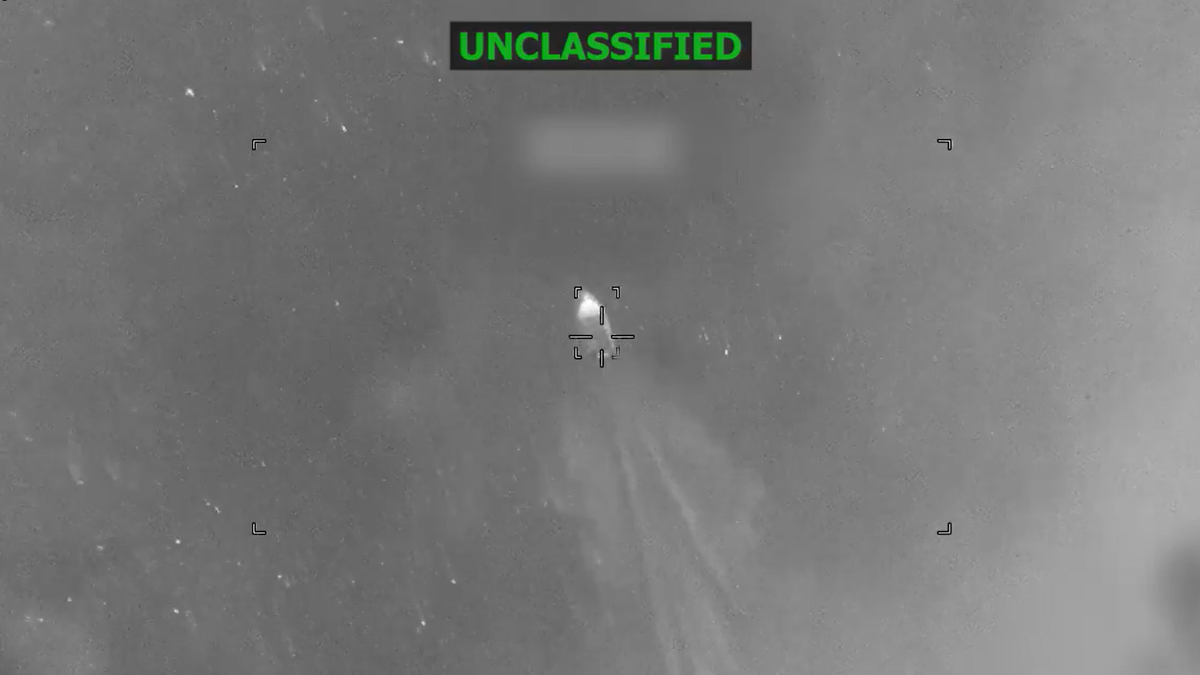
The sea does not keep records. It takes the wreckage, rolls it over in the salt, and washes the broken fiberglass onto the shore like driftwood. For years, the story of the modern maritime interdiction campaign was written in the wake of high-speed hulls slicing through midnight water off the coasts of Central and South America. Hundreds dead. Millions of dollars of cargo sent straight to the ocean floor. Speedboats burning against the horizon under the cold gaze of thermal optics.
We grew accustomed to that geometry of violence. It looked clean from a distance. A blip on a screen turning infrared white, a kinetic strike, and silence.
Then the water got too hot.
The security apparatus did not stop moving. It simply changed shoes. When the sea routes grew too narrow, too scrutinized, or too heavily littered with the debris of past engagements, the machinery of interception turned inward. It stepped onto the dirt. It traded the patrol boat for the boots of host-nation ground forces, backed by advisors, intelligence sharing, and the quiet expansion of an inland footprint across Latin America.
Consider what happens next. The map does not care about the shift. A border is just a line drawn on paper until a fence goes up, or a checkpoint appears, or a drone starts humming above a canopy that has stood undisturbed for centuries.
To understand this transition, imagine a man named Mateo. (This is a hypothetical scenario, a composite sketch of the thousand small adjustments happening right now in the valleys of the Andes and the lowlands of the Darien). Mateo lives in a village where the road turns from asphalt into red clay. For years, his biggest worry was the price of coffee and the unpredictable rains. Now, the main concern is the dust kicked up by unmarked white trucks carrying men who do not speak the local dialect of Spanish. They carry encrypted radios and coordinate with military units three countries away.
Mateo has never seen a boat strike. He has never watched a speedboat split open on the open ocean. But he knows what it feels like to have an armed perimeter erected around his town under the banner of transnational counter-narcotics cooperation.
The expansion from sea to land is not merely a change in geography. It is an escalation of intimacy.
When you fight a war on the water, the collateral damage is swallowed by the tide. When you fight it on land, the collateral damage has a name, a house, and a cousin who remembers. The U.S. military's pivot toward terrestrial campaigns in Latin America—working through security cooperation programs, joint training exercises, and intelligence-driven raids—brings the sprawling architecture of the war on drugs directly into the backyards of civilian populations.
History teaches us a persistent, stubborn lesson. Security vacuums do not remain empty. When pressure is applied to a fluid system, the liquid simply finds a new crack. For decades, interdiction forces focused on maritime routes because the Pacific and the Caribbean offered wide corridors for high-volume trafficking. Yet, as surveillance technology improved, and as radar aerostats and maritime patrol aircraft turned the blue water into a fishbowl, traffickers adapted. They went shallow. They went airborne in old Cessna planes landing on clandestine jungle strips. And, crucially, they went overland, weaving through porous borders where jungle trails bypass formal customs posts entirely.
The response from Washington and its regional partners was predictable. If the product is moving through the dirt, the footprint must follow it into the dirt.
This brings us to the core friction of the strategy. Security assistance looks sterile in a budget request. You read about capacity building, institutional reform, and technical support. You see numbers allocated for radar maintenance, tactical vehicles, and specialized training battalions. It sounds administrative. It sounds like an upgrade.
It is not an upgrade. It is an occupation by proxy.
Walk through a rural district in Honduras or Colombia where these expanded operations take root, and the atmosphere changes. The air gets heavy with suspicion. Checkpoints multiply like weeds after a spring rain. A young man walking home from the fields is no longer just a farmer; he is a potential vector of interest. His phone is checked. His movements are logged. The local police force, once a civilian entity meant to keep the peace at Saturday night dances, is militarized, rebadged, and pointed down a single track: find the product, stop the flow, by any means necessary.
We are told this is necessary for stability. We are told that without these inland campaigns, the violence will swallow the cities whole. There is a twisted logic to it. If the cartels are moving operations through the hinterlands, the state must establish a monopoly on violence in those exact same hinterlands.
But sovereignty gets bruised in the process.
When foreign military advisors operate alongside local forces in remote provinces, the lines of accountability blur until they disappear entirely. Who investigates a midnight raid that went wrong in a village with no cellular service? Who counts the bullets? Who speaks for the families whose homes were searched without a warrant under the broad umbrella of counter-narcotics exemptions?
The transition from sea to land strips away the convenient distance that maritime strikes provided. Out on the water, the ocean acts as a buffer between the action and our conscience. On land, the action happens right next to the schoolhouse. It happens next to the clinic where the medicine is running out because the supply trucks are delayed by military roadblocks.
We are watching the quiet redrawing of the security map across the hemisphere. It is happening without congressional debate, without front-page headlines, and without public reckoning. The strategy has metastasized. It has crawled out of the surf and into the soil.
The silence that follows a boat strike is loud. The silence that follows a militarized sweep through a mountain village is deafening, because the people are still there, living among the ruins of a peace that was promised and a security that never quite arrived.
The dust settles on the red clay road. The white truck disappears around the bend. And Mateo goes back to his coffee plants, wondering how long it will be before the war finds a new place to put its feet.
:max_bytes(150000):strip_icc()/lake-mead-173940030-5c25228846e0fb00014e8584.jpg)
