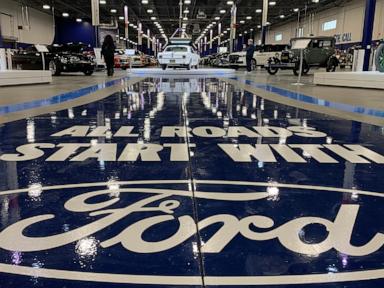
Ford has officially opened the doors to its private Heritage Vault in Dearborn, Michigan, granting public digital and curated physical access to roughly 125 rare historic vehicles that were previously locked away from consumers and independent researchers. While corporate press releases frame this move as a generous gift to automotive enthusiasts, the reality behind the decision is rooted in brand survival, intellectual property protection, and a calculated shift in how legacy automakers market an electric future.
Automakers do not spend millions of dollars cataloguing, restoring, and digitizing century-old steel out of pure nostalgia. They do it when their modern identity is under threat.
The Strategic Reality Behind Corporate Nostalgia
For decades, the automotive industry treated its internal archives like state secrets. Prototypes, clay models, one-off concepts, and engineering failures were shoved into unmarked warehouses across Southeast Michigan. Occasionally, a journalist or a wealthy collector would get a curated tour, but the vast majority of this hardware gathered dust under heavy canvas tarps.
Ford’s decision to formalize and unveil this collection of 125 historic vehicles changes that playbook, though not for the reasons casual observers assume. The Blue Oval is currently navigating the most expensive, volatile transition in its 120-year existence. Billions of dollars are pouring into battery chemistry, software architecture, and autonomous systems—technologies that strip away the mechanical soul that made people buy Fords in the first place.
When an internal combustion engine disappears, a Mustang or an F-150 risks becoming a commodity appliance on wheels. By pulling 125 rare historic vehicles into the spotlight, Ford is aggressively anchoring its electric future to its analog past. It is a defensive branding maneuver. If Ford can remind the buying public that it invented the modern assembly line, dominated Le Mans, and built the rugged trucks that shaped North America, consumers might trust the company to build their next software-defined electric vehicle.
There is also a hard financial calculation at play here. Maintaining a private fleet of 125 historic vehicles is an astronomical expense. Climate-controlled square footage in Dearborn is not cheap, nor are the specialized mechanics who still know how to tune a mechanical fuel injection system from 1957 or source period-correct wiring harnesses. Historically, corporate accountants viewed heritage departments as pure cost centers—the first things on the chopping block when quarterly margins tightened.
Turning the vault into an outward-facing, searchable, and tourable asset transforms a liability into a marketing engine. Instead of paying an agency tens of millions of dollars to manufacture brand authenticity, Ford is simply unlocking the garage doors and letting the metal do the talking.
What Is Actually Inside the Collection
To understand the weight of this collection, you have to look past the standard museum pieces. Anyone can go to The Henry Ford museum in Dearborn and see a Model T or the Rosa Parks bus. The 125 vehicles in the Heritage Vault represent a different beast entirely. These are the internal stepping stones—the cars that were never meant to leave the corporate campus.
The collection spans the entire arc of the company's existence, broken down into distinct engineering and cultural eras:
- Early Brass Era Anomalies: Beyond standard production Model As and Ts, the vault houses early experimental chassis and specialized commercial adaptations that show how Henry Ford’s engineers solved basic metallurgical and suspension problems when paved roads barely existed.
- Post-War Styling Exercises: During the 1950s and 1960s, Detroit styling studios operated with near-unlimited budgets. The vault contains surviving concept cars and styling bucks that tested radical aerodynamics, bubble canopies, and jet-age tailfins—ideas that were deemed too expensive or dangerous for dealership floors.
- The Total Performance Era: Ford’s 1960s racing dominance was not an accident; it was a brute-force financial war against Ferrari and General Motors. The collection includes homologation specials, experimental Holman-Moody stock cars, and early GT40 development mules that still bear the scars of wind-tunnel testing and track abuse.
- The Malaise Era Prototypes: Perhaps the most fascinating vehicles in the vault are the ones from the late 1970s and early 1980s. As fuel crises and emissions regulations choked horsepower, Ford engineers experimented wildly with turbine engines, early electric conversions, and radical aerodynamic shapes that eventually birthed the 1986 Ford Taurus.
Consider a hypothetical example of how this internal preservation works. Imagine an engineer in 1974 tasked with cutting vehicle weight by 30 percent to meet federal fuel economy mandates. That engineer builds a one-off aluminum-bodied Pinto prototype. The project is canceled because aluminum is too expensive to stamp at mass-market scale. Forty years later, when Ford decides to build the F-150 out of military-grade aluminum, that forgotten 1974 prototype suddenly becomes an invaluable reference point for galvanic corrosion and structural rigidity.
That is the true purpose of an automaker's vault. It is an institutional memory bank.
The Hidden Engineering Value of Forgotten Prototypes
Modern automotive engineering relies almost entirely on computer-aided design and digital twin simulations. A vehicle can go from a blank screen to a production line without a single physical prototype being hand-built until the final validation stages. It is fast, efficient, and brutally clinical.
Yet, digital simulations only test for the variables engineers program into them. Physical prototypes reveal unintended consequences.
Inside Ford’s collection are dozens of "mules"—Frankenstein vehicles cobbled together from existing body panels stretched over experimental powertrains. Looking at the weld marks, hand-hammered floor pans, and rerouted exhaust pipes on these 125 vehicles offers a masterclass in practical problem-solving that no software suite can replicate.
Younger engineers hired out of Silicon Valley tech firms often lack an intuitive feel for mechanical packaging. Bringing them into a facility housing 125 historic vehicles forces them to confront physical reality. They can see how a 1968 engineer routed brake lines away from exhaust manifolds without modern heat shielding, or how suspension geometry was altered on the fly during endurance testing.
Furthermore, these vehicles serve as physical proof of prior art. In an era where patent trolls and rival manufacturers constantly sue over design cues and mechanical layouts, having a documented, physical 1950s prototype sitting in a corporate warehouse can invalidate a competitor's patent claim in minutes. The vault is as much a legal shield as it is a historical archive.
The Gray Areas of Corporate Curation
While the unveiling of these 125 vehicles is a massive win for historians and enthusiasts, we need to be clear-eyed about what is missing. A corporate archive is not an objective journalistic record. It is a curated narrative.
Automakers are notoriously protective of their failures, particularly those involving safety controversies or catastrophic financial losses. When Ford opens its vault to the public, you will see the triumphs, the bold experiments, and the charming quirks of automotive history. You are far less likely to see the engineering mules tied to litigation, the scrapped union-busting equipment from the 1930s, or the unvarnished internal memos detailing why certain safety features were delayed to save three dollars per unit.
There is also the matter of physical access versus digital access. "Throwing open the doors" is a great headline, but the reality is heavily gated. The general public cannot simply buy a ten-dollar ticket, walk into the Dearborn facility, and start poking around under the hoods of priceless prototypes.
Insurance liabilities alone make open public tours impossible. One careless visitor leaning against a hand-formed aluminum fender with a metal belt buckle can cause fifty thousand dollars in restoration damage. Consequently, physical access remains tightly controlled—reserved largely for credentialed journalists, academic researchers, VIPs, and controlled charity events.
For the average enthusiast, "opening the vault" mostly means browsing high-resolution photographs and digitized archival documents online. While Ford’s digital heritage portal is genuinely impressive—offering thousands of downloadable brochures, press photos, and spec sheets—looking at a JPEG on a laptop screen is a vastly different experience than smelling the stale gear oil and aged leather of a 1966 prototype in person.
How Detroit Treats Its Iron Compared to Europe
To appreciate the significance of Ford finally organizing and showcasing these 125 vehicles, look at how badly Detroit has historically fumbled its own heritage compared to European rivals.
Companies like Mercedes-Benz, Porsche, and BMW realized decades ago that their history was their most potent sales tool. Mercedes-Benz Classic in Stuttgart does not just store old cars; it operates a massive, profit-generating restoration business, manufactures factory-spec replacement parts for 70-year-old vehicles, and runs an architectural masterpiece of a museum that draws hundreds of thousands of paying tourists every year. Porsche maintains an active fleet of historic race cars that it regularly ships around the globe to compete in vintage events, keeping the brand constantly visible to ultra-high-net-worth buyers.
Detroit, by contrast, has always been obsessed with the next model year. Historically, once a car went out of production, the tooling was scrapped, the blueprints were boxed up, and the prototypes were crushed to avoid paying property taxes on them.
Countless priceless concept cars from the 1950s and 1960s met their end in Michigan junkyards simply because an executive wanted to clear out warehouse space. General Motors famously crushed the majority of its EV1 electric vehicles in the early 2000s, a public relations disaster that still haunts the company's environmental credibility today. Chrysler’s heritage collection has bounced between corporate owners, suffered budget cuts, and spent years hidden from public view during bankruptcies and mergers.
Ford survived the 2008 financial crisis without taking a government bailout, largely because it mortgaged everything—including its iconic Blue Oval trademark—to secure a massive line of credit before the credit markets froze. That brush with mortality forced the company to take a hard look at the value of its intangible assets. Preserving these 125 vehicles is a direct result of that survival mindset. Ford realized that once a piece of automotive history is crushed, no amount of capital can ever bring it back.
The Economics of Preservation and Restoration
Keeping 125 historic vehicles in running, presentable condition requires a specialized ecosystem that is rapidly vanishing. Modern dealership technicians are essentially software diagnosticians; they plug a laptop into an OBD-II port, read a fault code, and replace a modular assembly. They do not know how to rebuild a four-barrel carburetor, adjust mechanical drum brakes, or cast a custom bronze bushing on a lathe.
The craftsmen who built and maintained the vehicles in Ford’s vault are retiring, taking decades of tribal knowledge with them. This creates a massive bottleneck for corporate heritage programs.
When a one-off concept car from 1962 needs a replacement windshield or a custom trim piece, you cannot order it from a catalog. The heritage team has to reverse-engineer the part using 3D laser scanning, fabricate custom tooling, and hand-finish the component to match 60-year-old manufacturing tolerances. A single restoration project inside a corporate vault can easily consume thousands of labor hours and hundreds of thousands of dollars.
This raises an uncomfortable question for the future of the collection. As the automotive industry transitions to electric propulsion, the mechanical gap between modern cars and historic cars widens into a chasm. In twenty years, will Ford’s board of directors still approve the budget to maintain a fleet of loud, oil-leaking, gasoline-burning artifacts from the twentieth century?
The answer depends entirely on whether the heritage team can prove its return on investment. By opening the vault now, digitizing the assets, and integrating these 125 vehicles into mainstream marketing campaigns, Ford’s archivists are building a protective moat around their budget. It is much harder for a future CFO to defund a heritage program when it is actively generating global media coverage and driving consumer engagement.
What Enthusiasts and Researchers Can Actually Do
If you are an automotive historian, a restoration specialist, or simply a die-hard Ford fan, the unveiling of this collection offers tangible resources—provided you know how to navigate the system.
First, bypass the press releases and go directly to the Ford Heritage Vault online database. Ford has uploaded tens of thousands of high-resolution assets covering vehicles from 1903 through the early 2000s. Unlike many corporate sites that watermark their images into oblivion or lock them behind paywalls, Ford allows free downloads for personal and editorial use. If you are restoring a 1978 Bronco or a 1965 Mustang, you can pull original factory press photography, interior trim codes, and period-correct paint brochures directly from the source.
Second, pay attention to regional automotive events in Southeast Michigan and major national concours shows. Because the vault is now an active outreach tool rather than a locked storage facility, Ford is rotating these 125 vehicles out into the public eye far more frequently. Vehicles that have not been seen outside Dearborn in forty years are suddenly appearing at the Woodward Dream Cruise, the Pebble Beach Concours d'Elegance, and specialized enthusiast gatherings.
Third, if you are a serious researcher, author, or academic, use the formal archival request channels. Corporate archivists are deeply passionate about the hardware they protect, and they are often eager to assist legitimate researchers who are documenting accurate history rather than looking for a quick social media photo op.
Ford’s decision to pull back the curtain on its 125 rarest vehicles is a welcome departure from Detroit’s traditional secrecy, even if it is driven by cold corporate pragmatism. As the auto industry marches toward an automated, electric, and increasingly homogenized future, these 125 machines stand as stubborn physical reminders of a time when cars were built by hand, tested by gut instinct, and defined by raw mechanical character. Once the last internal combustion engine rolls off the assembly line, this vault will no longer just be a corporate archive—it will be the only proof left of how we got here.