The midnight shift at a Japanese steel foundry possesses a specific, hypnotic rhythm. There is the relentless, low-frequency hum of heavy machinery. There is the sharp, metallic tang of oxidized iron hanging heavy in the damp night air. Sparks cascade in predictable, brilliant arcs, illuminating the faces of workers who move with the synchronized precision of clockwork. It is an environment entirely engineered by human hands, a fortress of concrete, rebar, and extreme heat designed to keep the unpredictable chaos of the natural world at bay.
Until the shadows move.
In the early hours of a Tuesday morning, at a sprawling industrial plant in northern Japan, that artificial certainty shattered. A worker, stepping away from the bright glare of the forge into a dimly lit staging area, caught a movement out of the corner of his eye. It wasn't the shifting glare of molten metal. It was something heavy, dark, and thick with coarse fur.
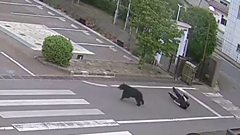
An Asian black bear, weighing nearly two hundred pounds, was standing inside the facility.
Before the worker could process the impossibility of the sight, the animal charged. What followed was a chaotic, terrifying blur of claws, shouting, and the desperate scramble for survival against an apex predator trapped inside a cage of industrial steel. The man survived, escaping with severe lacerations and a psychological scar that will likely never heal, but the incident left an entire nation asking a deeply unsettling question.
How did the wilderness get inside the machine?
The Shrinking Buffer
To understand why a bear would wander into a roaring steel mill, you have to understand the changing geography of the Japanese countryside. For centuries, the boundary between human civilization and the wild mountain forests was defined by a unique ecological zone known as satoyama. This wasn't untouched wilderness, nor was it paved urban space. It was a managed buffer zone of rice paddies, secondary forests, and small agricultural plots.
The satoyama served a vital purpose. It provided a clear, visible boundary. Bears stayed in the high, dense forests because the open, actively worked fields offered no cover and plenty of human noise. Humans stayed in their valleys. It was a tense, unspoken treaty written into the landscape itself.
But Japan is undergoing a historic demographic shift. Villages are emptying as the population ages and younger generations migrate to Tokyo and Osaka. The small farms that once Ringed the mountains are being abandoned, left to go fallow.
Consider what happens next: without farmers to clear the brush, the forest does what it has always done. It reclaims its territory. The thick undergrowth inches closer to the towns, closing the gap. The satoyama is vanishing, and with it, the physical buffer that kept two entirely different worlds apart. The wilderness is no longer out there in the distant mountains. It is creeping right up to the factory gates.
An Unlikely Confluence of Senses
Imagine the sensory overload a wild animal experiences when it steps across that invisible line. A bear relies almost entirely on its sense of smell and acute hearing to navigate. Under normal circumstances, the violent clanking of iron, the hiss of hydraulic presses, and the chemical stench of a steelworks would act as a powerful deterrent. It should have been a wall of sound and scent more formidable than any concrete barrier.
But nature is facing its own crises. Biologists point out that erratic weather patterns have severely impacted the seasonal yields of acorns and beech nuts—the vital caloric foundation that bears rely on to survive the winter. When starvation looms, fear takes a back seat to survival.
Driven by hunger, the bear descends from the mountains. It follows the overgrown valleys, completely hidden by the unchecked brush, until it finds itself in the gravel parking lot of a industrial complex. To the bear, the towering walls of the steel plant don't look like a human triumph; they look like the rocky cliffs of a strange, metallic canyon. It slips through an open loading bay in search of food, completely disoriented, terrified, and suddenly cornered by the very sounds that should have kept it away.
When a wild animal is trapped in an environment where every surface reflects its own fear, violence becomes the only currency.
The Myth of Separation
We like to believe in our own isolation. We build smart cities, surround ourselves with concrete, and design automated supply chains to insulate our daily lives from the whims of the natural world. We view nature as a destination—a park we visit on the weekend, a documentary we watch on a screen, or a scenic backdrop to a vacation.
This incident exposes that separation as a fragile illusion. The steel plant, a symbol of heavy industry and human mastery over raw elements, was breached in a matter of seconds by an animal acting on instincts developed over millennia.
The true crisis isn't just a sudden spike in animal encounters; it is our collective forgetting of how to live alongside the wild. When we abandon the land, we don't just leave behind empty houses; we leave behind the responsibility of managing the frontier. The bear didn't invade human territory out of malice. It simply walked through a door that we forgot to watch.
The Price of a Fragmented Landscape
The aftermath of such an event leaves a community altered. Security protocols are rewritten. Workers now glance toward the tree line with a new sense of vulnerability before walking to their cars at night. The easy confidence of the industrial routine is replaced by an underlying tension.
But the solution cannot simply be to build higher walls or to eliminate every predator that crosses the perimeter. That approach is a temporary patch on a systemic wound. The real work lies in reckoning with the spaces we have left behind. It requires reimagining how our modern, industrialized world interacts with the ancient ecosystems that border it.
The echoes of that struggle inside the steel works linger long after the sirens have stopped. It serves as a stark, visceral reminder that no matter how much concrete we pour, how much steel we forge, or how bright we light the night, we are never truly separated from the wild. The forest is always watching, waiting for the moment the fire burns low.