The glow of a Bloomberg terminal at four in the morning isn't just light. It is a pulse. For months, that pulse has been erratic, a jagged green-and-red heartbeat reflecting a world that seemed determined to tear itself apart. In the sterile, air-conditioned silence of trading floors from Singapore to Manhattan, the air felt thin. Every headline regarding the Strait of Hormuz or drone signatures over Isfahan felt like a physical weight on the chest of the global economy.
Then, the flicker changed. For a different view, read: this related article.
The news didn't arrive with a fanfare. It arrived as a sharp, collective intake of breath. Donald Trump and the leadership in Tehran had reached an agreement. Not a grand bargain. Not a permanent peace. Just fourteen days. Two weeks of silence. Two weeks where the missiles stay in their silos and the rhetoric stays behind closed teeth.
Markets don't just "cheer" for a ceasefire. They exhale. They relax their shoulders. They stop pricing in the end of the world and start pricing in the cost of a cup of coffee again. Similar coverage on this trend has been shared by Business Insider.
The Ghost of Eighty Dollars
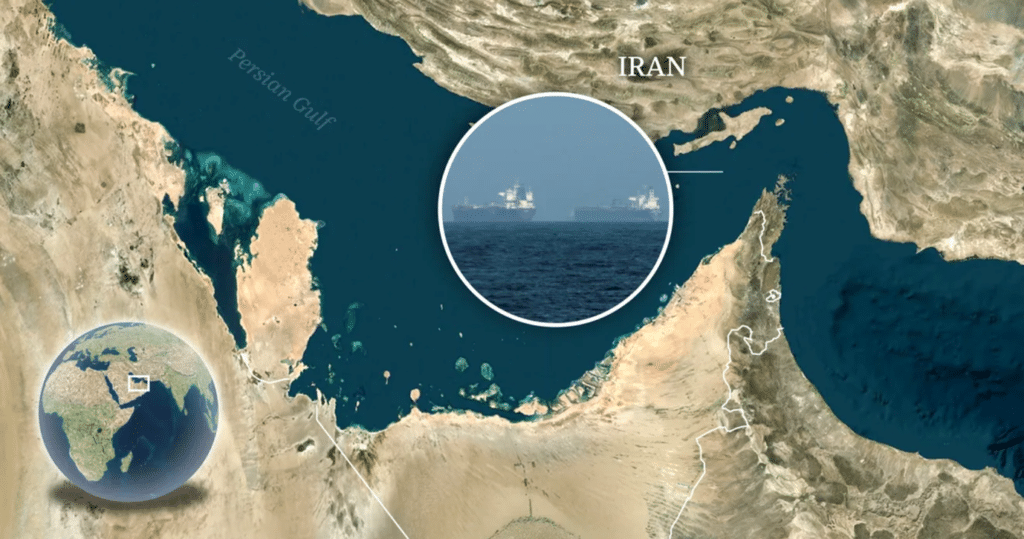
Consider a woman named Elena. She owns a small logistics firm in suburban Ohio. She doesn’t trade Brent Crude futures. She doesn’t have a direct line to the State Department. But for the last six months, Elena has been a prisoner of the geopolitics of the Middle East. Every time a fresh threat was lobbed across the Persian Gulf, the price of the diesel she puts into her trucks climbed.
When energy prices spike on the back of war fears, it isn't just a number on a screen. It is a slow-motion tax on everything that moves. It is the reason the strawberries at the local grocery store cost two dollars more. It is the reason Elena had to tell her lead driver that there would be no year-end bonus.
The fourteen-day ceasefire is, for people like Elena, a reprieve from an invisible executioner. The markets surged because, for the first time in a long time, the "worst-case scenario" was taken off the table, if only for a fortnight. The S&P 500 isn't just a collection of companies; it is a mirror of our collective anxiety. When that anxiety recedes, the mirror clears.
The Architecture of the Pause
There is a specific kind of madness in how we value peace. We often treat it as the absence of war, but in the financial world, peace is a commodity. It is the "risk premium" that suddenly vanishes from the ledger.
Yesterday, an oil trader would have told you that a barrel of crude carried a "war tax" of nearly ten dollars. That ten dollars represented the statistical probability of a tanker being struck or a refinery being darkened. Today, that tax has been slashed. The ceasefire acted as a giant, global eraser, moving across the balance sheets of every major energy firm and transport conglomerate.
But the ceasefire is fragile. It is a bridge made of glass.
Negotiating with Tehran has always been a game of shadows. To see the current administration find a common language—even a temporary one—suggests that the economic pressure has reached a boiling point where both sides needed to vent the steam before the boiler exploded. Trump, ever the dealer, understands that a soaring stock market is his most potent campaign surrogate. Tehran, buckled under the weight of sanctions and internal pressure, needs to show its people that the lights will stay on.
The Human Toll of the Ticker
We talk about "market sentiment" as if it’s an abstract weather pattern. It isn't. It is the sum total of millions of individual decisions rooted in fear or hope.
Imagine the floor of the New York Stock Exchange. In the movies, it’s all shouting and paper. In reality, it’s a high-tech cathedral of data. When the ceasefire news broke, the algorithms reacted in milliseconds, but the humans took a little longer. They had to process the "why."
Why now? Why two weeks?
The brevity of the deal is the most honest thing about it. It acknowledges that the grievances are too deep to fix in a single summit. It is a tactical pause. It allows the world to restock, to rethink, and to re-evaluate. It turns the screaming siren of a regional conflict into a low hum.
For the investor sitting at home, this isn't necessarily a signal to buy everything in sight. It is a signal that the floor has held. The terrifying trapdoor that seemed to be opening beneath the global economy has been bolted shut for 336 hours.
The Weight of Fourteen Suns
What happens on day fifteen?
That is the question that prevents this "cheer" from becoming a full-blown celebration. The market is a forward-looking machine. It is already trying to peer over the horizon of these two weeks. If this is a prelude to a larger diplomatic framework, we are standing at the beginning of a generational bull market. If this is merely a chance for both sides to reload, the subsequent crash will be more violent because of the hope that preceded it.
Confidence is a liquid. It’s hard to pour, and it’s incredibly easy to spill.
The ceasefire has given us a glimpse of what a de-escalated world looks like. It looks like cheaper shipping lanes. It looks like a tech sector that can focus on innovation rather than supply chain resilience. It looks like a sigh of relief from a world that was starting to feel like a tinderbox.
Right now, in a port in Singapore, a captain is looking at his route through the Indian Ocean. For the first time in months, he isn't checking the horizon for the silhouette of a hostile vessel. He is looking at the water. He is thinking about his family. He is thinking about the time he will make up.
Money is just a way of measuring human energy. When we aren't spending that energy on destruction, we spend it on building. We spend it on moving forward. We spend it on the belief that tomorrow might actually be better than today.
The fourteen-day ceasefire is a gift of time. It is a short, bright window in a dark room. The markets are cheering because, for a brief moment, they can see the furniture again. They can see the exit. They can see each other.
The clock is ticking. Every second of silence from the guns is a second where a kid’s college fund grows, where a small business stays solvent, and where the world remembers how to function without its hand on the hilt of a sword.
We are living in the space between the ticks of a very large, very dangerous clock. The silence is beautiful. The silence is expensive. And for the next fourteen days, the silence is all we have.
The sun sets over the Potomac and the Alborz mountains alike. For two weeks, those sunsets won't be framed by the smoke of a new escalation. That, more than any percentage point on the Dow, is the real profit.