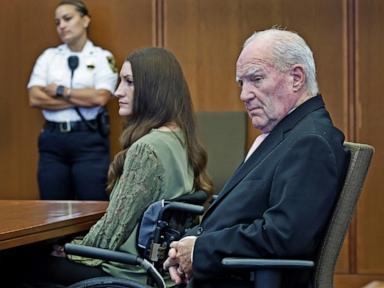
The room smelled of stale coffee, damp winter coats, and the heavy, electric fatigue of a week spent staring at the abyss. Twelve people had been handed a tragedy wrapped in a legal statute, told to untangle a knot that defies human comprehension. Outside the courthouse doors, the world clamored for a clean ending. Inside, there was only the gray.
Consider what happens when a jury box becomes a microcosm of a society at war with itself over pain it refuses to name.
For days, the jurors lived inside the nightmare of Duxbury. They listened to the medical testimonies tracing a mind coming undone, the frantic, blood-curdling echoes of a 911 call that left psychological shrapnel in the minds of everyone who heard it. They looked at journals written by a mother who had loved her children fiercely before a postpartum mental health crisis fractured her reality. The evidence pointed in conflicting directions, pulling toward profound sympathy on one hand and the unyielding weight of a horrific act on the other.
Then came the deadlock. An eleven-to-one split, whispered about in formal notes to the judge, culminating in a mistrial that left everyone legally suspended over empty air.
Days later, the silence broke. Jurors began to speak.
Roni Carlson, the foreperson who had guided the panel through the harrowing process, pulled back the curtain on a deliberation room choked with friction. She described the exact moment hope flickered and died. A lone holdout admitted to harboring reasonable doubt—the precise threshold required by law to question a guilty verdict. The forms were nearly filled out. The legal machinery was ready to turn.
Then came the pivot. The holdout drew a hard line, announcing that despite the acknowledged doubt, an acquittal by reason of insanity was off the table.
Another juror, speaking anonymously, described the room as a pressure cooker of unyielding convictions and outsized personalities. There was no smoking gun, no neat mathematical equation to solve a human catastrophe. There was only an overwhelming gray area where the medical system's failure to catch a spiraling mother collided with the absolute finality of three dead children.
This is what happens when we ask the legal system to do the work of a moral autopsy. The courts deal in binaries: guilty or not guilty, sane or insane, black or white. But postpartum psychosis and severe psychiatric crises do not live in binaries. They live in the terrifying shadows where a mother can love her children with every fiber of her being and simultaneously lose her mind entirely.
The jurors absorbed that terror. Kellie Farina, another member of the panel, recounted the haunting despair of the recorded emergency call, noting that the sound would stay with her for the rest of her life. They weren't just weighing exhibits; they were standing at the edge of a precipice, staring down into the dark corners of modern healthcare, motherhood, and mental health stewardship.
When a trial ends in a mistrial, people look for someone to blame. They point fingers at the lone holdout, at the defense, at the prosecution, or at the judge who pulled the plug after multiple deadlocked notes. But the deeper discomfort lies in the truth exposed by the jury's unraveling. The system did not break because one juror dug their heels in. The system broke because it was forced to categorize a tragedy that defies clean resolution.
The jurors walked out of that courthouse changed, carrying the echoes of a desperate scream that no verdict could ever silence. And the rest of us are left standing in the wake, waiting to see if the state will choose to walk back into the fire for a second try, or if we will simply look away from the shadows that allowed the tragedy to grow in the first place.