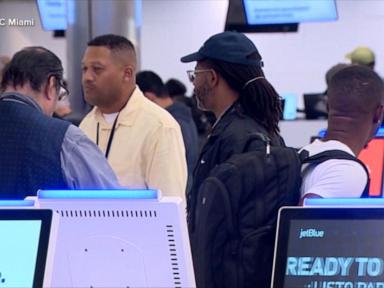
At 3:14 AM in Terminal 3 at Dubai International Airport, the fluorescent lights do not care that you have been awake for twenty-two hours. They hum with a flat, indifferent brilliance over the polished marble floors, reflecting the tired silhouettes of thousands of people staring upward at the departure boards.
Wait.
Watch the letters flip. One green status turns amber. Another blinks red. Delayed. Rerouted. Cancelled.
To an aviation analyst sitting in a climate-controlled office miles away, a November 20 travel advisory across the United Arab Emirates is just a routine operational friction point—a seasonal convergence of morning fog banks rolling off the Arabian Gulf, regional airspace restrictions, and cascading slot adjustments across Dubai, Abu Dhabi, and Sharjah. To the person standing beside Gate B14 with a sweating passport in one hand and a lukewarm paper cup of cardamom coffee in the other, that amber light is an earthquake.
Consider a hypothetical traveler—let us call her Nadia, a structural engineer from London trying to make a forty-five-minute connection through Zayed International Airport in Abu Dhabi to reach her sister’s wedding in Kochi. In the dry language of a standard airline bulletin, Nadia does not exist. She is absorbed into a load-factor percentage, a rebooking queue, a metric of disrupted passenger-kilometers. Yet it is Nadia’s pulse that accelerates when the gate agent picks up the microphone, clears his throat, and delivers the rehearsed cadence of corporate regret.
We have conditioned ourselves to treat modern aviation as an infallible conveyor belt. We buy a digital ticket, scan a barcode on a glass screen, and expect the laws of meteorology, geopolitics, and mechanical physics to bend silently to our calendar invites. When the UAE’s aviation hubs—some of the busiest and most ruthlessly efficient crossroads on Earth—issue flight status updates and travel alerts, the shock we feel isn't really about the delay itself. It is the sudden, jarring reminder that global transit is not a solid bridge. It is a high-wire act performed five miles above the desert floor, held taut by thousands of invisible threads that can snap when a single variable shifts.
The Architecture of a Domino Effect
To understand why a single morning’s travel alert in the Emirates ripples outward to disrupt dinner plans in Frankfurt, cargo deliveries in Singapore, and surgical schedules in Nairobi, you have to picture the Gulf not as a destination, but as a mechanical watch.
I learned this the hard way three Novembers ago, stranded on the tarmac in Sharjah while a wall of dense coastal advection fog swallowed the runway lights whole. Outside my oval window, the wingtip vanished into a soup the color of wet concrete. Inside the cabin, the air conditioning clicked off, replaced by that heavy, claustrophobic silence that settles over three hundred strangers when they realize nobody is going anywhere soon. For four hours, we sat twenty feet from the terminal building, separated from dry land by regulatory protocols, crew duty-time limits, and a queue of forty-two aircraft waiting for visibility to clear by a mere two hundred meters.
That experience strips away any illusion of simplicity. Think of the UAE’s major carriers—Emirates, Etihad, flydubai, Air Arabia—as the central gears of a massive Swiss timepiece. Because roughly two-thirds of the world’s population lives within an eight-hour flight of Dubai and Abu Dhabi, these hubs operate on a pulse-and-wave model. Hundreds of wide-body jets arrive in tightly choreographed banks around midnight, disgorge tens of thousands of passengers into duty-free concourses, swap crews, refuel, reload bellies with everything from fresh orchids to semiconductor wafers, and launch outward again before dawn.
When everything works, it is a miracle of human coordination.
When one gear slips, the teeth grind everywhere at once.
A sudden restriction in neighboring regional airspace forces a westbound flight from Manila to dogleg south, burning an extra forty minutes of fuel and arriving late into Dubai. That forty-minute slip means the aircraft misses its maintenance window. The delay bleeds into the outbound morning wave to Manchester. Meanwhile, an unforecasted blanket of November coastal fog settles over Al Maktoum and DXB, forcing air traffic control to double the spacing between landing aircraft for safety. Arrival rates drop by half. Planes enter holding patterns over the Gulf, burning reserves until low-fuel advisories force diversions to Muscat, Fujairah, or Bahrain.
By the time a passenger wakes up in a hotel room in Deira or checks their phone over breakfast in Downtown Dubai, the official airline status page reads simply: Operational adjustments due to weather and regional airspace congestion. Five sanitized words masking a logistical chess match played at five hundred miles per hour.
What the Departure Board Won't Tell You
If you have ever stood in a customer service line snaking past three closed gates while your battery drops to four percent, you know the specific, cold panic of information starvation. Standard travel advisories tell you what is happening, rarely why, and almost never what to do before the crowd moves.
Let us clear away the fog around what these UAE flight alerts actually mean for your ticket, your rights, and your sanity when the schedule fractures.
First, there is the myth of the airport counter. When hundreds of flights experience rolling delays or selective cancellations across DXB, AUH, and SHJ, the physical rebooking desk is the worst place on earth to stand. By the time you reach the front of a two-hour queue, every seat on the next three outbound flights has already been claimed by passengers who understood how airline inventory systems actually work. The moment your flight status shifts from On Time to Delayed by more than ninety minutes—or before you even leave your hotel if an alert is active—your battleground is the airline’s mobile app, their direct WhatsApp support channel, or an international call center operating in a time zone where it is still afternoon. You are competing for algorithmic inventory, and speed beats proximity to a gate agent every single time.
Second, pay ruthless attention to the distinction between an airline-controlled disruption and an extraordinary circumstance. When a flight out of the UAE is cancelled due to crew scheduling or technical faults, carriers operating under UAE General Civil Aviation Authority (GCAA) regulations—and especially on routes connecting to the European Union or the United Kingdom—carry strict obligations for hotel accommodation, meal vouchers, and rerouting. When the culprit is dense November fog or sudden regional airspace closures, carriers classify the event as outside their operational control. They will still rebook you, and premium hub carriers like Emirates and Etihad routinely go above and beyond with hotel stays to protect their reputation, but you should never walk into an airport during a weather or airspace alert without knowing whether your travel insurance policy covers "trip delay" versus "carrier default." That single clause in a PDF you ignored when booking can be the difference between sleeping on a carpeted terminal floor and checking into a suite at the airport hotel.
Third, watch the hidden trap of separate tickets. In a hub-and-spoke ecosystem as dense as the Emirates, budget-conscious travelers frequently stitch together self-transfers—flying into Sharjah on a low-cost carrier, taking a taxi down Sheikh Mohammed Bin Zayed Road to Dubai International, and boarding a separate long-haul flight four hours later. On a clear Tuesday in April, it works brilliantly. During a November advisory window, a ninety-minute ground hold on your first leg doesn't just make you late; it voids the entire value of your second ticket, because the second airline owes you nothing for a connection you built yourself.
The Invisible Hands Behind the Glass
It is easy to aim our frustration at the person wearing the crisp uniform behind the podium. I have watched grown men in tailored suits slam their palms on boarding counters in Dubai because a mechanical sensor malfunction delayed their departure to Zurich, completely blind to the reality that a mechanic in a high-visibility vest was out on the apron in thirty-degree heat ensuring the hydraulic system wouldn't fail over the Alps.
There is an unspoken social contract in air travel that we rarely honor until it is tested. Every cancellation notice, every frustrating ground stop, every rerouted flight path around closed airspace is an active choice to prioritize survival over convenience. Aviation safety was written in blood over a century of trial and error; the protocols that trap you in a departure lounge on November 20 are the exact same protocols that keep modern commercial jet travel statistically safer than walking down your own stairs.
Yet knowing that intellectually does not soften the ache of missed moments.
Picture again our hypothetical engineer, Nadia, standing in Abu Dhabi. If her flight to Kochi is pushed back six hours, no statistic about global aviation safety rates will put her in the front row when her sister walks down the aisle. That is the real cost hidden beneath the sterile prose of a travel bulletin. It is the missed final goodbye at a hospital bedside. The job interview lost to a closed boarding door. The toddler melting down on a luggage carousel while exhausted parents try to decipher baggage claim tags in a language they don't speak.
When we strip the human heartbeat out of transportation news, we miss the entire point of why people move across the planet in the first place. Nobody boards a metal tube at two in the morning for the thrill of TSA-approved liquid bags or recirculated cabin air. We endure the friction of transit because something—or someone—on the other side matters enough to justify the ordeal.
Moving Through the Chaos Without Breaking
So how do you navigate a day when the Gulf’s skies turn unpredictable? You stop treating your itinerary like a promise and start treating it like a negotiation.
Arrive at the terminal earlier than your instincts tell you, even if the app says your flight is delayed—because airlines frequently swap aircraft tails at hub airports, turning a four-hour delay back into an on-time departure with thirty minutes' notice, leaving behind everyone who lingered at a café downtown. Keep your essential medications, a change of clothes, and every charging cable you own in a bag that never leaves your shoulder, because checked luggage during cascading cancellations enters a labyrinth that can take days to untangle. And above all, check your flight status directly with the operating carrier—not a third-party booking aggregator whose data feeds lag behind live airport operations by crucial, agonizing minutes.
Eventually, the fog burns off the Gulf. The airspace corridors reopen. The amber lights on the departure boards flick back to green, one by one, restoring the illusion that we are masters of distance and time.
Outside the floor-to-ceiling windows of the concourse, the sun rises over the desert haze, catching the silver fuselage of an A380 as the tug pushes it back from the gate. Inside, three hundred strangers buckle their seatbelts, stow their tray tables, and lean their heads against the plastic window frames—each carrying a private, urgent reason to reach the horizon, trusting the fragile choreography of the sky to carry them home.