Credit agencies don't usually panic over standard political bickering in Europe. They start sweating when a government spends money it simply doesn't have while thousands of teenagers shut down high schools across the country. Right now, France sits right at that uncomfortable intersection.
If you look past the romantic clichés of Parisian cafés, the economic reality is stark. France is drowning in debt. At the same time, high school students are taking to the streets to protest educational reforms and the broader direction of public policy. This isn't just a domestic headache for President Emmanuel Macron. Observers from Berlin to Washington are watching closely because when the French economy sneezes, the rest of the eurozone catches a cold.
Let's look at why this moment matters so much, what is actually driving the fiscal crisis, and why the youth protests represent a deeper crack in the nation's social contract.
The Weight of a Record Debt Mountain
France has a spending problem. It's not a secret, but politicians have spent decades dodging the math. Public debt has ballooned to historic highs, pushing past three trillion euros. That number sounds abstract until you realize what it means for everyday public services. When interest payments on national debt start competing with healthcare and infrastructure funding, something has to break.
European Union fiscal rules demand discipline. Member states are theoretically supposed to keep deficits under control, yet France consistently misses the mark. Brussels is keeping a very close eye on French budget talks. Ratings agencies have already issued warnings. If French bonds lose their luster, borrowing costs skyrocket. That triggers a nasty cycle of higher taxes, deeper spending cuts, and even more public anger.
Fixing this isn't about numbers on a spreadsheet. It requires touching sacred cows of the French welfare state. Pensions, labor protections, and public sector employment rules are heavily guarded. Every time a leader tries to reform them, the streets fill with people.
Why High Schoolers Are Walking Out
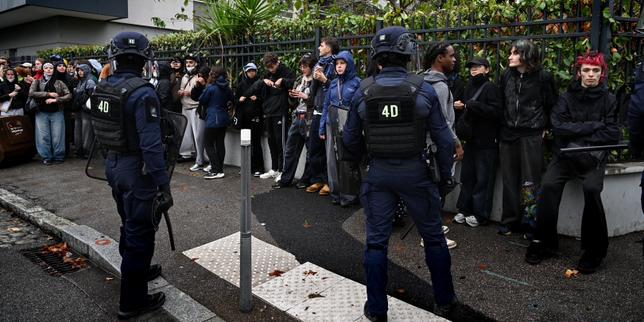
It's easy to dismiss teenage protests as an excuse to skip morning classes. That's a mistake. When French high schoolers (lycéens) blockade school entrances with burning trash cans and placards, they usually tap into a broader anxiety about the future.
Recent mobilization stems from a mix of local grievances and national fears. Students are pushing back against changes to vocational education tracks, university selection processes, and the perceived elitism of the national curriculum. But look closer at their signs and chants. They're talking about climate change, purchasing power, and the bleak job market waiting for them after graduation.
They watch their parents struggle with inflation and hear politicians debate raising the retirement age. The subtext of these youth protests is simple: young people feel like the social contract is broken. They are inheriting a state that spends heavily on the present while mortgaging their future. When teenagers organize nationwide walkouts, it signals to the political class that the next generation has zero trust in current leadership.
The International Ripple Effect
Why should anyone outside of France care about these domestic frictions? Because France remains a core pillar of the European project. Along with Germany, it drives EU policy, defense strategy, and economic direction.
When Paris is paralyzed by strikes or locked in budgetary standoffs with Brussels, European integration slows down. Foreign investors watch French political instability and rethink capital allocation. If populist movements capitalize on the current fiscal anxiety, the political landscape shifts sharply to the right or left. That alters EU consensus on everything from trade agreements to support for Ukraine.
Neighboring countries rely on French stability for regional security. A distracted, financially strained France has less bandwidth to project power or lead diplomatic efforts abroad.
Escaping the Cycle of Resistance
Solving this mess requires a level of political courage that is rare in modern democracies. Governments cannot tax their way out of a mountain of debt without crushing growth, nor can they cut spending without sparking massive strikes.
The path forward demands genuine compromise and honest conversations about what the state can actually afford. Citizens expect world-class public services, robust healthcare, and early retirement, but nobody wants to pay the higher taxes required to sustain them. Until France reconciles its expectations with its balance sheet, the tension between fiscal reality and social protection will only grow sharper.
The protests and the debt crisis share a single root cause. They both stem from a refusal to adapt to a changing global economy. Until leaders and citizens face that truth together, the nation will keep bouncing from one crisis to the next.