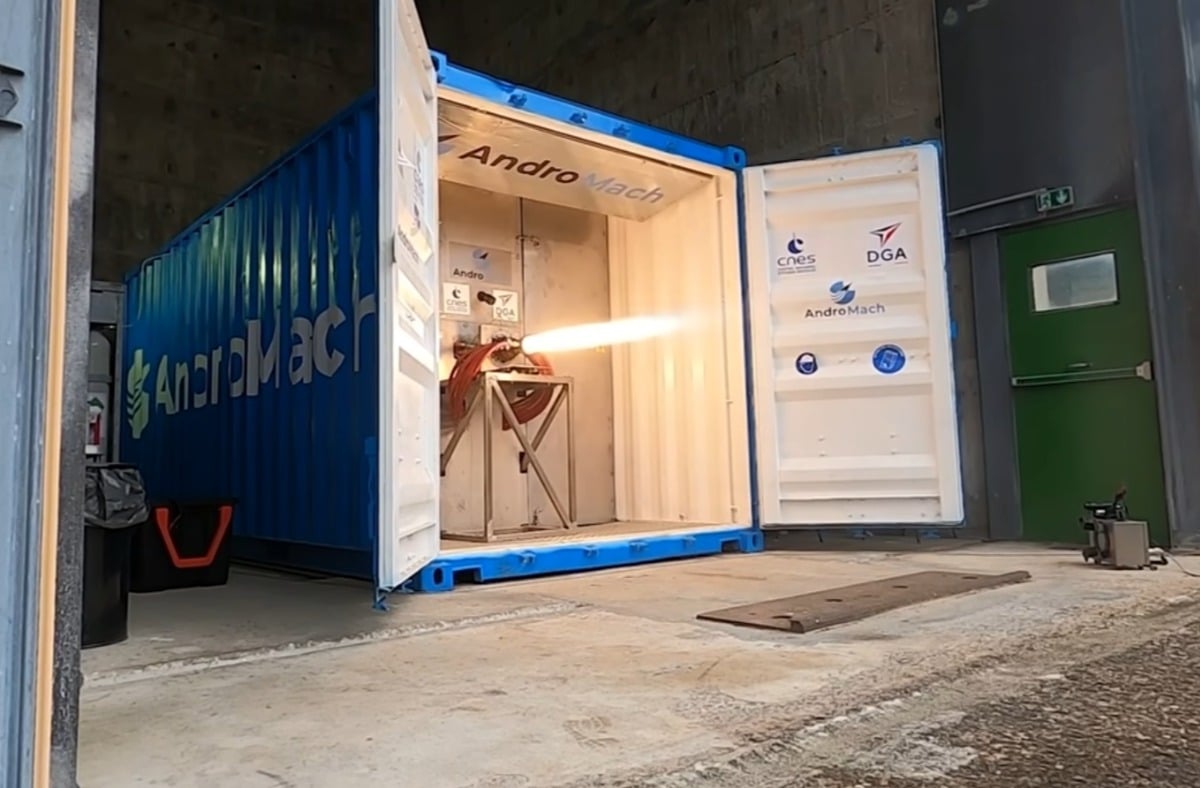
Everyone is losing their minds over France successfully firing a reusable hypersonic drone engine down in Gironde. Defense blogs are hyperventilating. Aerospace analysts are drafting breathless think pieces about a European hypersonic renaissance. The lazy consensus is simple: we built a reusable scramjet demonstrator, therefore Europe is back in the high-speed race and operational hypersonic cruise missiles are just around the corner.
It is complete nonsense. Meanwhile, you can read other stories here: Why AI Analysis of Birdsong is a Massive Waste of Time.
I have watched defense contractors and state-backed agencies incinerate billions of euros chasing the ghost of high Mach numbers for three decades. They celebrate a five-second burn in a controlled test rig as if it solves the brutal, unforgiving reality of thermodynamics. It does not. Testing a scramjet engine in a pristine French test facility is about as relevant to actual battlefield utility as wind-tunnel testing a paper airplane in a vacuum chamber.
Let us look past the press releases from DGA and ArianeGroup. The real story is not that France built a cool engine. The real story is that they are solving a problem nobody actually needs solved while ignoring the structural failures making the technology obsolete before it even launches. To understand the bigger picture, check out the detailed article by Mashable.
The Hypersonic Fallacy
Let us define terms because the tech press refuses to do so. Hypersonic flight means traveling at Mach 5 or higher—roughly 3,800 miles per hour and up. At these velocities, air molecules stop behaving like polite fluid streams and start ripping apart. Temperatures at the nose cone and intake ramp skyrocket past 1,500 degrees Celsius. Metals buckle. Electronics fry.
The lazy narrative claims that reusability changes the economics. If you can recover the engine, hypersonic weapons and reconnaissance platforms suddenly become affordable.
This logic collapses under the weight of material science.
A scramjet—supersonic combustion ramjet—has no moving parts in the traditional sense. No turbine blades. No compressors. It relies entirely on the sheer forward velocity of the vehicle to ram air into the intake, compress it, mix it with fuel, and ignite it. Sounds elegant, right? Except it means the engine only works when you are already moving at Mach 4. You need a booster rocket just to get the thing moving fast enough for the engine to turn on.
Now add the word "reusable." To make a scramjet survive the thermal and mechanical violence of Mach 7 repeatedly, you need active cooling channels pumping liquid hydrogen or specialized endothermic fuels through the engine walls at terrifying pressures. You are asking a thin metal structure to act as a heat exchanger while enduring acoustic vibrations that literally liquefy internal components.
When France tests a drone engine in Gironde, they are looking at telemetry from a heavily instrumented, short-duration bench test. They are not looking at what happens to a carbon-composite airframe after enduring structural fatigue through three cycles of hypersonic deceleration and salt-air corrosion. I have seen defense programs blow nine figures trying to make reusable thermal protection systems hold up for more than a single flight. The maintenance cost of a "reusable" hypersonic drone will eclipse the cost of a disposable ballistic missile before the second flight ever clears the runway.
Why Speed Is a Vanity Metric
The entire obsession with hypersonic speed stems from a fundamental misunderstanding of modern warfare. The marketing pitch goes like this: traditional cruise missiles are too slow, so air defense systems shoot them down. Hypersonic weapons fly so fast and maneuver so unpredictably that anti-air batteries cannot track them.
It sounds great in a PowerPoint presentation. It falls apart the moment you look at sensor fusion and orbital constellations.
Modern defense networks do not rely on a single radar dish sitting on a hill waiting for a blip. They use distributed infrared early-warning satellites, multi-spectral sensor arrays, and AI-driven track prediction. A hypersonic vehicle moving at Mach 7 creates an ionized plasma sheath around itself. Ironically, this plasma layer acts as a double-edged sword. While it makes traditional radar reflection messy, it also lights up the vehicle like a neon sign in the infrared spectrum. Space-based sensors track the thermal bloom of a scramjet exhaust from hundreds of miles away with ruthless precision.
Furthermore, speed without maneuverability is just a straight line to an intercept point. To evade terminal phase interceptors, a hypersonic drone has to pull G-forces that would tear its own wings off or disrupt the delicate shockwave inlet geometry required to keep the scramjet lit. The moment a scramjet-powered vehicle yaws hard to dodge a threat, the airflow separates inside the intake, the engine unstarts, flameout occurs, and your multi-million-dollar drone becomes an expensive lawn dart.
The Strategic Diversion
Why are European aerospace firms pouring cash into this dead-end geometry? Because it keeps the subsidy spigot open.
France wants strategic autonomy. They want a domestic defense industrial base that does not rely on American technology. That is a noble political goal, but writing checks for hypersonic drone engines is an inefficient way to achieve it.
While engineers in Gironde obsess over Mach numbers, the actual wars of the 21st century are being won and lost in the electromagnetic spectrum, through autonomous swarm coordination, and via cheap, attritable loitering munitions that cost twenty grand a pop. If you can blind an enemy command center with a localized cyber attack or overwhelm their air defense with a hundred low-cost kamikaze drones, you do not need a Mach 8 reusable intelligence-gathering drone that requires a dedicated runway, a rocket booster stack, and a battalion of metallurgists to refurbish between sorties.
Imagine a scenario where a state deploys a squadron of inexpensive subsonic stealth cruise missiles alongside hundreds of decoy drones. The enemy spends millions firing interceptors at cheap targets while the main payload slips past undetected. Now compare that to launching a single, highly visible, thermally screaming hypersonic drone that costs more than a hospital wing.
The economics are upside down.
The Uncomfortable Truth About French Aerospace
Let us give credit where it is due. The French aerospace sector has engineering talent that few nations can match. Dassault and Safran know how to build world-class propulsion systems. Their work on the Prométhée reusable rocket engine program and previous Vmax glider tests shows a genuine commitment to pushing technological boundaries.
The failure is not in the engineering capability. The failure is in the strategic alignment.
When you ask people why hypersonics matter, they mumble vague phrases about deterrence and keeping pace with global competitors. They point to developments in China and Russia. But they ignore the asymmetrical reality. Russia uses hypersonics because they struggle to build effective, miniaturized precision guidance systems for standard cruise missiles. China invests heavily because they are projecting power across vast maritime distances against heavily defended carrier strike groups.
France has entirely different geopolitical constraints. Their primary security concerns involve expeditionary interventions in North Africa, littoral defense, and maintaining a credible nuclear deterrent via submarine-launched ballistic missiles and Rafale-borne ASMP-A nuclear cruise missiles. None of these missions require a reusable scramjet drone.
Dismantling the Hype Cycle
Let us address the specific claims coming out of the Gironde test site. The engine demonstrated stable supersonic combustion—meaning combustion occurring within air flowing at supersonic speeds. That is a legitimate physics hurdle. It requires fuel injection to mix with air moving at thousands of meters per second in a matter of milliseconds. Think of trying to light a match in a Category 5 hurricane and keeping the flame stable.
They did it. In a lab. With clean gas flows and ideal pressures.
Transitioning that stability from a stationary rig to a free-flying vehicle experiencing atmospheric turbulence, angle-of-attack variations, and boundary-layer transition is a quantum leap in difficulty. The boundary layer—the thin layer of air interacting directly with the skin of the drone—goes from laminar to turbulent, generating localized heat spikes that can burn through a titanium-alloy hull in fractions of a second.
Until France publishes data on a flight test that demonstrates sustained, controlled cruise, engine recovery, and structural survival without a complete overhaul of the hot section, these tests are little more than expensive chemistry experiments.
What Actually Works
If you want to disrupt modern aerial warfare, stop trying to make jet engines work at speeds where air turns into plasma. Look instead at what is happening in hypersonics' ugly stepchild: high-endurance low-observable subsonic platforms and swarm intelligence.
The future belongs to systems that can persist, adapt, and operate below the radar threshold indefinitely. A drone that loops over a contested zone for twenty-four hours gathering data provides infinitely more tactical value than a drone that screams overhead at Mach 6, takes three blurry pictures, and crashes into the Mediterranean because a cooling line ruptured.
France does not need a reusable hypersonic drone engine. They need the courage to admit when a technology is a solution in search of a problem.
Stop funding the prestige projects. Build things that actually win fights.