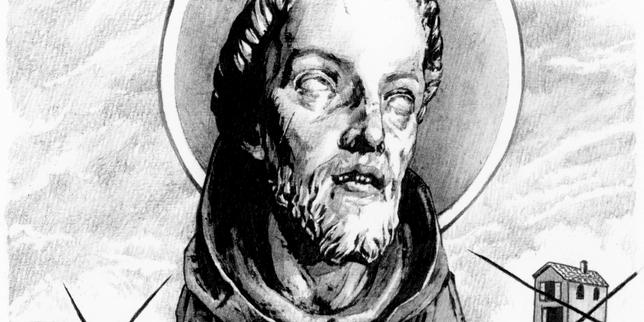
We live in a world that worships liquidity. Every single aspect of modern life ties back to accumulation, credit scores, and the constant hum of commercial transactions. Step outside that framework for even five minutes, and people look at you like you've lost your mind. But back in the thirteenth century, a wealthy cloth merchant's son from Italy did something far more extreme than just cutting up his credit cards. He stripped naked in front of his bishop, handed his father every stitch of expensive clothing he owned, and declared absolute war on money.
Francis of Assisi wasn't just a quirky medieval mystic who liked talking to birds. He and his early disciples built a genuine socio-economic counter-model that terrified the emerging financial powers of medieval Europe. While cities like Florence and Venice were inventing modern banking, double-entry bookkeeping, and international trade networks, the Franciscan movement preached the absolute rejection of wealth. They didn't want to reform the system. They wanted to obliterate its spiritual grip on the human soul.
If you think this is just an ancient religious curiosity, you're missing the point. The anxiety around currency, net worth, and status hasn't changed at all. Let's look at how these early friars pulled off the ultimate financial rebellion and why their extreme stance still makes us deeply uncomfortable.
The Medieval Money Shock
To understand why Francis went to such violent extremes, you have to look at what was happening around 1200 AD. Europe was waking up from a largely agrarian, barter-based feudalism into a roaring commercial revolution. Coins were flowing freely. Towns were growing. For the first time in centuries, people could buy social mobility, political power, and respect simply by stacking enough silver coin.
Francis grew up right in the middle of this consumer boom. His father, Pietro di Bernardone, made a fortune selling fine foreign cloth to the newly rich bourgeois class. Francis knew the intoxicating scent of luxury. He wore imported silks, threw lavish parties for his rowdy friends, and dreamed of becoming a celebrated knight.
Then came the crisis. After a brief stint as a prisoner of war and a serious illness, Francis experienced a complete psychological and spiritual collapse. He looked at the frantic rush for cash and status around him and saw a spiritual sickness. Wealth wasn't a blessing. It was a chain.
When he founded the Order of Friars Minor, he laid down a rule that sounds completely unhinged by today's standards: the brothers were forbidden from touching money. Not a single copper coin. They couldn't own property individually or corporately. They couldn't even touch donations intended for their own keeping. If someone handed them money, they were supposed to drop it in the dirt like it was radioactive.
The Mechanics of Absolute Poverty
How do you survive in a booming commercial society without a single cent in your pocket? Most people assume Francis and his followers just starved in caves. They didn't. They lived right in the middle of the crowded, noisy medieval towns.
They survived through a mix of manual labor and begging, in that exact order. Francis insisted that his brothers work with their hands. If employers didn't pay them in cash, which was increasingly difficult, they accepted food, old clothes, or basic supplies. When labor failed, they begged. Begging wasn't just a strategy for getting dinner; it was a deliberate performance of dependency. By refusing to secure their own future through savings or investments, they forced themselves into total reliance on the goodwill of strangers and God.
Think about how threatening this is to a capitalist society. Capitalism relies on predictability, contracts, insurance, and deferred gratification. The Franciscan model blew all of that up. It said that hoarding resources for tomorrow is a sign of a lack of faith in human community.
Historians often point out that the early Franciscan movement caused massive headaches for the Papacy. Popes spent decades trying to figure out how to handle a group of religious radicals who legally owned nothing, yet lived inside the wealthiest institution on earth. The Church eventually compromised, bending the rules to let legal ownership of Franciscan convents belong to the Pope while the friars merely used the buildings. Francis would have hated the workaround. For him, compromise was the death of freedom.
Why the Experiment Collapsed From Within
You cannot build a massive global movement on total economic chaos forever. Almost immediately after Francis died in 1226, his followers started arguing over how strictly to interpret the rule of poverty.
Human nature got in the way. As the order swelled from a dozen ragged men into tens of thousands of friars spread across Europe, managing day-to-day survival through spontaneous charity became impossible. You need roofs that don't leak. You need books for education. You need care for aging, sick brothers.
A fierce ideological civil war broke out inside the Franciscan order. The "Spirituals" argued for a return to the absolute poverty of Francis's early days, viewing any compromise as a betrayal. The "Conventuals" argued for a pragmatic approach, accepting properties and endowments through legal proxies.
The moderates won, backed by papal authority. By the fourteenth century, the Franciscan apparatus looked a lot like any other large institution. They had grand churches, libraries, and administrative structures. The radical counter-model had been successfully absorbed, domesticated, and tamed by the very economic machine it tried to dismantle.
Yet, the ghost of that rebellion never quite vanished.
What We Can Learn From the Ultimate Financial Rebel
Nobody is suggesting you strip off your clothes in the town square and throw away your bank account. Modern life requires rent, groceries, and medical insurance. Ignoring those realities is reckless, not spiritual.
However, looking at the Franciscan counter-model exposes our modern addiction to financial security. We treat our bank balances as direct measurements of our personal worth. We spend decades trading our actual time and mental health for assets we don't need, trying to impress people we don't even like.
Francis understood something profound about human psychology long before modern neuroscience caught up: the more you own, the more your possessions own you. Every financial commitment is an anchor.
Take a hard look at your own budget this week. Not to pinch pennies or stress over inflation, but to ask yourself a harder question. Which of your expenses are genuine needs, and which are just anxiety insurance? You don't have to live on the streets of Assisi to realize that freedom begins the moment you stop letting money dictate your identity.