When President Ferdinand Marcos Jr. brushed aside criticism over the use of Freddie Aguilar’s 1978 folk ballad Anak during a dinner for Asia-Pacific Economic Cooperation leaders in Gyeongju, South Korea, he called it "just a song." That dismissal missed the point entirely. For critics, civil society groups, and political observers in Manila, playing a track recorded by a staunch supporter of the Marcos family—and an outspoken ally of former President Rodrigo Duterte—at an international diplomatic gathering was never merely a musical choice. It was a collision of cultural memory, soft power diplomacy, and the unresolved political fault lines of the Philippines.
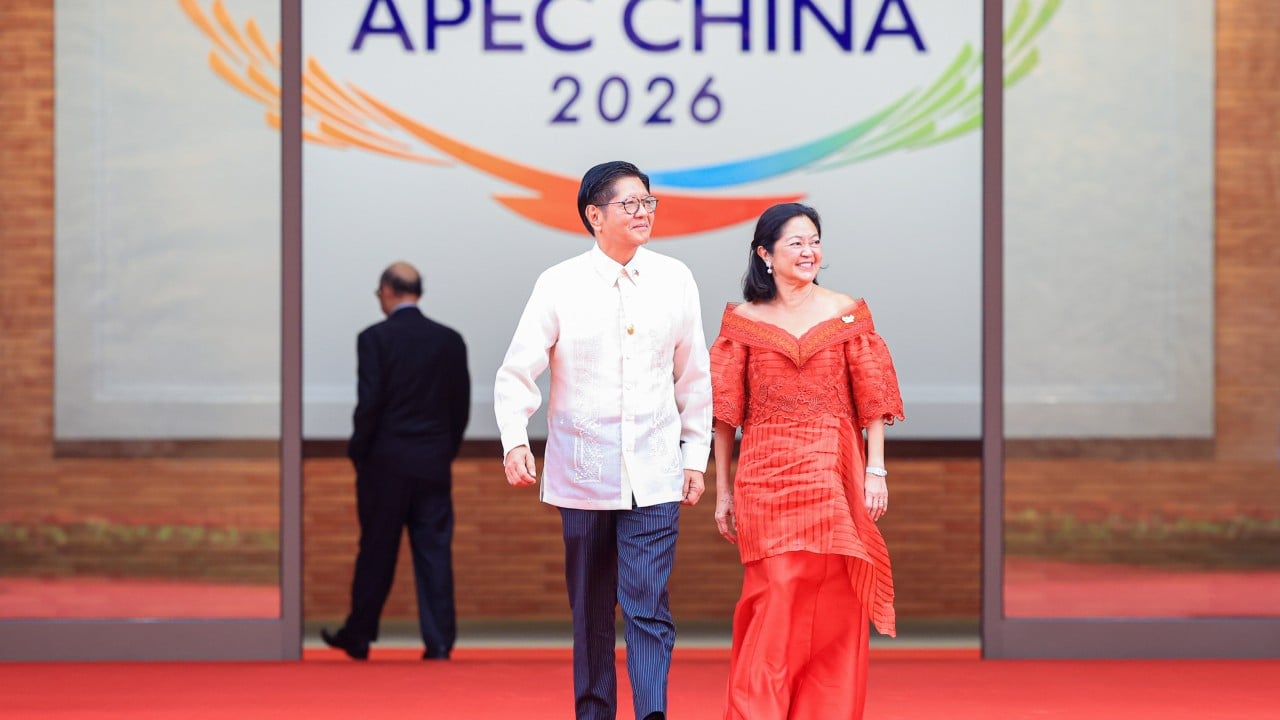
The incident occurred during the APEC Economic Leaders’ Meeting in late October 2025, hosted by South Korea. As part of the cultural programming for the gala dinner, organizers featured musical selections representing member economies. When Anak echoed through the banquet hall, reactions back home were immediate and polarized. Supporters saw a proud moment of Filipino musical heritage recognized on a global stage. Critics saw a tone-deaf reminder of the Martial Law era and the political alliances that brought the Marcos family back to Malacañang.
To understand why a four-decade-old acoustic ballad can still trigger a national debate, one has to look beyond the melody. In Philippine politics, nothing is ever just a song.
The Anatomy of a Diplomatic Soundtrack
International summits operate on meticulous choreography. Every flag placement, seating chart, menu item, and musical cue is vetted by protocol officers to project stability, cultural pride, and diplomatic neutrality. When a host nation selects a piece of music to honor a visiting head of state, it typically relies on recommendations from the visiting delegation’s embassy or foreign ministry, or defaults to the single most internationally recognizable cultural export available.
Anak fits the latter category without question. Released in 1978 by folk-rock musician Freddie Aguilar, the song became a phenomenon rarely matched in Asian pop history. Translated into dozens of languages—including Japanese, Mandarin, Malay, Korean, and Spanish—it sold millions of copies worldwide and remains one of the few Filipino compositions instantly recognizable across the Asia-Pacific region. In South Korea specifically, Anak has enjoyed decades of popularity, covered by Korean artists and woven into local nostalgia.
From the perspective of a South Korean event organizer, choosing Anak to welcome the Philippine delegation was logical. It is universally known, emotionally resonant, and unmistakably Filipino.
Yet the diplomatic calculus changes the moment the listener knows the song’s political biography.
President Marcos Jr., speaking to reporters on the sidelines of the summit, leaned into the song's universal appeal. According to media reports covering his remarks, he laughed off the controversy, noting that people were reading too much into a classic piece of Filipino music and pointing out that South Koreans themselves were fond of the track. By framing the backlash as overreaction, Marcos attempted to depoliticize a cultural artifact that has been deeply politicized for more than forty years.
Freddie Aguilar and the Politics of the Marcos Era
The friction surrounding Anak stems directly from the life and loyalties of its creator. Freddie Aguilar’s career has been inextricably linked to the shifting tides of Philippine authoritarianism and populism, often in contradictory ways.
When Anak was released in 1978, the Philippines was six years into Martial Law under Ferdinand Marcos Sr. The song itself is a poignant tale of a wayward child and unconditional parental forgiveness—a theme with no overt political message. In the mid-1980s, however, Aguilar became a prominent musical voice of the opposition. His rendition of Bayan Ko became the unofficial anthem of the 1986 People Power Revolution that toppled the Marcos dictatorship and sent the family into exile in Hawaii.
Decades later, Aguilar’s political trajectory reversed completely.
During the 2016 presidential campaign, Aguilar emerged as one of the most visible celebrity endorsers of Rodrigo Duterte, even writing and performing campaign jingles for the tough-talking Davao mayor. Duterte later appointed Aguilar to a government post as a presidential adviser on culture and the arts, though the musician’s tenure was brief. More significantly, Aguilar publicly reconciled with the Marcos family, expressing support for Ferdinand Marcos Jr. and performing at political gatherings aligned with the administration’s coalition.
For survivors of Martial Law abuses and human rights advocates, this evolution makes Aguilar a polarizing figure. Seeing his signature work played to honor Ferdinand Marcos Jr. at an international summit felt, to many, like an erasure of historical memory—a symbolic closing of the circle where the soundtrack of the People Power era was repurposed to serenade the restored dynasty.
Cultural Diplomacy Versus Domestic Memory
Every government uses soft power—the ability to influence others through cultural appeal rather than coercion—to burnish its image abroad. In Southeast Asia, music, cuisine, and heritage are standard tools at multilateral forums like ASEAN and APEC.
The problem arises when a nation’s most recognizable cultural exports carry heavy domestic baggage.
Consider the dilemma facing diplomatic protocol teams. If a government selects a completely neutral, traditional folk piece—such as a kundiman from the early twentieth century—international audiences may fail to recognize it, dulling the diplomatic impact. If it selects a globally famous contemporary or classic pop track, it inherits the public persona of the artist attached to it.
In the Philippines, where the entertainment industry and electoral politics are deeply intertwined, virtually no major artist exists outside the political ecosystem. Musicians, actors, and broadcasters routinely campaign for candidates, accept political appointments, and align themselves with competing political dynasties. As a result, cultural symbols rarely belong to the entire nation uncontested.
When Anak played in Gyeongju, two completely different audiences heard two completely different things:
- The International Audience heard a melancholic, world-famous Asian classic celebrating family bonds—an ideal musical backdrop for a summit focused on regional cooperation and shared prosperity.
- The Domestic Critics heard the work of a vocal ally of both the Duterte and Marcos administrations, played during a period when the Philippine government was actively working to rehabilitate its global image and attract foreign investment.
The Fragile Alliance Behind the Curtain
The timing of the APEC summit added another layer of complexity to the debate. By late 2025, the political alliance between the Marcos and Duterte camps—the "UniTeam" coalition that swept the 2022 elections—had fractured into open hostility. Public disputes between Vice President Sara Duterte and President Marcos Jr. dominated headlines, while congressional inquiries probed the previous administration’s anti-drug campaign and confidential fund expenditures.
Against this backdrop of bitter political realignment, Freddie Aguilar’s dual legacy as both a Duterte loyalist and a Marcos supporter took on fresh irony.
Political analysts in Manila pointed out that the controversy revealed how hypersensitive the Philippine public had become to any perceived symbolism involving the two families. Even an overseas banquet playlist became a proxy battlefield for domestic grievances. Social media commentary dissected not only why the song was played, but who approved it, whether Malacañang’s communications team had vetted the program, and whether the president’s casual laughter signaled genuine indifference or calculated deflection.
Marcos Jr.’s response—"It’s just a song"—follows a well-established communication strategy used throughout his presidency. Rather than engaging in ideological debates over Martial Law or historical revisionism, his administration consistently favors a forward-looking, pragmatic tone focused on economic growth, infrastructure, and foreign investment. Dismissing cultural controversies as trivial distractions allows the president to project calm above the political noise while leaving critics to argue over symbols.
What History Tells Us About Political Soundtracks
The debate over Anak is hardly unique in global diplomacy. Music has repeatedly sparked unintended political storms when leaders cross paths with contentious artists.
In the United States, presidential campaigns routinely face cease-and-desist orders from musicians who object to their songs being played at rallies, turning stadium playlists into legal and ideological skirmishes. In Europe, state visits have occasionally been overshadowed by debates over whether classical compositions linked to nationalist movements should be included in official concert programs.
What distinguishes the Philippine case is the compression of history. Fewer than forty years separate the fall of Ferdinand Marcos Sr. and the presidency of his son. The living memory of Martial Law is not an abstract chapter in a textbook; it is carried by millions of voters, journalists, lawmakers, and activists who lived through it.
When a cultural artifact from that era resurfaces on a diplomatic stage, it inevitably triggers a debate over how the past is remembered. To call it "just a song" ignores the reality that music is one of the primary vessels through which societies preserve and contest their collective memory.
The Limits of Casual Dismissal
For foreign diplomats and business leaders watching APEC from the sidelines, the controversy in Manila likely seemed puzzling. At a summit dominated by supply chain resilience, artificial intelligence governance, trade tariffs, and regional security, a debate over a 1978 folk song appeared peripheral at best.
Yet for observers of Philippine governance, the episode was a revealing barometer of the country's political climate. It demonstrated that despite economic recovery efforts and high-profile diplomatic engagements across Washington, Tokyo, and Seoul, the administration cannot fully outrun the historical questions attached to its name.
Every international appearance carries a dual audience. Abroad, the goal is to project stability, openness, and cultural confidence. At home, every gesture is filtered through decades of unresolved political trauma and partisan rivalry.
A melody can travel across borders without a passport, stripped of its original context and embraced by listeners who know nothing of the politics behind it. Inside the country that produced it, however, the lyrics are never heard in isolation—they carry the weight of everyone who ever sang them, and everyone who ever marched against them.