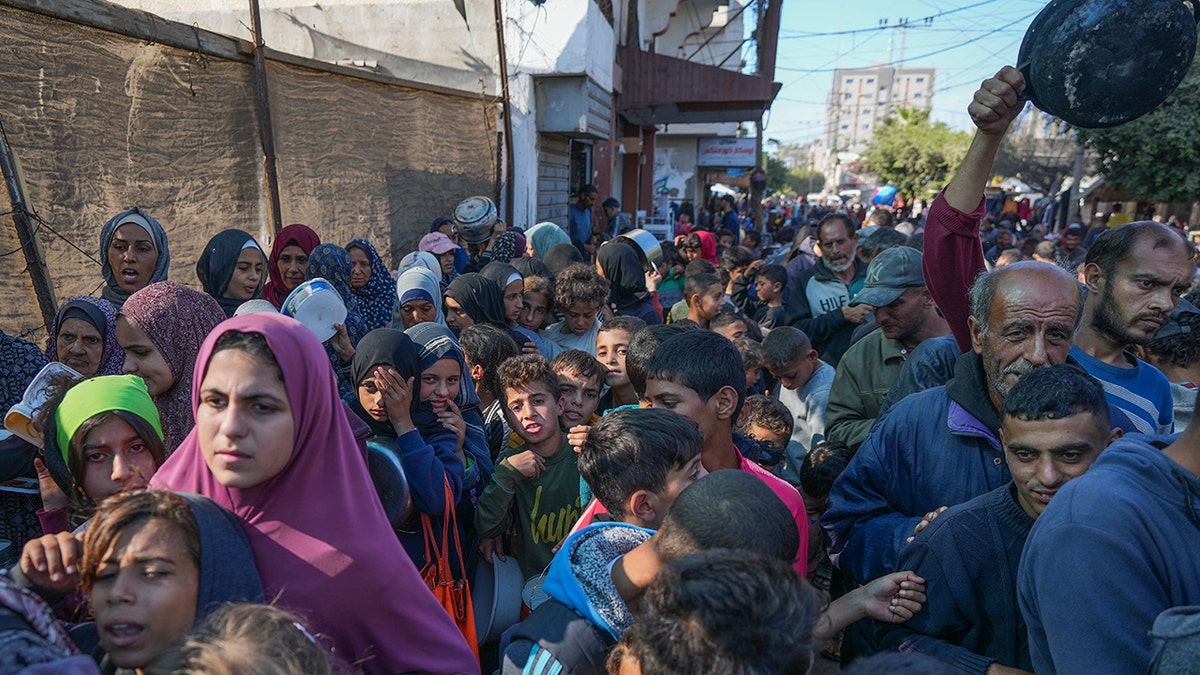
The headlines are lazy. You’ve seen them a thousand times: "Prices soar as borders close." It’s a textbook supply-and-demand narrative that makes everyone feel like a genius for passing Economics 101. But if you think Gaza’s current hyper-inflation is purely a byproduct of closed gates and Iranian geopolitical posturing, you aren't looking at the ledger. You are looking at the theater.
Stop treating the Gazan food market like a broken vending machine. It’s an extraction engine. When a bag of flour jumps from $15 to $100, that isn’t just "shortage." That is a sophisticated, multi-layered capture of the supply chain by internal monopolies, black-market arbitrageurs, and the very administrative bodies claiming to fight for the people. We are witnessing the weaponization of the "last mile" of delivery, and the international community is footing the bill for the markup.
The Myth of the Simple Shortage
The standard argument suggests that if you open the Kerem Shalom or Rafah crossings wider, prices drop. Wrong. History in conflict zones—from Sarajevo to Kabul—proves that volume alone doesn’t kill inflation when the distribution is a cartel.
I’ve spent years analyzing how aid enters high-friction environments. You can send 500 trucks a day, but if the distribution nodes are controlled by armed actors or "connected" merchant families, they will simply throttle the release of goods to maintain price floors. They aren't "surviving" the war; they are "leveraging" it.
When the media focuses entirely on the border, they ignore the warehouse. The bottleneck isn't just the concrete wall; it's the 15 guys with clipboards and rifles who decide which neighborhood gets the shipment and which merchant gets to set the retail price.
The Iranian Variable: Geopolitical Noise vs. Market Reality
Everyone wants to talk about how the shadow war with Iran is "deepening" the crisis. It’s a convenient distraction. While regional escalations certainly add a "risk premium" to logistics and insurance, the idea that Tehran’s maneuvers are the primary driver of the price of tomatoes in Deir al-Balah is laughable.
The Iran-Israel friction acts as a macro-shroud. It provides the perfect cover for local price-gougers to claim "unforeseen circumstances" while they sit on stockpiles. If you want to understand why Gaza is hungry, stop looking at the flight path of drones over Isfahan and start looking at the tax structure imposed on "emergency" goods at the local level.
How the Price Spiral Actually Works
To understand the mechanics, we have to look at the Velocity of Capital versus the Scarcity of Goods. In a standard economy, if prices rise, more players enter the market to capture the profit, eventually driving prices down. In Gaza, the "barrier to entry" for a new merchant is a death sentence or a massive bribe.
The pricing follows a predictable, albeit brutal, formula:
- The Risk Premium: The cost of moving a truck through a kinetic zone. This is the only "legitimate" reason for a price hike.
- The Protection Tax: Payments made to local factions to ensure the truck isn't looted.
- The Arbitrage Gap: The difference between the "official" aid price (zero or subsidized) and the "street" price.
When you see a 500% markup, only 50% of that is usually attributable to the war’s physical constraints. The rest is pure, concentrated rent-seeking by the people holding the keys to the local storage units.
Stop Asking About "Aid Volume"
People Also Ask: "How many trucks are entering Gaza daily?"
This is the wrong question. It’s a metric designed for bureaucrats to pat themselves on the back. The real question is: "What is the shelf-life of a dollar in the Gaza market before it is absorbed by the black market?"
If you flood a broken system with more goods without breaking the internal monopolies, you just increase the profit margins of the people controlling the gates. You are literally subsidizing the very entities you claim to be sanctioning.
The Uncomfortable Truth About Aid Dependency
The competitor articles love to wax poetic about the "deepening shortages." Let’s get cold-blooded for a second: the "shortage" is the most valuable asset certain leaders have.
High prices create desperation. Desperation creates a recruitment pool. It also ensures that the population is entirely dependent on whoever hands out the vouchers. If the market were to stabilize and prices were to normalize through private sector competition, the political leverage of the ruling factions would evaporate.
They don't want a functioning market. They want a ration system they control.
I’ve seen this play out in Sub-Saharan Africa and the Levant. The moment you introduce a parallel, un-taxable, and un-controllable supply chain (like drones or decentralized small-batch smuggling), the "shortages" miraculously begin to ease—not because the borders opened, but because the monopolists had to compete.
The Solution No One Wants to Hear
If the goal is actually to lower prices and feed people—rather than just scoring points in a geopolitical blame game—the strategy has to shift.
- Decentralize the Points of Entry: Stop funneling everything through massive, easily controlled corridors. We need "micro-logistics." Small, varied entry points that make it impossible for a single faction to tax every calorie.
- Cash, Not Just Cans: In many cases, flooding the market with physical goods just fuels the black market. Injecting digital, traceable currency directly to heads of households allows them to bypass the "official" distribution lines if they can find private sellers.
- Target the Warehouses: If you want to lower the price of flour, you don't need a diplomatic summit in Doha. You need to make it more expensive for local "businessmen" to hoard than to sell.
The Downside of This Take
Is this approach risky? Absolutely. Decentralized logistics are harder to track and can be "taxed" by smaller, more chaotic gangs. Traceable cash can still be extorted. But the current "controlled corridor" model is a guaranteed failure. It is a system designed to look like help while functioning as a tax on the starving.
Stop Reading the Script
The "Gaza food crisis" isn't a tragic accident of geography. It is a highly efficient economic ecosystem. The "soaring prices" are the dividends paid out to those who have mastered the art of managing a siege.
If you continue to view this through the lens of "war-induced scarcity," you are a mark. You are falling for the narrative that the people in charge—on all sides—are doing their best in a bad situation. They aren't. They are optimizing for a set of incentives that have nothing to do with the price of bread and everything to do with the price of power.
The next time you read about a border closure, don't just think about the trucks parked in the desert. Think about the merchant in a Gaza City basement who just saw his net worth double because his competition was "delayed." That is the war. The rest is just noise.
Identify the monopoly. Break the monopoly. Or stop pretending you’re surprised by the price of a meal.


