The convergence of the International Energy Agency (IEA), the International Monetary Fund (IMF), and the World Bank Group into a unified task force signals a systemic shift from reactive crisis management to integrated macroeconomic containment. While public narratives focus on humanitarian relief, the structural objective of this coalition is the preservation of global price stability and the prevention of a "triple-shock" event: a simultaneous disruption of energy supply chains, sovereign debt solvency in emerging markets, and the physical degradation of critical trade infrastructure. The efficacy of this task force depends not on diplomatic consensus, but on its ability to synchronize disparate data streams into a single, actionable risk model for global markets.
The Architecture of Synchronized Response
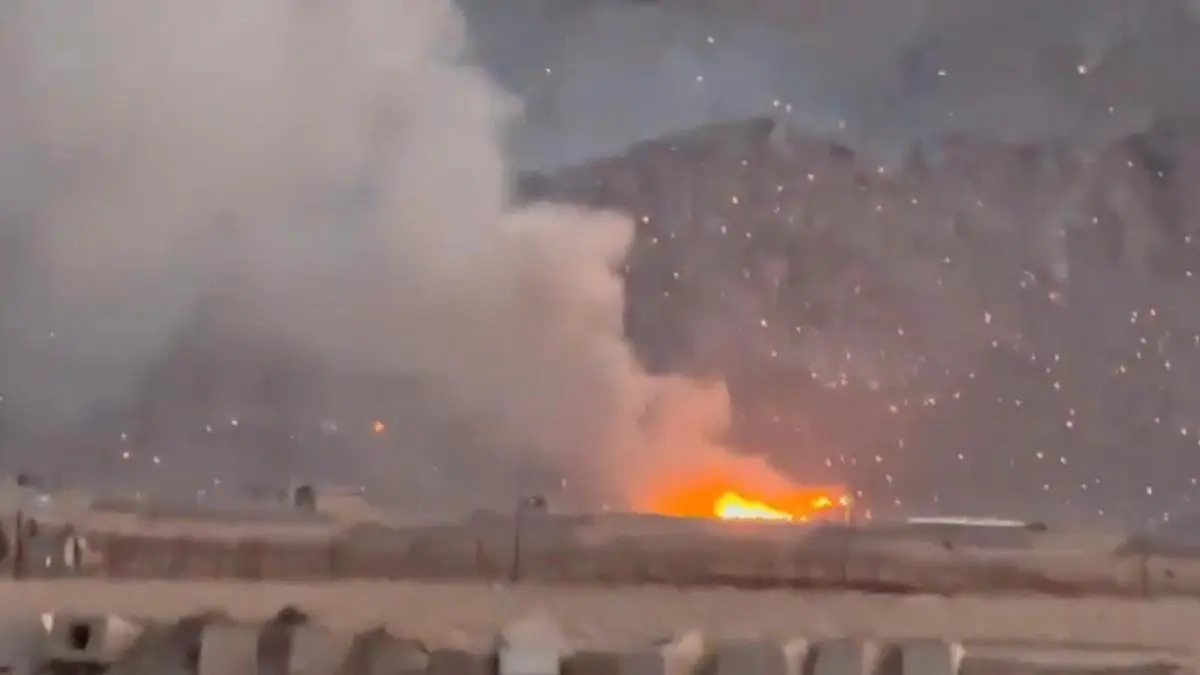
The formation of this joint task force addresses a fundamental fragmentation in global governance. Historically, these institutions operated in silos—the IEA managed oil stockpiles, the IMF stabilized currencies, and the World Bank funded infrastructure. However, the current conflict in West Asia demonstrates that these variables are now inextricably linked through a feedback loop of inflation and fiscal distress.
The task force operates through three distinct functional pillars:
Energy Security and Supply-Side Resilience (IEA-Led)
The primary risk is the physical or regulatory blockage of maritime chokepoints, specifically the Strait of Hormuz and the Bab el-Mandeb. The IEA’s role involves coordinating the release of Strategic Petroleum Reserves (SPR) and providing real-time data on supply-side elasticity. The goal is to suppress the "fear premium" in Brent Crude pricing, which can decouple from actual supply-demand fundamentals during periods of kinetic conflict.Fiscal Solvency and Monetary Containment (IMF-Led)
For oil-importing nations in the Global South, a spike in energy costs triggers an immediate balance-of-payments crisis. The IMF’s involvement focuses on "Precautionary and Liquidity Lines" (PLL) to prevent currency devaluations. Without this intervention, the rising cost of energy imports forces central banks to deplete foreign exchange reserves, leading to sovereign defaults that can contagion into broader financial markets.Critical Infrastructure and Human Capital Preservation (World Bank-Led)
While the IEA and IMF manage the macro-level variables, the World Bank addresses the micro-level degradation of economic assets. This includes the rehabilitation of energy grids, water desalination plants, and port facilities. By focusing on asset preservation, the World Bank attempts to maintain the "absorptive capacity" of regional economies, ensuring they can return to productivity once hostilities cease.
The Cost Function of Regional Instability
To quantify the impact of the West Asia conflict, the task force utilizes a multi-variable cost function. This model moves beyond simple GDP loss and looks at the velocity of economic erosion. The total economic cost ($C_{total}$) is a product of three primary stressors:
$C_{total} = (P_e \cdot V_i) + (D_s \cdot R_f) + (I_k \cdot T_l)$
Where:
- $P_e$ represents the Energy Price Delta, specifically the deviation of oil and gas prices from the pre-conflict baseline.
- $V_i$ is the Import Volatility Index, measuring the increased cost of shipping and insurance premiums (war risk surcharges) for regional trade.
- $D_s$ is the Debt Service Ratio, quantifying the impact of rising interest rates on local sovereign debt as risk profiles worsen.
- $R_f$ is the Capital Flight Factor, representing the net outflow of foreign direct investment (FDI).
- $I_k$ is the Infrastructure Kinetic Loss, the literal replacement cost of destroyed physical assets.
- $T_l$ is the Trade Latency, or the time-cost of rerouting logistics around conflict zones.
This framework allows the task force to identify which specific variable is driving the most damage in a given quarter. For instance, if the primary driver is $T_l$ (Trade Latency), the focus shifts to Suez Canal alternatives; if it is $D_s$ (Debt Service), the focus shifts to debt restructuring and IMF liquidity injections.
Logistics and the Red Sea Bottleneck
The disruption of trade through the Red Sea serves as a diagnostic tool for the task force. Roughly 12% of global trade and 30% of global container traffic pass through the Bab el-Mandeb. When these routes are compromised, the global economy faces a "Capacity Squeeze."
Rerouting vessels around the Cape of Good Hope adds approximately 3,500 nautical miles to the journey. This is not merely a delay; it is a fundamental shift in the global supply-demand balance of shipping vessels. The increased transit time effectively reduces the global fleet capacity because ships are tied up for longer durations per voyage. This creates a secondary inflationary pulse:
- Fuel Consumption: Steam-time increases lead to higher fuel burn, increasing the carbon footprint and operating costs.
- Inventory Carrying Costs: Businesses must hold more "safety stock" to account for delayed arrivals, tying up working capital that could otherwise be used for expansion.
- Port Congestion: When ships finally arrive in clusters after a long detour, they overwhelm port facilities, leading to further delays in offloading and inland distribution.
The task force monitors these "logistical ripples" to predict where consumer price index (CPI) spikes will hit three to six months in the future.
The Energy Transition Paradox
A significant challenge for the IEA within this task force is the tension between short-term stability and long-term decarbonization goals. Conflicts in West Asia often lead to a renewed emphasis on domestic fossil fuel production in the West to offset regional volatility.
This creates a "Carbon Lock-in" risk. When capital is diverted to emergency oil and gas infrastructure to mitigate a crisis, that capital is unavailable for renewable energy deployment. Furthermore, high energy prices can lead to "demand destruction," where industries simply shut down rather than transition. The task force must balance the immediate need for affordable hydrocarbons with the World Bank's mandate for "Green, Resilient, and Inclusive Development" (GRID).
Geopolitical Risk as a Quantifiable Asset Class
The task force’s existence validates a new reality in global finance: geopolitical risk is no longer an "externality." It is a core metric. Institutional investors now use the data provided by the IMF and IEA to calculate the "Conflict Discount" on assets located in or near the region.
The primary mechanism for this is the Credit Default Swap (CDS) spread. As the task force releases reports on regional stability, the market reacts by adjusting the cost of insuring sovereign debt. If the task force successfully coordinates a liquidity bridge for a country like Egypt or Jordan, the CDS spreads narrow, lowering the cost of capital and preventing a localized conflict from becoming a regional financial collapse.
Strategic Divergence in Institutional Mandates
Despite the outward appearance of unity, the task force faces internal friction points caused by diverging institutional priorities. These friction points represent the "Limiting Factors" of the group's effectiveness:
- The Liquidity vs. Moral Hazard Conflict: The IMF seeks to provide liquidity to prevent collapse, but providing too much support can discourage necessary fiscal reforms in recipient nations. This creates a tension between immediate stabilization and long-term economic health.
- The SPR Depletion Risk: The IEA must decide when to deploy Strategic Petroleum Reserves. Deploying them too early leaves the global economy vulnerable to a larger, secondary shock; deploying them too late allows inflation to become entrenched.
- The Reconstruction Timing Gap: The World Bank cannot effectively deploy reconstruction capital while active hostilities are ongoing. This leads to a "dead period" where assets continue to depreciate without any countervailing investment.
Mechanism for Global Contagion Prevention
The task force’s most critical function is the prevention of "Economic Contagion." Contagion occurs when a crisis in one sector or region spills over into others through psychological or mechanical links.
The task force uses a Containment Protocol consisting of:
- Ring-fencing Sovereign Debt: Ensuring that the debt of neighboring countries (e.g., Jordan, Lebanon, Egypt) is isolated from the volatility of the conflict-centered state.
- Commodity Buffer Management: Coordinating with non-OPEC+ producers to ensure that any shortfall in regional production is met with increased output elsewhere, preventing a global price shock.
- Trade Route Diversification: Accelerating the development of the "India-Middle East-Europe Economic Corridor" (IMEC) or similar multimodal routes to reduce dependency on single maritime chokepoints.
Operational Recommendations for Global Stakeholders
The formation of this task force suggests a permanent increase in the complexity of doing business in and with West Asia. Organizations must move away from static risk assessments toward dynamic, data-driven strategies.
For Multinational Corporations (MNCs):
Maintain a "dual-track" supply chain. The efficiency of JIT (Just-in-Time) manufacturing must be sacrificed for the resilience of JIC (Just-in-Case) inventory management. This involves diversifying suppliers away from the immediate conflict periphery and securing long-term freight contracts to hedge against spot-market volatility in shipping.
For Institutional Investors:
Monitor the task force’s "Communication Pivot." When the language shifts from "monitoring" to "intervention," it usually precedes a large-scale liquidity event. Investors should use the IEA’s weekly oil inventory data and the IMF’s Article IV consultations as leading indicators for regional equity and bond performance.
For Regional Governments:
Prioritize fiscal transparency to meet the task force’s E-E-A-T (Experience, Expertise, Authoritativeness, Trustworthiness) criteria. Nations that provide high-quality data and demonstrate a commitment to structural reform are more likely to receive the "liquidity lifelines" managed by the IMF and World Bank.
The task force represents a move toward "Managed Volatility." It acknowledges that while conflicts may be unavoidable, their economic fallout can be mitigated through the aggressive, coordinated application of fiscal and energy policy. Success will not be measured by the resolution of the conflict, but by the lack of a global recession in its wake.
The strategic play here is the institutionalization of crisis. By creating a permanent task force, the IEA, IMF, and World Bank are signaling that West Asian instability is no longer a temporary anomaly but a persistent structural variable in the global economic equation. Firms and states must treat "Geopolitical Resilience" as a core competency rather than a peripheral concern.
The immediate priority for the task force is the establishment of a "Conflict-Adjusted Growth Forecast" for the next fiscal year. This forecast will likely downgrade growth projections for the Middle East and North Africa (MENA) region while increasing the projected "Security Premium" on energy prices. Stakeholders must recalibrate their internal hurdle rates and capital allocation models to reflect this higher-cost, higher-risk environment. The era of the "Peace Dividend" is over; the era of the "Stability Hedge" has begun.