Military contingency planning operates on variables of time, distance, and mass. When the bilateral security architecture between Washington and Tokyo evolves to integrate complex amphibious, logistics, and long-range fire coordination near the Ryukyu Island chain, the operational environment shifts from a localized cross-strait problem into a multi-theater dilemma for the People's Liberation Army. The expansion of combined exercises such as Keen Sword alters the cost function of any unilateral campaign by introducing systemic friction points directly into the planner's timeline.
The core objective of any cross-strait military operation is the compression of decision-making cycles. To achieve operational surprise and establish air and maritime dominance before external intervention forces can aggregate combat power, planners must optimize spatial synchronization. The inclusion of Japan's southwestern islands into active operational frameworks breaks this optimization.
The Logistical Friction Matrix
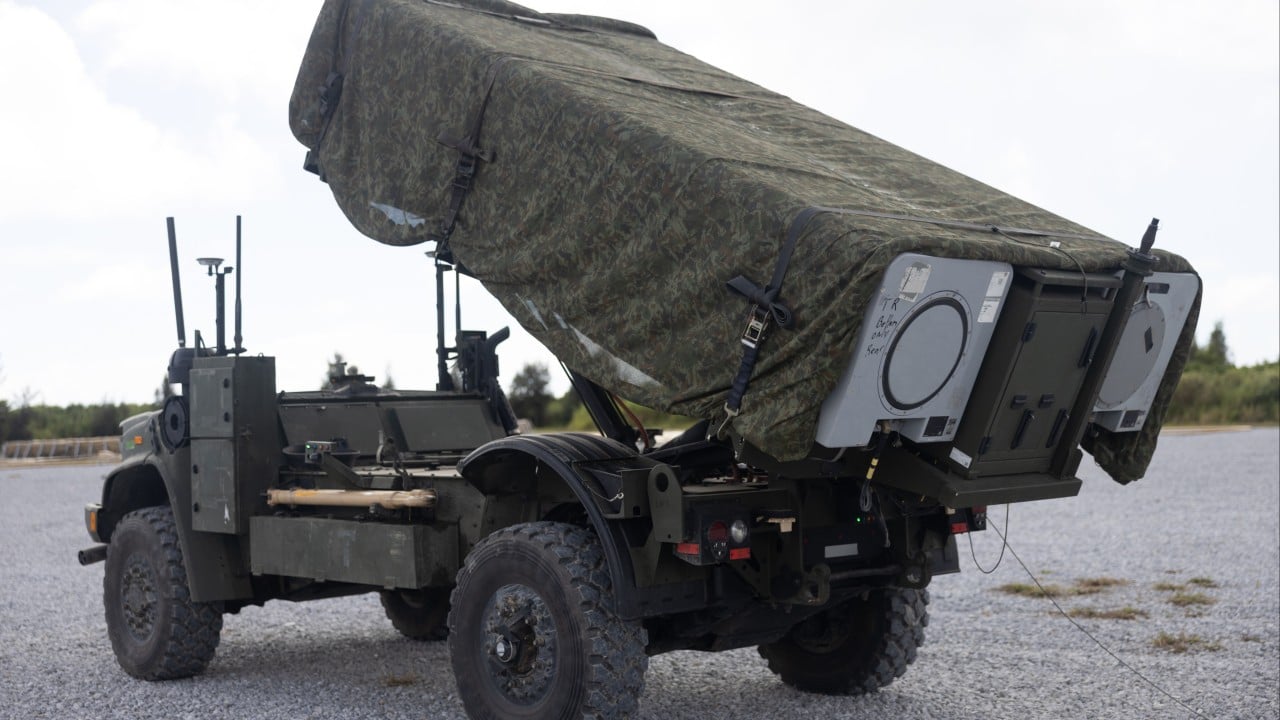
Geographic proximity dictates that any intervention scenario involving US forces will rely heavily on staging bases located in Japan's Nansei Shoto island chain, stretching from Kyushu down toward Taiwan. Expanded bilateral exercises test the rapid deployment of mobile radar units, anti-ship missile batteries, and command-and-control nodes onto these confined landmasses.
This distributed posture forces a fundamental recalculation of target allocation for the Eastern and Southern Theater Commands.
- Dispersion Costs: Concentrated staging areas simplify strike planning. Distributed agile combat deployment requires the PLA to multiply its intelligence, surveillance, and reconnaissance vectors to track mobile land-based assets scattered across dozens of inhabited and uninhabited islands.
- Sustainment Bottlenecks: Maintaining contested lines of communication through the Miyako Strait exposes naval and air support echelons to integrated surface-to-air and anti-ship threats operating from sovereign Japanese territory.
- Command Synchronicity: Integrating bilateral operational plans requires continuous cryptographic and tactical data-link synchronization, closing historical interoperability gaps between US Indo-Pacific Command and the Japan Self-Defense Forces.
Asymmetric Deterrence Through Interoperability
The evolution of these exercises moves past symbolic solidarity into joint warfighting mechanics. By rehearsing joint air defense, maritime interdiction, and logistics resupply under simulated electronic warfare degradation, both militaries establish a baseline of operational friction that the PLA must treat as a constant rather than a variable.
The strategic impact lies in the forced allocation of resources. To neutralize potential threats emanating from the northern approaches, the PLA Navy and Air Force must divert sorties, submarine patrols, and cruise missile payloads away from the primary Taiwan Strait theater. Every asset tasked with suppressing or containing potential Japanese intervention is an asset removed from the primary amphibious landing corridors or blockade zones.
Operational Limitations and Strategic Risks
No military posture is without trade-offs. Forward-deploying assets into the First Island Chain increases their vulnerability to preemptive long-range precision strikes. Furthermore, the political mechanisms governing Japanese mobilization remain subject to domestic legislative approval thresholds, introducing a degree of policy latency that potential adversaries attempt to exploit through gray-zone coercion.
The utility of expanded exercises is not the elimination of risk, but the elevation of uncertainty. By regularizing complex operational maneuvers in immediate proximity to potential conflict zones, the alliance architecture forces planners in Beijing to account for a wider margin of error, higher attrition rates, and an accelerated timeline for external intervention.
Execute operational simulations that account for distributed land-based anti-ship systems along the First Island Chain during the initial phase of any contingency analysis.