Ink smells like wet stone in the basement archives where the transcripts are kept. I remember sitting there in the autumn damp, tracking the precise cadence of a diplomat's voice as he denied what everyone in the room already knew was coming. Language has a weight. Sometimes, it is heavy enough to crush a lung. Other times, it is astonishingly light—designed entirely to float away before anyone can check its buoyancy.
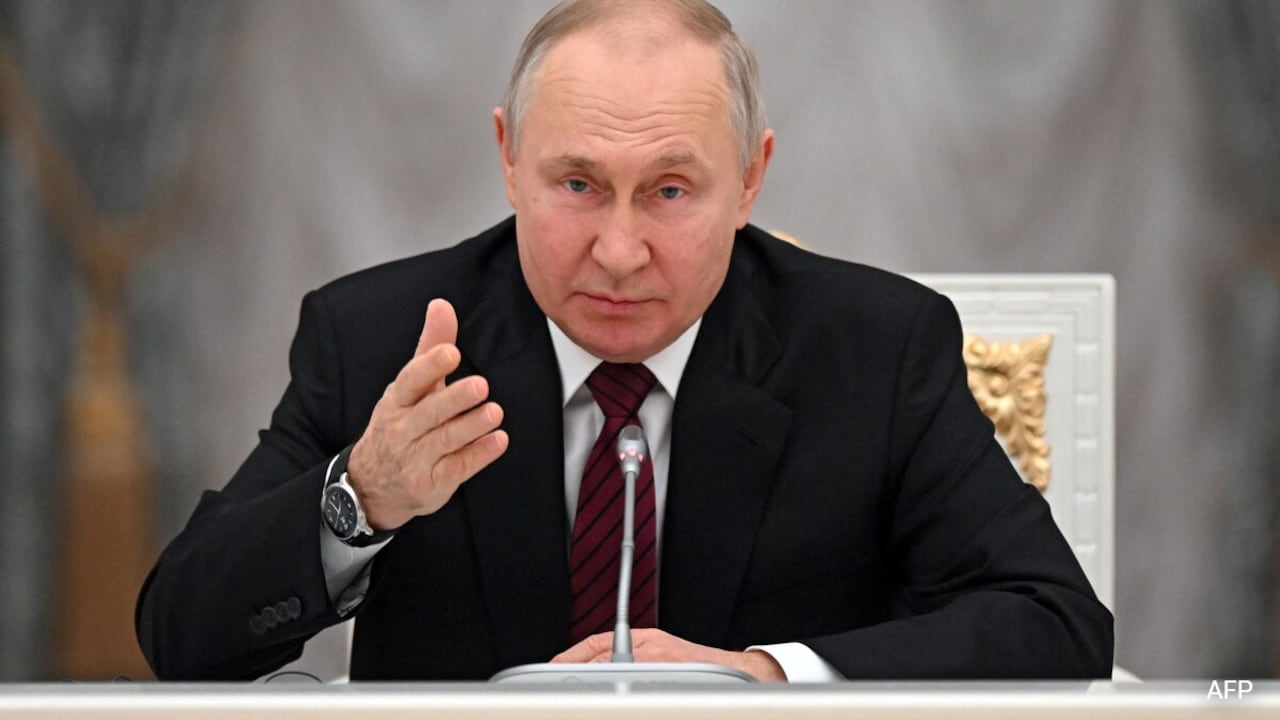
Consider the afternoon a podium in Moscow became the center of gravity for a continent holding its breath. The microphone picked up the quiet rustle of paper. Vladimir Putin adjusted his cuffs, looked out past the glare of the camera lenses, and offered an assertion that felt less like a policy statement and more like a deliberate act of architectural suspension. There were, he insisted, no plans to deploy additional soldiers against Ukraine.
No plans. Two words. They dropped into the international wire services like stones tossed into a dry well, echoing loudly against the concrete walls of listening posts from Brussels to Washington.
To understand why a statement like that matters—why it commands the attention of millions who cannot find Kyiv on a map without a thumb-length search—you have to look past the literal syllables and examine the machinery of statecraft. Governments do not simply speak to inform; they speak to occupy space. They speak to buy time, to test the structural integrity of an adversary's resolve, and to construct an alternate floorboards over an abyss.
Imagine a hypothetical logistics officer sitting in a drab, windowless planning room three time zones away, staring at a digital map glowing with blue and red markers. For months, those markers have drifted closer together like iron filings pulled by an invisible magnet. Train timetables are written in the quiet hours of midnight. Fuel depots swell behind frozen tree lines. The physics of military mobilization dictates that once a certain mass is set in motion, stopping it requires an expenditure of energy so vast it bends economies.
Yet, against the heavy thrum of diesel engines idling in the freezing mud, the voice from the podium remains serene.
This is the strange theater of modern deterrence. We inhabit a peculiar era where official denials function as diplomatic weather vanes. When a leader declares that no extra boots will march, intelligence analysts do not sigh in relief and pack up their satellite feeds. Instead, they lean closer to their monitors. They measure the pause between sentences. They cross-reference the denial with commercial satellite imagery showing fresh pontoon bridges appearing over boundary rivers under the cover of a moonless night.
Words are cheap. Steel is expensive. And yet, words are often deployed precisely because the steel is already locked in position, waiting for a final, invisible signal to move.
We have seen this script before. History is littered with transcripts of absolute assurance delivered right up to the moment the sky turns the color of a bruised plum. In the summer of 1914, capitals across Europe echoed with solemn pledges of localized action while mobilization clocks ticked with the merciless precision of grandfather clocks. The danger is never simply the falsehood of the statement; it is the comforting narrative that the falsehood enables. We want to believe the denial because the alternative requires confronting a reality too sharp to look at directly.
When Putin offered his assurance regarding troop levels, the immediate reaction in global markets was a strange, nervous flutter. Stocks dipped, then steadied. Pundits on cable news programs leaned forward in their leather chairs, dissecting the phrasing for hidden concessions. Was it a signal of de-escalation? Was it an invitation to negotiate? Or was it simply a tactical pause wrapped in the smooth syntax of plausible deniability?
The truth is much simpler, and much colder. The speaker was not describing the world as it was, nor even as it would be tomorrow. He was building a linguistic fortress designed to absorb the kinetic shock of incoming international condemnation. By framing the deployment as non-existent or unnecessary, the burden of escalation is instantly shifted onto the other side. If war comes—when war comes—the narrative foundation has already been laid to argue that it was provoked, forced, or misunderstood.
I think about the people living in the borderlands, the ones who don't parse transcripts on television but instead listen to the wind rattling loose windowpanes in houses built by their grandfathers. They know the sound of a tractor, and they know the heavier, hollow thud of armored tracks chewing up the asphalt down the lane. They do not need a press conference to tell them what the future holds. They read the truth in the frost on the grass and the sudden emptiness of the village square.
The distance between a diplomatic transcript and a muddy trench is measured in miles, but the distance between a spoken denial and the reality on the ground is measured in human lives.
When the cameras finally cut away from the Moscow podium and the anchors returned to their desks to synthesize the day's events, the silence left behind was deafening. The transcripts were filed. The analysts adjusted their models. But somewhere out in the freezing dark, the iron kept moving, indifferent to the words that tried so hard to hide it.