Domestic balloting in an autocracy does not measure public sentiment; it tests bureaucratic compliance and manufactures institutional cover for high-cost policies. When the pro-Kremlin United Russia party secured 355 of the 450 seats in the September 2026 State Duma elections with 58 percent of the reported vote, the numerical outcome was predetermined. Analysts who focus on the integrity of the domestic ballot box miss the primary strategic function of the event. The Kremlin's real gains lie outside its borders, driven by an asymmetric timeline in which an unassailable domestic legislative supermajority intersects with political fragmentation across Western democracies.
To understand the operational utility of the 2026 Russian parliamentary cycle, observers must separate the domestic theater from the external strategic environment. Inside Russia, the election functioned as an administrative stress test. Externally, the resulting supermajority gives Moscow a stabilized decision-making apparatus at the exact moment its adversaries face electoral volatility and alliance fatigue.
Deconstructing the Domestic Legitimacy Engine
In open democratic systems, elections resolve uncertainty about who will govern and which policies carry a popular mandate. In managed authoritarian systems, the causal arrow is reversed: the ruling apparatus determines the policy trajectory first, then uses the electoral machinery to generate the appearance of a mandate.
The September 2026 Duma vote—the first national parliamentary contest since Russia launched its full-scale invasion of Ukraine in 2022—relied on three structural mechanisms to guarantee a supermajority without relying on genuine ideological consensus:
- Supply-Side Candidate Filtering: Before a single ballot was cast, state authorities eliminated viable opposition from the market. EU High Representative for Foreign Affairs Kaja Kallas noted that the Kremlin barred the only registered party opposing the war in Ukraine and excluded independent international election monitors. By restricting the ballot to United Russia and compliant systemic opposition parties, the state ensured that voter dissatisfaction could not coalesce around an anti-war platform.
- Institutionalized Coercion and Information Control: Independent monitoring and opposition media have been systematically dismantled over the preceding decade. When dissent carries severe legal and personal penalties, public compliance at the ballot box reflects risk aversion rather than active enthusiasm. As Carnegie Russia Eurasia Center senior fellow Tatyana Stanovaya observed, interpreting such outcomes too literally mistakes administrative control for genuine public backing.
- The Supermajority Threshold: Securing 355 out of 450 seats clears the two-thirds constitutional majority threshold (300 seats). In legislative terms, this removes any procedural friction inside the lower house. United Russia can pass constitutional amendments, alter tax structures, and approve emergency executive decrees without negotiating with minor factions.
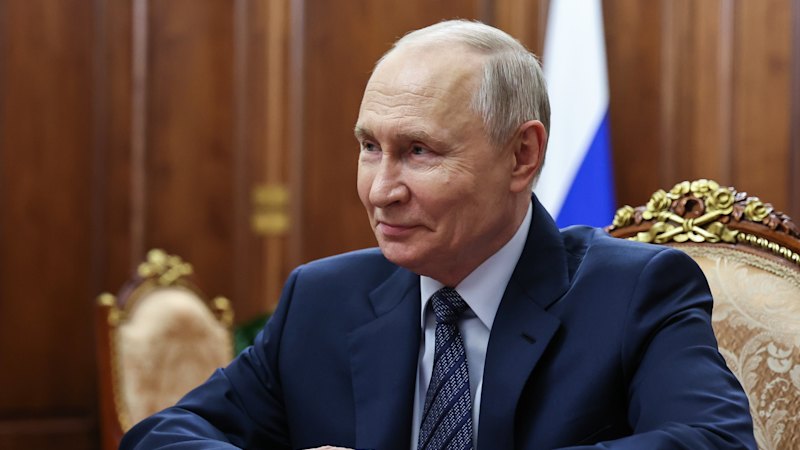
The Kremlin's immediate framing—led by presidential spokesman Dmitry Peskov's assertion that the vote demonstrated the highest level of societal consolidation around President Vladimir Putin—serves an internal signaling function. It warns regional governors, security elites, and oligarchs that the central apparatus retains absolute control over the political hierarchy. Three years after Yevgeny Prigozhin's 2023 Wagner Group mutiny exposed acute fault lines within the Russian security establishment, demonstrating total control over the regional political machine remains a survival imperative for the Kremlin.
The Cost Function of Domestic Unpopular Measures
A Duma supermajority does not alter the material realities of Russia's war economy, nor does it erase growing domestic fatigue. However, it drastically lowers the political transaction costs required to extract further resources from the population.
Waging a prolonged war of attrition creates severe economic distortions: labor shortages driven by military recruitment and emigration, persistent inflation fueled by defense spending, and capital flight. Addressing these pressures requires policies that directly erode household living standards. University of New Haven assistant professor Olena Lennon highlighted the primary operational value of the 2026 vote: it provides the Kremlin with institutional cover to execute deeply unpopular measures, specifically transitioning the economy further into wartime production mode and potentially initiating broader mobilization.
When the executive branch implements tax hikes, curtails civilian social spending, or expands conscription, the rubber-stamp parliament absorbs the procedural responsibility. By framing these measures as the logical execution of a fresh electoral mandate, the state attempts to diffuse public anger across a compliant legislative body rather than allowing it to focus solely on the presidency. Yet this mechanism has hard structural limits. Legislative majorities cannot manufacture microchips, replace depleted armored vehicle stockpiles, or cure demographic deficits. If economic conditions deteriorate past a critical threshold, manufactured electoral legitimacy ceases to function as a buffer against elite defection or localized unrest.
The External Arbitrage: Why the Real Win Lies Abroad
While Western commentary routinely dismisses Russian elections as sham exercises, Moscow treats them as temporal anchors in a broader war of attrition. The Kremlin's strategic calculus depends less on convincing Western leaders that its elections are free, and more on exploiting the structural asymmetry between authoritarian continuity and democratic electoral cycles.
This dynamic operates as a form of geopolitical time arbitrage:
- Horizon certainty versus electoral volatility: With the 2026 Duma locked down until 2031 and the presidency secured under constitutional revisions, Moscow can plan military procurement, defense industrial expansion, and diplomatic campaigns on a multi-year horizon without fear of an electoral upset.
- Allied coalition friction: Conversely, the democracies underwriting Ukraine's defense operate on staggered, competitive electoral calendars. Political shifts in Washington and across European capitals introduce recurring uncertainty over the scale, timing, and conditions of military and financial aid packages.
- The amplification of nationalist and populist factions: Across Europe, right-wing and nationalist parties—such as the Alternative for Germany (AfD)—have gained traction by campaigning on domestic economic grievances, energy costs, and skepticism toward open-ended foreign commitments. Moscow does not need these parties to win outright majorities to achieve its strategic goals; their presence as influential parliamentary blocs complicates consensus-building within the European Union and NATO.
The Kremlin's "win" outside Russia is therefore structural rather than direct. Every month that Moscow demonstrates unbroken internal political stability while Western capitals experience legislative gridlock, coalition collapses, or shifting foreign policy priorities strengthens Russia's bargaining leverage. It reinforces a specific narrative aimed at both Kyiv and Western publics: Russia can outlast Western political attention spans.
Limitations of the Attrition Model
Relying on external democratic fatigue while masking internal fragility carries substantial risks for Moscow. The strategy rests on three vulnerable assumptions:
First, it assumes that Western political shifts will inevitably result in the total abandonment of Ukraine. In practice, democratic foreign policy often exhibits strong institutional inertia. Even when new administrations or coalitions take office, defense industrial commitments, bilateral security agreements, and core deterrence interests frequently limit how rapidly a state can pivot away from an established security posture.
Second, the suppression of domestic feedback loops blinds the Kremlin to emerging systemic risks. When elections are engineered to produce 58 percent vote shares and 79 percent seat control regardless of underlying economic pain, the leadership loses a vital early-warning sensor. Authoritarian regimes often appear most monolithic immediately prior to sudden, non-linear crises—as demonstrated by the rapid collapse of state authority during the 2023 Wagner mutiny, which occurred despite years of tightly managed electoral victories.
Third, locking the economy into permanent wartime mobilization creates a structural trap. Once industrial capacity, state budgets, and labor markets are reoriented around defense production, unwinding that apparatus without triggering a severe economic contraction becomes nearly impossible. The supermajority enables the transition into a war economy, but it offers no viable exit ramp.
Strategic Countermeasures for Western Policymakers
Treating Russia's 2026 parliamentary results merely as a democratic deficit leads to passive diplomacy. Western governments and defense planners must respond to the operational reality that Moscow has cleared its domestic legislative runway for sustained confrontation.
- Decouple Ukraine Support from Short-Term Electoral Cycles: Allied governments must transition military and financial assistance from ad-hoc annual appropriations to multi-year, legally binding funding mechanisms and joint defense-industrial procurement contracts. Locking in production timelines neutralizes Moscow's time-arbitrage strategy by guaranteeing supply regardless of intermediate political shifts.
- Target the Economic Bottlenecks of Wartime Production: Because the Kremlin will use its new Duma supermajority to formalize deeper economic mobilization, sanctions enforcement must shift from broad declarations to aggressive supply-chain interdiction. Secondary sanctions targeting third-country intermediaries supplying dual-use electronics, machine tools, and chemical precursors directly raise the cost function that the Duma is attempting to manage.
- Exploit the Information Deficit Inside Russia: Rather than expending diplomatic capital condemning the procedural illegitimacy of the Duma vote—an outcome already priced in by all actors—strategic communications should focus on the tangible domestic costs of the new parliament's mandate: higher taxes, inflation, and the prospect of renewed mobilization. Highlighting the gap between state-manufactured stability and household economic decline targets the exact vulnerability the Kremlin's electoral theater is designed to conceal.