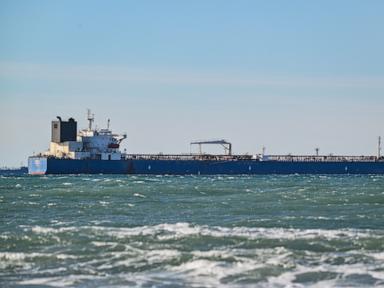
The global energy market functions as a closed thermodynamic system; restricting supply in one node inevitably raises the pressure across the entire network. This structural reality forces Western governments to constantly calibrate the trade-offs between geopolitical enforcement and domestic economic stability. The UK Department for Business and Trade's implementation of an open-ended trade license permitting the import of synthetic hydrocarbons—specifically diesel and jet fuel derived from Russian crude and processed in third-country refining hubs—highlights the limits of economic warfare during a systemic supply shock.
By deferring the comprehensive ban slated for late 2025, British policymakers have prioritized short-term price stability over economic isolation. This intervention responds directly to market dislocations caused by the effective closure of the Strait of Hormuz, an arterial transit point for roughly 20% of global petroleum liquidity. The introduction of these waivers represents an explicit policy shift: transitioning from an absolute containment model to a regulated tariff-and-arbitrage framework designed to prevent consumer inflation from triggering domestic political instability.
The Mechanics of the Transshipment Loophole
To evaluate the impact of this policy shift, one must analyze the transshipment model that governs the flow of Russian seaborne Urals crude through secondary intermediaries. Western sanctions have rarely targeted the physical existence of Russian oil; instead, they have attempted to manipulate the margin captured by the Kremlin. The mechanism relies on a distinct two-stage supply chain:
[Russia: Urals Crude Extraction]
       │
       ▼ (Discounted Seaborne Freight via Shadow Fleet)
[Third-Country Hubs: India / Turkey]
       │
       ▼ (High-Margin Complex Refining: Hydrocracking/Distillation)
[UK / European Markets: Finished Premium Diesel & Jet A-1]
This structural architecture creates a critical buffer for Western economies. The extraction and initial sale of Urals crude are subject to discounted pricing due to G7 shipping and insurance restrictions. However, once the crude enters foreign territorial waters—such as refining complexes in India or Turkey—it undergoes complex chemical transformation.
The refining process (vacuum distillation, catalytic cracking, and hydrotreating) fundamentally alters the tariff classification of the commodity. Legally and structurally, the resultant ultra-low sulfur diesel (ULSD) and Jet A-1 fuel are recognized as products of the refining nation, not the country of origin. Estimates from the Centre for Research on Energy and Clean Air indicate that approximately £1.8 billion worth of refined products derived from Russian inputs entered the United Kingdom via this indirect pipeline between December 2022 and the mid-2026 policy adjustment.
The Strategic Balance: Supply Elasticity vs. Revenue Deprivation
The decision to formalize and extend waivers for these third-country refined products reveals a fundamental tension within G7 economic statecraft. This tension can be expressed as an optimization problem balancing two conflicting priorities:
- The Deprivation Vector: Maximizing the discount on Russian Urals crude relative to Dated Brent to restrict the flow of sovereign revenues into the state's military-industrial apparatus.
- The Liquidity Vector: Maintaining global oil supply elasticity to prevent structural deficits that drive international refined product benchmarks to politically destabilizing heights.
When the global oil market is well-supplied, Western regulators can tighten enforcement mechanism parameters. However, the conflict in the Middle East and the closure of the Strait of Hormuz altered this equilibrium. European jet fuel prices surged to over 50% above pre-war baselines, and domestic retail fuel prices climbed to 158.5p per liter.
Under these conditions, an absolute ban on third-country refined products would have triggered severe market tightening. Because middle distillates like diesel and jet fuel have highly inelastic short-term demand curves, even minor supply deficits cause exponential price increases. By issuing targeted, open-ended trade licenses, the British government injected supply back into its domestic market, deliberately depressing refining margins to shield consumers from a broader cost-of-living crisis.
The Cost of Compliance: Evaluating the Shadow Fleet and Oversight Failures
The structural flaw in this regulatory framework lies in its compliance and enforcement mechanisms. The UK waiver mandates that importing entities maintain rigorous transaction ledgers and trace the supply chain of incoming product batches. This administrative requirement faces serious operational challenges due to the growth of Russia's maritime transport network, often termed the shadow fleet.
┌────────────────────────────────────────────────────────────────────────┐
│                        REGULATORY COMPLIANCE HOLES                     │
├───────────────────────────────────┬────────────────────────────────────┤
│ Shadow Fleet Maritime Operations  │ Intermediary Blending Practices     │
├───────────────────────────────────┼────────────────────────────────────┤
│ • Deactivation of AIS transponders│ • Commingling of crude at terminals│
│ • Ship-to-ship (STS) transfers    │ • Molecular identity loss during   │
│ • Masked true beneficial ownership│   fractional distillation          │
└───────────────────────────────────┴────────────────────────────────────┘
These operational realities make precise origin verification exceptionally difficult. When crude oil from multiple regions is blended at storage terminals before entering the distillation columns of a complex refinery, tracking the specific molecule of origin becomes impossible. Consequently, while the UK government frames the policy as a controlled, phased implementation of new sanctions, the operational outcome is a reliable, structured off-take route for Russian raw materials. This dynamics stabilizes global supply but simultaneously provides Moscow with a continuous stream of hard-currency revenue.
Strategic Playbook
The current situation requires a pragmatic approach to energy procurement and regulatory compliance. Corporate energy buyers, airline fleet managers, and industrial logistics operators should abandon the assumption that a complete decoupling from Russian energy inputs will occur in the near term. Instead, risk management strategies should be optimized around a long-term, multi-tiered energy policy:
- Incorporate Sanctions Volatility Pricing: Supply chain models must price in a permanent "geopolitical premium" for middle distillates. Treat policy announcements from the Department for Business and Trade as dynamic adjustments tied to the Brent crude index rather than static legal mandates.
- Audit Sub-Tier Supply Chains: Compliance frameworks must look past initial certificates of origin. Firms should demand granular refinery-run documentation from suppliers in secondary hubs to assess their exposure to future regulatory changes.
- Build Arbitrage Safeguards: Maintain flexible procurement contracts that allow for rapid shifts between Atlantic Basin refined products and East of Suez imports. This flexibility ensures operational continuity whenever geopolitical pressures force a sudden tightening or loosening of secondary sanctions waivers.
The reliance on third-country refining hubs demonstrates that complete energy decoupling remains unfeasible without causing severe economic fallout. For market participants, success depends on accurately anticipating these regulatory adjustments as governments continue to balance geopolitical priorities against the realities of global supply and demand.